
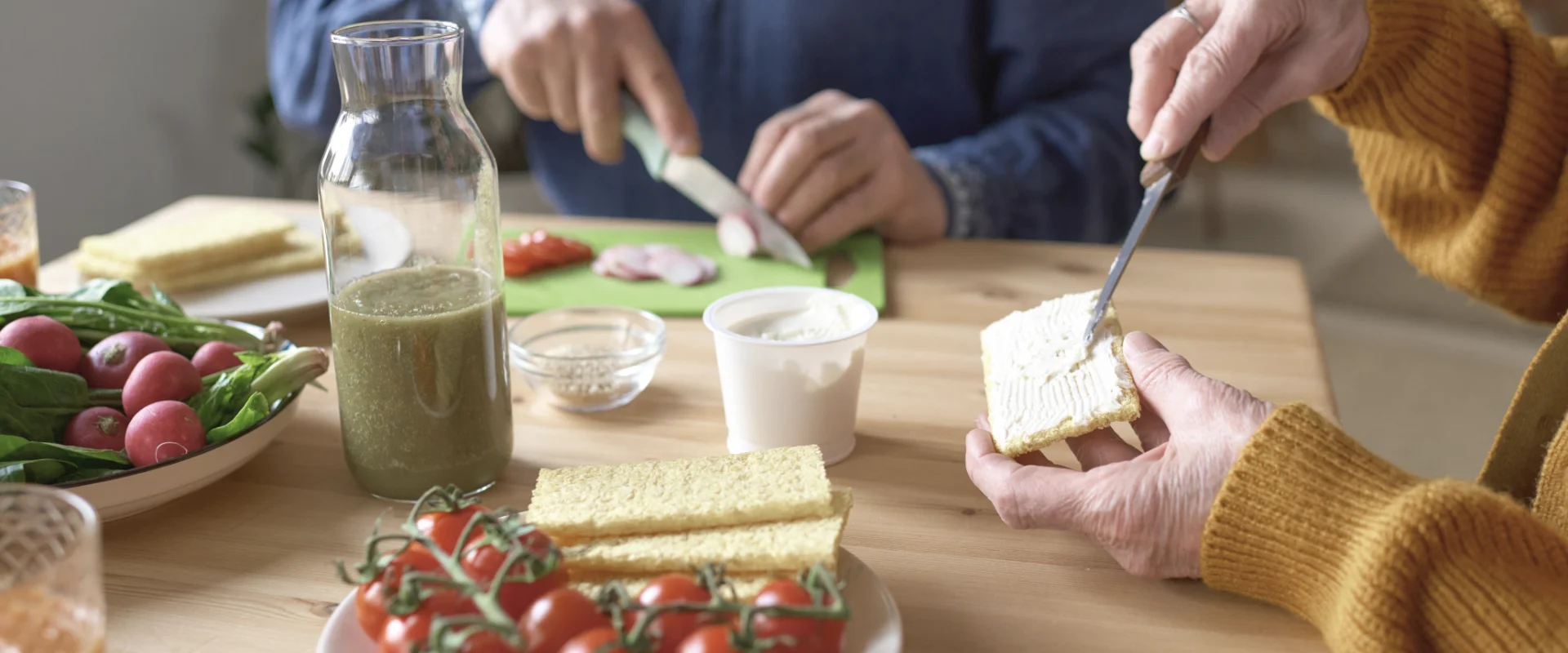

When Mrs. M., 82, lost two teeth a few months ago and her gums remained sore for a long time after the procedure, she pushed her half-full plate aside at nearly every meal. “It tastes fine, but chewing hurts,” she told her daughter on the phone. What sounds like a minor issue is a daily reality for many older people: Eating familiar foods becomes a struggle, slowly but surely sapping their appetite—and, ultimately, a piece of their quality of life—as they lack energy, lose weight, and find daily life becoming a burden.
It is precisely in such cases that soft foods become an important solution for seniors, helping them to reintegrate not only enjoyment but also the necessary nutrition into their daily lives.
This article explains why soft foods are so important, especially for older adults, which foods are particularly suitable, and provides specific recipes and ideas for every meal. Finally, you’ll learn how a home care aide can assist with shopping and meal preparation, and when you may be eligible for a home care aide through your long-term care insurance.
Why soft foods are so important for seniors
Over the years, many changes occur in the body, and eventually these become noticeable in the mouth as well. Not only does the sense of taste change, but chewing also becomes more difficult and saliva production decreases. Those who ignore these changes and think that eating less is the solution risk not getting enough essential vitamins, minerals, and proteins from their diet. In the long term, this can affect strength, the immune system, and mood, and lead to malnutrition in old age.
Making these adjustments is not a form of dieting or deprivation; rather, it is a form of self-care. Soft foods are gentle on the mouth while still providing the essential nutrients the body needs every day to function properly.

When teeth, gums, and chewing muscles weaken
As people age, it is not uncommon for teeth become loose or even fall out, the gums become more sensitive, and the chewing muscles gradually weaken. Eating soft foods can become essential when dealing with dental problems, as hard foods can be particularly taxing—these include, among others, bread with a hard crust, raw vegetables, or tough meat. As a result, affected individuals often unconsciously reduce their portion sizes or adopt an unbalanced diet, thereby avoiding certain foods. Switching to soft foods that require no chewing early on can help prevent malnutrition in old age while also avoiding the pressure of having to “power through” a meal.
Recognizing difficulty swallowing and swallowing disorders
Swallowing disorders, also known medically as dysphagia , can often occur in older adults following, for example, strokes, neurological diseases, or surgical procedures. Difficulty swallowing is characterized by symptoms such as frequent choking, coughing while eating, or a hoarse voice after meals.
Anyone who suspects they may have developed difficulty swallowing should consult a doctor. During a consultation with the treating physician, it can then be determined which food consistencies are safe in each individual case and which should be avoided. Only then can the diet be appropriately adjusted, as soft foods may suffice in some cases, while in others, for example, thickened water may be necessary to ensure that drinking does not pose a risk.
After surgery and during recovery
Eating soft foods doesn’t always have to be a long-term dietary choice. There are also temporary situations that may require a switch to a diet consisting largely of soft foods. These include the period following dental surgery, procedures in the mouth or throat, or even after a prolonged hospital stay , a softer diet may be advisable. During this time, the main goal is to provide the body with everything it needs for healing.
What Makes Soft Foods Special: Texture, Taste, and Nutrients
Soft food is more than just mashed vegetables on a plate. It involves a careful selection of ingredients, an adjusted texture, and above all, flavor that isn’t lost.
Finding the right consistency
Soft food does not mean that all textures are the same. They range from soft but firm enough to bite into to pureed or strained. The required texture usually depends on the individual case and the person’s specific chewing and swallowing abilities.
Classic options for particularly soft foods include mashed potatoes, mashed sweet potatoes, soft pasta, well-cooked rice, steamed vegetables such as carrots and zucchini, scrambled eggs, cottage cheese, or creamy yogurt. For people with very severe swallowing difficulties, a slightly thicker, smooth consistency may be safer than very thin soups. This precaution is important here because very thin foods can more easily enter the windpipe.
Keep track of vitamins, minerals, and proteins
Soft foods aren't necessarily low in nutrients. On the contrary: A good soft meal provides high-quality protein—for example, from cottage cheese, tender fish, scrambled eggs, or legumes—vitamin C from soft fruits like bananas or strawberries, vitamin A from carrots and sweet potatoes, other vitamins and minerals from steamed vegetables, and omega-3 fatty acids from salmon, flaxseed oil, or walnut oil. A little bit of healthy fat—such as some butter or high-quality vegetable oil—helps the body absorb fat-soluble vitamins and makes dishes creamy. If you make sure to vary your meals, you’ll almost automatically ensure that nothing important is missing.
Soft Foods for Seniors: Recipes and Ideas for Every Meal
Below you’ll find a selection of soft dishes suitable for everyday meals that don’t require much chewing. They’ve been chosen so that they can be easily adapted, remain varied, and are easy to prepare with just a few ingredients. If you’d like, you can write them down, share them with your family, or use them as inspiration to adapt your own favorite dishes into soft versions.
Breakfast: light, gentle, and nutritious
Oatmeal with banana and yogurt
Soak the oats overnight in milk or a plant-based alternative, bring to a brief boil, and stir in a ripe, mashed banana and a little yogurt. A teaspoon of honey adds sweetness without adding extra sugar. If you like, add fresh strawberries—they provide vitamin C and a touch of tartness that whets the appetite.
Scrambled Eggs with Cottage Cheese
Whisk two eggs with a tablespoon of cottage cheese and a pinch of salt, then gently cook in a little butter until set. The result is especially tender, high in protein, and easy to chew. Serve with a slice of soft bread, lightly spread with butter, and you have a nutritious and delicious breakfast.
Lunch: Main courses that are easy to chew
Mashed potatoes with tender vegetables
Boil floury potatoes in water until tender, then mash them with warm milk, a little butter, salt, and a pinch of pepper to make creamy mashed potatoes. Serve with steamed carrots, tenderly cooked zucchini, or a smooth pea purée. For a change, replace some of the potatoes with sweet potatoes to create a bright orange sweet potato purée that has a slightly sweet taste and is rich in vitamin A.
Sweet potato purée with carrots and delicate fish
Cook the sweet potato and carrot together, then mash them, and finish with a splash of milk and a little butter. Serve with a piece of gently cooked salmon, which is naturally tender and rich in omega-3 fatty acids. A few drops of lemon juice enhance the flavor and add some vitamin C. A dish that’s quick to prepare yet feels like a little feast.
Rice or pasta dishes with a delicate sauce
Well-cooked rice or tender pasta served with a mild tomato sauce without large chunks, a cheese sauce, or a pureed vegetable sauce are classic, easily digestible dishes. If you like meat, choose tender ground meat, slowly braised poultry, or fish, all cut into small pieces or finely chopped.
Soups, smoothies, and snacks
Creamy vegetable soups
Soups are the all-around stars of home cooking. Pumpkin-carrot soup, zucchini soup, or cream of broccoli soup are easy to prepare, freeze, and thaw in individual portions. Be careful with salt: Older people are often more sensitive to overly salty food. It’s better to season with fresh herbs, a little pepper, and a splash of lemon juice.
Smoothies with strawberries, banana, and honey
A smoothie made with banana, strawberries, yogurt, a little milk, and a teaspoon of honey is an ideal snack when your appetite is low. This way, your body gets vitamins, minerals, and energy with minimal effort. If you have difficulty swallowing, you should discuss the consistency with your doctor beforehand; sometimes a thickening agent is needed to ensure safe swallowing.
Sweet dishes and desserts
Sweet dishes are also included: rice pudding, semolina porridge with soft strawberries, a delicate apple compote, a creamy pudding, or mashed banana with honey and yogurt. Those looking to cut back on sugar can rely on the natural sweetness of ripe fruit. Such small meals help many seniors maintain a healthy weight, a factor that family doctors cite as an important criterion for health in old age.
Tips for preparation and making mealtime more enjoyable
Even the most beautiful kitchen is of little use if the plate remains untouched. With just a few simple steps, a meal can become something to look forward to.
Take taste, variety, and personal preferences into account
Ask about the person’s preferences, not about dietary rules. What has Mrs. M. enjoyed eating all her life? What smells remind her of the past? A handful of fresh herbs, a drizzle of good oil, or a pat of butter can bring out the best in even the simplest dish. Presentation also plays a role: colorful ingredients, small portions, and a lovingly set table stimulate the appetite.
Be careful with salt, sugar, and difficulty swallowing
If you have high blood pressure or heart failure, you should limit your salt intake. If diabetes , the same applies to sugar. And for those with difficulty swallowing, liquid and solid components in a dish should never be placed side by side without proper separation—so a smooth cream soup is preferable to a stew with soft noodles and thin broth. When in doubt, a doctor is the first point of contact for such questions. Additional consultation with a nutritionist can provide further clarity, especially when multiple conditions are present.
When cooking becomes too much to handle on your own: Get help from a housekeeper
Ms. M., mentioned at the beginning of this post, was lucky: her daughter lives just a few streets away and cooks for her twice a week. But many people are in a different situation. They live alone, their family is far away, and the trip to the store gets longer the more tired their legs become. That’s exactly where we come in.
Here's how a home care aide can help with soft foods
A housekeeper takes care of all the steps in daily life that lie between an empty fridge and a finished meal. This starts with shopping for fresh ingredients—soft fruits, vegetables, cottage cheese, yogurt, sweet potatoes, carrots, zucchini, and salmon—and extends to the simple preparation of hot meals tailored to the person’s preferences. She cuts bread into bite-sized pieces, purees soups, prepares smoothies, and ensures there’s always something fresh in the fridge.
Equally important is a watchful eye: An experienced caregiver can tell if a plate is being returned full, if the person is coughing unusually often while drinking, or if they are losing weight. Such observations are often the first reason to discuss the issue with a doctor.
When is a person eligible for home care assistance from the long-term care insurance fund?
Starting at Care Level 1 , many people are entitled to household assistance through the so-called relief allowance from the long-term care insurance fund, which is available monthly for approved providers. Starting at Care Level 2 , additional options become available, such as respite care or the reallocation of long-term care benefits in kind to services that provide support in daily life. The criteria that apply in each individual case depend on the care level, living situation, and individual needs.
Even those who does not (yet) have a care level may still be eligible for home help under certain conditions, for example after a hospital stay, following surgery, or during a prolonged illness. In these cases, the health insurance provider is responsible. Who lives in the household, the ages of any children living there, and the medical certificate—these are all criteria that are assessed on a case-by-case basis. No one has to figure out these applications on their own. It’s worth asking for help early on, rather than waiting until the burden becomes too great.
We'll assess your situation—right by your side
In the case of Mrs. S., 79, it was her daughter who called us: Her mother didn’t want to go to a nursing home under any circumstances, but shopping and cooking had become a burden. We worked together to determine which services the long-term care insurance would cover, and before long, an empathetic, experienced home care aide was at her door. Today, Mrs. S. once again enjoys a hot lunch regularly—often mashed potatoes with tender vegetables, sometimes a stew, always whatever she likes.