
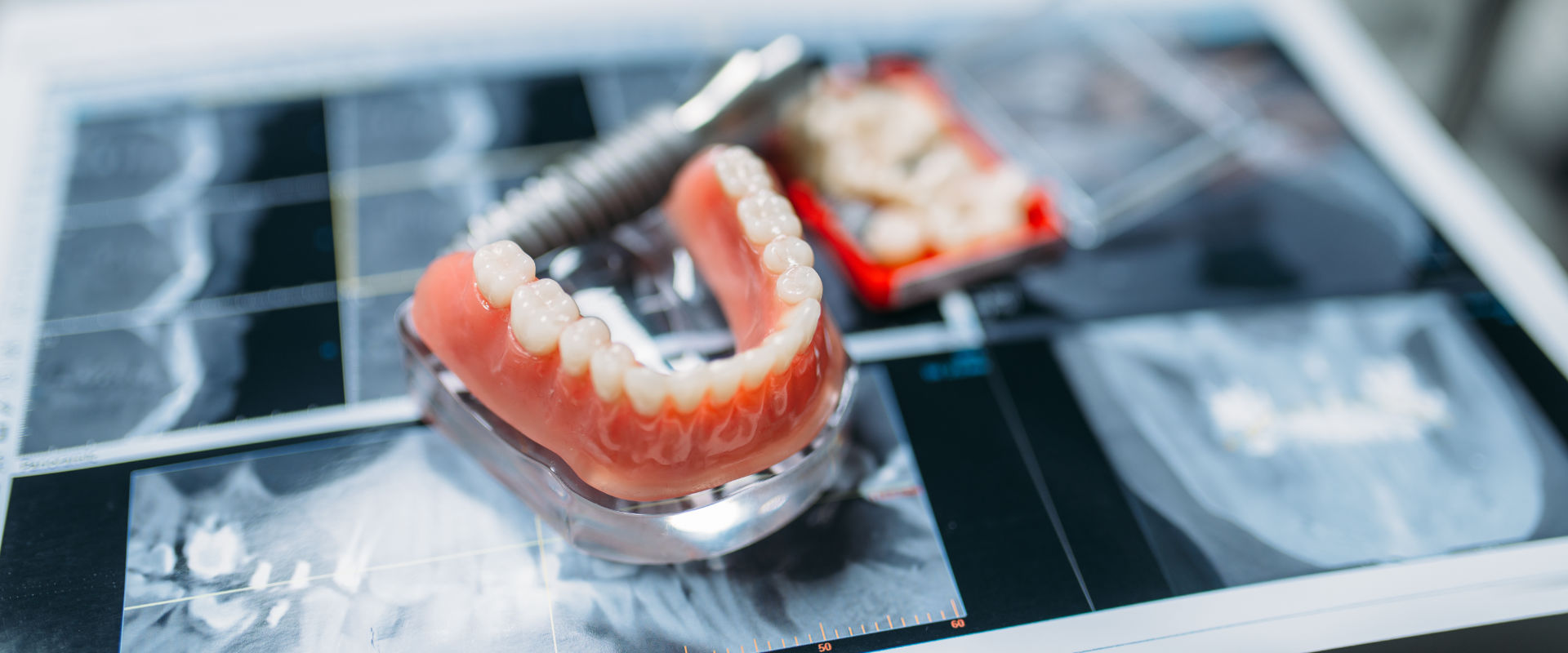

Losing teeth is a drastic experience for many people. In addition to the function of chewing, a certain quality of life is lost, the smile changes, speaking becomes more difficult and self-confidence often declines. However, modern dentistry today offers a wide range of solutions to replace lost teeth. Whether classic dentures, high-quality implants or innovative concepts such as All-on-4: patients have many options for regaining a complete set of teeth.
We explain step by step: what causes tooth loss, what types of dentures are available, how high the costs are, what is covered by health insurance, what the procedure at the dentist looks like and what you should look out for when caring for your teeth.
Background knowledge on third teeth
Teeth are far more than just tools for chewing, they shape our face, influence our speech and are symbolic of health and self-confidence. However, teeth can be lost over the course of a lifetime for various reasons. Whether due to diseases such as periodontitis, accidents or ageing, many people become dependent on some form of dental prosthesis.
What are "third teeth"?
The term "third teeth" refers to all forms of dental prostheses that replace the patient's own natural teeth, i.e. the "second teeth" after the milk teeth. These include dentures, dental bridges and dental implants. The aim is to restore chewing and speech function, but also to maintain the aesthetic appearance of the face and smile.
Why are third teeth necessary?
Tooth loss can occur at any age, but is particularly common in later life. In addition to health restrictions, incomplete dentition can also cause emotional stress.
Patients often report that they don't like to laugh or have difficulty eating and speaking. This is where third teeth come in: They improve quality of life, support self-confidence and prevent further health problems such as jaw changes.
Progress in dentistry
Thanks to modern prosthetics and implantology, today's solutions are far more than simple replacement products. Digital impressions, precise treatment concepts and high-quality materials enable restorations that are virtually indistinguishable from natural teeth, both functionally and visually.
Patients benefit from more stable, durable and comfortable solutions than just a few decades ago.

Causes of tooth loss
Tooth loss is not a rare phenomenon; it affects millions of people in Germany and can occur at any age. While accidents or individual decayed teeth are more likely to be the cause in young patients, it is often a consequence of periodontitis, poor dental hygiene or chronic diseases in middle and older age.
Lifestyle factors such as smoking, diet and stress also play a decisive role. In addition, there are genetic predispositions that make some people more susceptible to dental problems. In order to choose the right type of denture, it is important to understand the causes of tooth loss, as they have a significant influence on the choice between partial dentures, implants or full dentures.
Common medical causes
The loss of teeth can have various medical causes. First and foremost are caries and periodontitis.
- Caries destroys the tooth substance and, if it progresses without dental treatment, leads to severe damage and even complete loss of the tooth.
- Periodontitis is an inflammation of the periodontium. It affects the gums and jawbone and, if left untreated, causes teeth to lose their hold.
Accidents, such as those caused by sport or falls, can also lead to tooth loss. In addition, certain diseases such as diabetes or osteoporosis can increase the risk of premature tooth loss.
Influence of lifestyle
In addition to medical reasons, personal habits also play an important role. Smoking is considered one of the biggest risk factors for tooth loss, as it weakens the gums and impairs blood circulation.
A diet high in sugar also promotes tooth decay and thus tooth loss.
In addition, people who neglect their dental care also risk tooth loss in the long term.
Genetic factors
Last but not least, genetic predispositions can also play a role. Some people have weaker gums or more susceptible teeth. Even with good oral hygiene, this can lead to earlier tooth loss.
Age-related edentulism
With increasing age, the likelihood of not being able to keep your own teeth increases. Particularly in old age, complete dentures or other types of dentures are necessary in order to continue eating, speaking and maintaining the familiar smile.
Types of dentures
Today, modern dentures offer a wide range of options for replacing missing teeth. The right solution depends on how many teeth are missing, the condition of the dentition and jaw, and the patient's expectations in terms of comfort, durability and aesthetics.
A basic distinction is made between removable and fixed dentures. While dentures are often a flexible and cost-effective solution, implants and dental bridges offer a firm hold and a particularly natural feel.
Dentures
The classic form of dental prosthesis is the denture. A distinction is made here between partial dentures and full dentures (complete dentures).
- Partial denture: It replaces individual teeth or a small gap between teeth and is attached to the remaining teeth with clasps or special connecting elements.
- Full denture/total denture: This is used when there are no teeth left in the upper or lower jaw. It rests on the gums and is held in place by suction and adaptation to the jaw.
Dental bridges
A dental bridge is firmly anchored in the mouth and closes one or more gaps between teeth. To do this, the adjacent teeth are ground down and covered with a dental crown, which serves as the bridge abutment. Bridges offer a stable and aesthetically pleasing solution, but are only possible if there are enough healthy neighboring teeth.
Dental implants
Implants are considered the most modern form of dental prosthesis. They consist of an artificial tooth root (usually titanium or ceramic) that is anchored in the jawbone. Crowns, bridges or even entire dentures can be attached to them. Implants offer a particularly secure hold, feel like natural teeth and prevent the jawbone from receding.
Combinations and special shapes
In addition to the classic forms, there are also combined solutions:
- Telescopic dentures combine removable and fixed dentures and offer particularly good support.
- Systems such as All-on-4 make it possible to create a complete fixed restoration per jaw with just four implants.
- Partial dentures can also be combined with implants to ensure a better fit and greater comfort.
Dental implants in detail
Today, implants are considered the most modern, comfortable and durable form of dental prosthesis. Unlike conventional dentures or bridges, which rest on the gums or adjacent teeth, implants are firmly anchored in the jawbone, comparable to a natural tooth root. They provide a stable hold, natural aesthetics and a secure feeling when speaking, eating and smiling.
Implants offer many advantages, especially for patients who want a long-term solution. However, they are not suitable for everyone and the financial outlay is also higher than with conventional alternatives.
What are dental implants?
A dental implant is an artificial tooth root that is firmly anchored in the jawbone. It is usually made of titanium or ceramic, materials that are particularly well accepted by the body. The actual dental prosthesis is then attached to this implant, including a dental crown, a dental bridge or a complete denture. Implants are considered the highest quality solution in modern dentistry because they not only perfectly restore function, but also aesthetics.
Advantages of implants:
Implants offer numerous advantages that distinguish them from traditional dentures or bridges:
- Stability and support: They sit firmly like natural teeth.
- Natural feeling: Patients report that implants feel like real teeth.
- Preservation of the jawbone: Since the bone continues to be loaded, it does not recede.
- Long service life: With good care, implants can last for decades.
- Aesthetics: Implants are virtually indistinguishable from real teeth and give patients a confident smile.
Disadvantages and risks:
Despite many advantages, implants also have some points that patients should be aware of:
- Costs: They are more expensive than conventional solutions such as a full denture.
- Intervention necessary: Insertion requires a surgical procedure.
- Healing time: The jaw needs several months for the implant to heal completely.
- Not suitable for everyone: Implant treatment is often not recommended for patients with little jawbone, certain pre-existing conditions or smokers.
Special methods - All-on-4
The All-on-4 concept is a particularly innovative technique. Only four implants are placed in the upper or lower jaw, which support a complete fixed bridge.
This method shortens the treatment time and reduces costs compared to a treatment with many individual implants.
Dentures: costs and health insurance
The question of cost is one of the most important aspects when deciding on a suitable dental prosthesis. Many patients are unsure about which treatments they can afford, what is actually covered by their health insurance and what additional payments they will have to make.
The prices for third teeth literally range from inexpensive basic restorations as part of standard care to complex implant solutions that can cost several thousand euros. This makes it all the more important to keep track of treatment and cost plans, fixed allowances, the role of the bonus booklet and possible supplementary dental insurance.
Third teeth costs: What are the costs?
The cost of dentures varies greatly depending on the type, material, complexity of the procedure and the patient's individual situation.
- A simple partial denture is usually the cheapest option.
- Full dentures (complete dentures) are more expensive, but offer a complete restoration in the case of edentulism.
- Implants and concepts such as All-on-4 are the most cost-intensive, as they require surgical procedures and high-quality materials.
On average, prices range from a few hundred euros for a simple prosthesis to several thousand euros per jaw for implant-supported dentures.
What is standard care?
When subsidizing dentures, the statutory health insurance fund is guided by the so-called standard care. This is a "sufficient, appropriate and economical treatment" that is functional but not necessarily aesthetically ideal.
Examples of standard supplies:
- Gap restoration with a bridge instead of an implant
- Simple model casting prosthesis instead of comfortable telescopic solution
- Standard full denture without special adaptation or implant anchorage
Those who opt for a higher-quality or more comfortable version must bear most of the additional costs themselves, even if the fixed subsidy remains in place.
Treatment and cost plan
Before treatment begins, the dentist draws up a so-called treatment and cost plan (HKP).
- This plan contains the planned treatment, the estimated costs and the patient's own contribution.
- It serves the health insurance company as a basis for calculating the subsidy.
- Patients should check this plan carefully and seek a second opinion if necessary.
Supplementary dental insurance
Supplementary dental insurance is worthwhile in order to reduce the co-payments. Depending on the plan, it covers some or even all of the costs for dental implants, crowns or dentures.
If you make provisions in good time, you can save several thousand euros and at the same time gain access to higher-quality treatment concepts.
Procedure at the dentist
The path to third teeth always begins with a visit to the dentist. This is not a standardized treatment, but an individually tailored process that is based on the patient's personal initial situation, medical requirements and wishes.
Initial consultation
The first step on the way to third teeth is always a detailed consultation with the dentist. During this consultation, patients describe their wishes, concerns and expectations. The dentist explains the various options for tooth replacement, explains the advantages and disadvantages and discusses which form of restoration, such as dentures, bridges or implants, is suitable.
Diagnostics and planning
The next step is a detailed examination. This includes
- Digital impressions or classic dental impressions,
- X-rays or 3D images to assess the jaw and gums,
- Analysis of tooth gaps, bite and jaw position.
On this basis, the dentist develops an individual treatment concept that is precisely tailored to the patient's needs.
Treatment and cost plan
Before treatment begins, the dentist prepares the aforementioned treatment and cost plan (HKP). This contains the planned type of dental prosthesis, the procedure, the duration and the expected costs. Patients submit this plan to their health insurance company in order to apply for the fixed subsidy.
Treatment and interventions
The specific procedure depends on the solution chosen:
- Dentures usually only require a few sessions in which impressions are taken and the dentures are fitted.
- Bridges are inserted after the neighboring teeth have been ground down.
- Implants require a surgical procedure in which the artificial tooth root is placed in the jaw. This is followed by a healing phase before the final prosthesis is attached.
Aftercare and control
After treatment, regular check-ups with the dentist are crucial. With implants in particular, the dentist checks that they are firmly in place and that the surrounding gums are healthy. Dentures also need to be adjusted regularly, as the jaw and gums can change over time.
Advantages and disadvantages: Fixed vs. mobile denture solutions
| Denture type | Advantages | Disadvantages |
|---|---|---|
| Fixed solutions | - Very stable, secure hold when eating and speaking - Natural aesthetics - No removal necessary - Durable with good care |
- Higher costs - Invasive procedure (e.g. for implants) - Partial grinding of healthy teeth necessary (for bridges) |
| Mobile solutions | - Less expensive to purchase - Quick to install - No or minimal intervention - Adaptable to changes in the jaw |
- Less stability - Acclimatization time when speaking and eating - Risk of pressure marks - Removal necessary for cleaning |
Tips for patients
For many patients, finding the right dentures involves many questions, uncertainties and decisions. In order to find the best solution for yourself, both medically and financially, it is worth taking an early and well-informed approach.
The following tips will help you to go through the treatment process in a structured and self-determined manner.
Get advice at an early stage
Don't wait until symptoms become more frequent or tooth loss has already occurred. The earlier you seek advice from a specialist dentist or practice for prosthetics or implantology, the greater your scope for action, both medically and financially.
- Use the initial consultation to ask your questions, e.g. about implants, partial dentures, All-on-4, materials or alternatives to standard care.
- Have various forms of care explained to you, ideally also with models or clear visual material.
- If in doubt, get a second opinion, especially for complex or very cost-intensive solutions.
Thoroughly check the treatment and cost plan
The treatment and cost plan (HKP) is the central document for every dental prosthesis treatment. It is drawn up by the dentist and must be approved by the health insurance company.
- Check exactly which treatment is planned, which materials are to be used and how high the co-payment will be.
- Pay attention to whether it is a standard treatment, a similar treatment or a different treatment, as this has a considerable influence on the amount of the fixed allowance.
- Let us explain to you which items for laboratory, dental technology, implant parts or additional services are included and which are not.
- Submit the plan to your health insurance company in good time and obtain written confirmation of the approved subsidy.
Covering your own contributions with supplementary dental insurance
High-quality dentures are often associated with high out-of-pocket costs, especially for implants or individual full dentures. Good supplementary dental insurance can provide enormous financial relief here.
- Take out supplementary insurance at an early stage, preferably before dental prostheses become necessary.
- Look out for short waiting times, high reimbursement limits and the assumption of costs for implants, all-ceramic crowns, telescopic prostheses or bone augmentation.
- Check whether professional dental cleanings, diagnostics and aftercare services are also covered.
- Seek independent advice and compare several tariffs to ensure you get good value for money.
Regular dental care for maximum durability
Regardless of whether you have a removable partial denture, a fixed bridge or several implants, the right care is crucial to the lifespan and comfort of your dentures.
- Clean your dentures thoroughly at least twice a day with a toothbrush, interdental brushes or special cleaners.
- Use special denture brushes and cleaning tablets for dentures.
- Make sure that the gums, mucous membrane and any remaining natural teeth remain clean and healthy.
- Arrange regular check-ups at the dentist, even if there are no acute symptoms. This way, problems can be detected and avoided at an early stage.
- Avoid nicotine, sugary drinks and hard foods that could damage the dentures.