
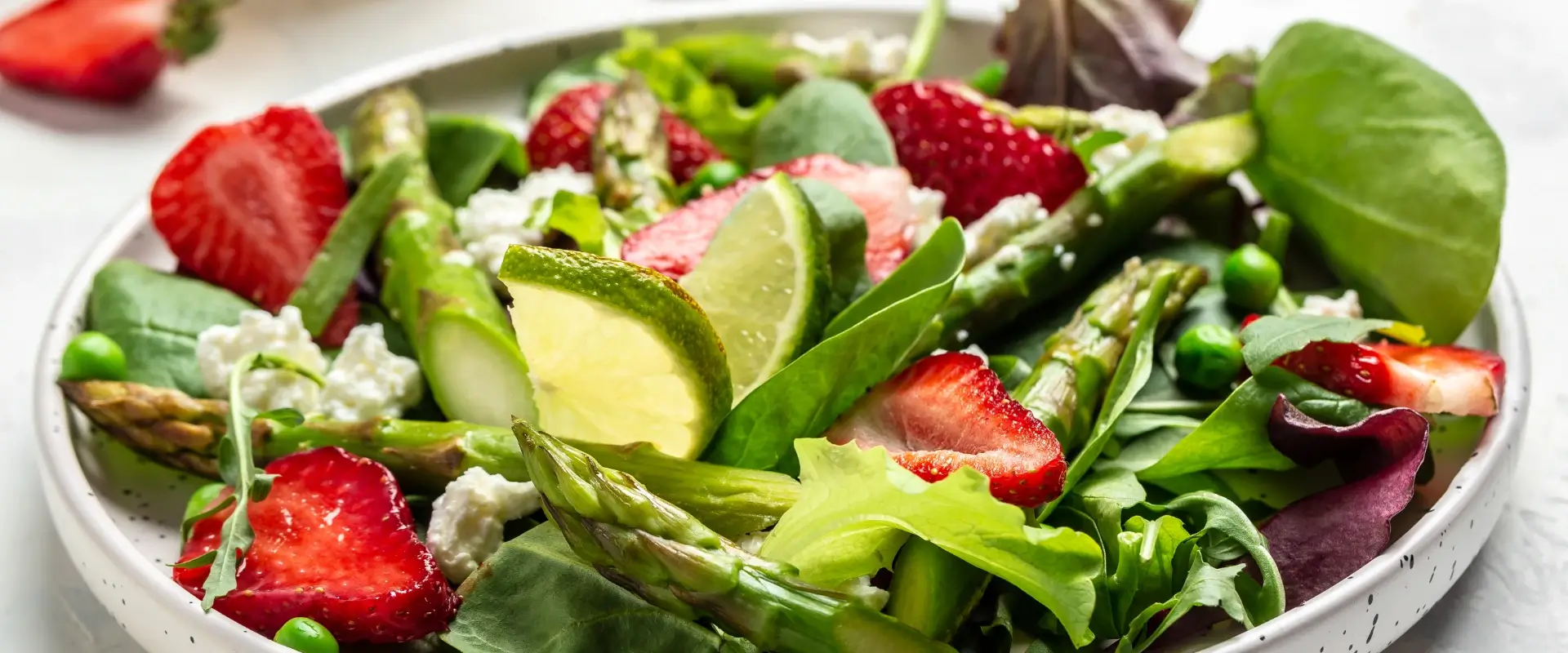

It’s finally here—May. The days are getting longer, the sun is getting warmer, and crops are sprouting up everywhere in the fields and at the markets. Shopping locally now not only saves you money but also benefits your health and the climate. In May, harvest season begins in Germany for many fresh products that go straight from the field to the shelves, enriching our diets with a variety of seasonal delicacies. Thanks to the proximity to local fields and short transport routes, consumers benefit from more intense flavor and greater freshness while also protecting the environment. The benefits of greater availability and freshness in May are reflected in better taste, more nutrients, and a sustainable diet. The May seasonal calendar shows: The selection of local fruits and vegetables is finally becoming truly colorful and diverse—a real treat for food lovers.
Germany’s self-sufficiency rate for vegetables is around 36 percent, and for fruit, it’s as low as 20 percent. This means that by choosing regional products in May, you’re taking advantage of the window when local produce is actually available in large quantities and at unbeatable prices. In May, the selection of fresh fruits and vegetables is particularly abundant, and a wide variety of seasonal products are available directly from regional suppliers.
The following seasonal calendar for May provides a detailed overview of which fruits and vegetables—whether grown locally in open fields, in protected cultivation, or as stored produce—are currently in season. It also includes nutritional information, price trends, and practical shopping tips—tailored specifically to seniors, families, and caregivers seeking a balanced and affordable diet.
Which vegetables are in season in May? An overview of German open-field produce
For many types of vegetables, the outdoor growing season begins in May. This means they grow in the open air, without heated greenhouses, and are particularly flavorful and nutrient-rich. In May, many vegetables such as cauliflower, broccoli, and spring onions are available fresh. The most important seasonal foods in May are asparagus, leafy greens, kohlrabi, radishes, spinach, Swiss chard, spring onions, leeks, peas, fava beans, wild garlic, and rhubarb.
| type of vegetable | Nutritional values per 100 g | Distinctive feature |
|---|---|---|
|
Asparagus (white & green) |
18 calories, 2.0 g protein, 0.1 g fat |
Rich in vitamin K, folate, and potassium. Aspartic acid has a diuretic effect and helps relieve strain on the kidneys. The spears can be boiled, sautéed, or baked and should be prepared quickly to preserve their freshness. |
|
Spinach |
23 calories, 2.9 g protein, 0.4 g fat |
An excellent source of iron and magnesium. Rich in vitamins A, C, and K. Fresh spinach is ideal for use raw in salads or pesto, while fall spinach is better suited for cooked dishes. |
|
Kohlrabi |
27 calories, 1.9 g protein, 0.1 g fat |
It is a top source of vitamin C (63 mg per 100 g). Its dietary fiber aids digestion. Kohlrabi is a type of cabbage whose name derives from its characteristic bulbous shape, and it differs from other cabbages—such as savoy cabbage, white cabbage, and red cabbage—due to its mild, crisp texture. |
|
radishes |
16 calories, 0.7 g protein, 0.1 g fat |
Mustard oils have antibacterial properties, boost metabolism, and aid digestion. They’re perfect for light spring salads. The leaves can also be used—either fresh in a salad or made into pesto. |
|
Fresh peas |
81 calories, 6.5 g protein, 0.4 g fat |
This legume is a good source of plant-based protein and fiber. It’s perfect as a side dish or in stews. |
|
Turnips |
22 calories, 1.0 g protein, 0.1 g fat |
This nearly forgotten vegetable is making a comeback. It contains carotene, vitamin C, zinc, and iron. |
|
Broccoli |
34 calories, 2.8 g protein, 0.4 g fat |
Sulforaphane—a phytochemical that protects cells. It’s also rich in calcium and vitamin C. Like cauliflower, broccoli is a type of cabbage whose name reflects its Italian origins. |
|
Cauliflower |
25 calories, 2.0 g protein, 0.3 g fat |
Low in calories and rich in vitamin C, folate, and vitamin K. The head consists of many small florets protected by green leaves. The head remains white only as long as it is not exposed to the sun—otherwise, it turns yellow or purple. The florets are the edible part; the leaves protect them during cultivation and transport. |
|
Rhubarb |
12 calories, 0.6 g protein, 0.1 g fat |
Strictly speaking, it is a vegetable, but it is usually prepared as a sweet dish. Its season in May is relatively short. It contains potassium, calcium, and vitamin C. The stalks are mainly used in compotes or cakes. |
Other seasonal vegetables in May:
-
Swiss chard: A seasonal leafy vegetable rich in vitamins, minerals, and phytochemicals. Swiss chard is often used as a medicinal plant to treat nervousness and digestive issues and can be used in various recipes, much like spinach.
-
Spring onions: Harvested fresh in May, they have a short shelf life. They contain essential minerals and vitamins that boost the immune system. They are particularly nutritious and can be used in a variety of ways, either raw or cooked.
-
Chinese cabbage: A popular, mild cabbage with a short cooking time that is available fresh in May. Chinese cabbage is great for salads, stir-fries, and soups.
-
Pak choi: Also known as Chinese mustard greens, pak choi is available fresh in May. It can be eaten raw, steamed, boiled, or stir-fried—short cooking times help preserve its freshness and crispness.
-
Iceberg lettuce: The outdoor growing season kicks off in May. Iceberg lettuce is now fresh from the field, crisp, and perfect for colorful salads.
-
Tomatoes: In May, tomatoes are usually grown in greenhouses. Those who prefer seasonal produce can opt for alternatives grown under cover.
Example: A colorful spring salad with fresh spinach, radishes, Swiss chard, and green onions not only adds a splash of color to your plate but also provides plenty of vitamins and minerals.
Salads and herbs grown outdoors in May
May marks the start of salad season, bringing fresh leafy greens and herbs straight from the field. A wide variety of varieties are now available to add variety to your meals and bring freshness and color to your plate. Typical salads of the month include:
-
Lettuce, Lollo Rosso, oak leaf lettuce – crisp classics rich in vitamin A and fiber, whose heads and protective leaves ensure exceptional freshness. The name "lettuce" refers to the round head, which consists of many layers of overlapping leaves.
-
Iceberg lettuce – harvested fresh from the field in May, it stands out for its crisp leaves and is a popular regional spring salad. Its head stays especially fresh thanks to its dense leaves.
-
Arugula —with its sharp, spicy flavor from mustard oils and rich in folate and B vitamins—adds variety to your plate.
-
Lamb's lettuce and endive – nutty flavors rich in iron and magnesium; both differ in taste and leaf shape.
-
Spring onions – available fresh in May, versatile, and particularly healthy from a nutritional standpoint thanks to their vitamins and minerals.
-
Swiss chard, Chinese cabbage, and bok choy —these types of cabbage are also available fresh in May, are packed with nutrients, and can be prepared in a variety of ways. Bok choy, also known as Chinese mustard greens, stays especially crisp when cooked briefly.
-
Wild garlic – with spring just around the corner, fresh wild garlic is now available; its essential oils and sulfur compounds make it perfect for pesto or spring soups.
-
Woodruff – May is its season; it’s traditionally used in fruit punch or as a flavoring in desserts.
-
Chives, mint, sage, thyme, chervil, parsley —a wide variety of fresh herbs are available in May and add flavor and health benefits to your meals.
Example: A fresh salad made with iceberg lettuce, arugula, and green onions, garnished with mint and chives, brings seasonal variety and vitamins to the table.
The benefits of regional produce in May lie in its freshness, short transport distances, and proximity to consumers. From a nutritional perspective, leafy greens and herbs provide many vitamins, minerals, and phytochemicals. Those who take advantage of the variety of seasonal salads and herbs in May will enjoy great taste, health benefits, and sustainability.

Tip from vegetable gardener Constantin Maftei (Gut Wulfsdorf): “It’s asparagus season! In addition to fresh, locally grown produce, flavor is key. I recommend heirloom varieties like Huchel’s Alpha or Schwetzinger Meisterschuss. They don’t always grow perfectly straight, and the tips aren’t snow-white—but they taste delicious. Purple asparagus is an absolute delicacy; its high anthocyanin content has a cell-protective effect.”
Strawberries in May – the first local fruit of the year
Probably the best news on the seasonal calendar for May: the first locally grown strawberries are hitting the market. Starting at the end of the month, field-grown strawberries will be available, peaking from May through July. At the beginning of the season, they usually come from protected cultivation under plastic or fleece—but this is significantly less energy-intensive than a heated greenhouse. Strawberries from storage are no longer available in May, so only fresh produce is offered.
The proximity to local growers ensures that the strawberries are exceptionally fresh and can be served immediately after harvest. In terms of freshness and environmental impact, local strawberries offer many advantages: they are more flavorful, contain more vitamins, and generate fewer CO₂ emissions.
| Nutritional value | Strawberries (per 100 g) |
|---|---|
|
Calories |
32 calories |
|
Protein |
0,7 g |
|
Carbohydrates |
7,7 g |
|
Dietary fiber |
2,0 g |
|
Vitamin C |
62 mg (62% of the daily value) |
|
Folic acid |
65 µg |
|
Potassium |
150 mg |
According to a study by the Heidelberg Institute for Energy and Environmental Research (ifeu), seasonal strawberries grown locally produce only 0.3 kg of CO₂ per kilogram, whereas winter strawberries grown in heated greenhouses produce a whopping 3.4 kg. So if you choose local strawberries in May, you save over 3 kg of CO₂ per kilogram.
May offers a wide variety of strawberry recipes that are perfect for the start of the month. For example: fresh strawberries served as a dessert, such as strawberry quark or as a topping for vegan pancakes. The benefits of locally grown strawberries are clear—they’re not only delicious but also sustainable.
Our tip: Buy strawberries as fresh as possible—from the farmers’ market or straight from the farm. They’re most flavorful this way and should be stored in the refrigerator for no more than 1–2 days after purchase. Wash them just before eating; otherwise, they’ll lose their flavor.
In-stock items in May – your last chance to get local apples
An important note for apple lovers: In May, apples from storage represent the last regional supply. These apples were stored in special storage facilities after the fall harvest to ensure freshness and quality until the end of May. The benefits of storage are that apples stay fresh longer and retain most of their nutrients. During the summer months of June and July, there are practically no regional apples left—at that time, imports from the Southern Hemisphere dominate the market. A tip: Make apple compote or applesauce. It keeps for months and provides valuable pectin and vitamins even in the summer.
In May, there is a wide variety of produce available that adds variety to your meals. Storage apples, beets, and carrots, for example, can serve as a base for salads, soups, or stews, adding seasonal variety to your meals.
Other items in stock in May include:
-
Potatoes – store in a cool, dark place; check for sprouts
-
Carrots, beets, and celeriac —the perfect base for soups and stews—add variety to your diet throughout the month
-
Chicory, white cabbage, red cabbage, savoy cabbage – will keep in the refrigerator for several weeks
-
Onions – store them separately from potatoes, otherwise they’ll sprout faster
An example of proper storage: Radishes should have their leaves removed before being stored in the refrigerator to prevent them from losing unnecessary moisture. Rhubarb stays fresh longer when wrapped in a damp kitchen towel and stored in the refrigerator; it should be eaten or frozen within a few days. Fresh spinach will keep for up to two days in the refrigerator, but it can also be blanched and frozen to extend its shelf life.
From a nutritional standpoint, many of these stored foods offer benefits because they retain important vitamins and minerals even after prolonged storage, thereby enriching the seasonal diet in May.
Prices in May: What's on sale right now?
May brings a wide variety of real bargains and special offers to the market:
-
Asparagus – starting in mid-May, prices drop significantly as the harvest reaches its peak (often falling below €8–10 per kilogram). Consumers benefit the most from these seasonal prices.
-
Rhubarb – available locally for less than €2 a bunch, a perfect example of affordable, fresh produce straight from the field.
-
Radishes and spring onions —the most affordable harbingers of spring, often costing less than €1 per bunch—offer a wide range of options for your meal plan.
-
Lettuce and lamb's lettuce – starting in May, field-grown varieties are cheaper than greenhouse-grown ones, which has a positive effect on supply and prices.
-
Potted herbs —basil, mint, and chives—cost as little as €1.50 at the supermarket and will last for weeks on your windowsill. For example, fresh mint is a versatile and inexpensive way to enhance drinks and salads.
Seasonal produce in May offers a variety of benefits: it adds variety to your meals, is easy on the wallet, and allows you to plan your meals using fresh, locally grown ingredients. Learn more about ideal nutrition for summer now!
Shopping Tips for Seniors and Families
The Home Help Agency understands the challenges of everyday life. For older adults and families with relatives who need care, maintaining a healthy diet isn’t always easy. The benefits of locally sourced products are clear: you get fresh produce, shorter transport distances, and a wide variety of options right in your neighborhood. Here are some helpful tips:
-
A farmers’ market instead of a supermarket: Local producers often offer fresh produce at lower prices and in smaller quantities—ideal for one- or two-person households. In May, the selection ranges from crisp carrots to fresh spinach and aromatic spring onions.
-
Print the seasonal calendar: The Federal Center for Nutrition (BZfE) offers a free seasonal calendar as a poster. Just a glance at the kitchen door—and you can see at a glance what’s in season. For example: In May, a wide variety of seasonal produce—such as Swiss chard, cauliflower, Chinese cabbage, bok choy, iceberg lettuce, and tomatoes—can enrich your meal plan.
-
Preparing and Freezing: Spinach, peas, and asparagus can be blanched and frozen. This way, you can still enjoy regional May-quality produce in June and reap the benefits of a locally grown harvest.
-
Farm stands with delivery service: More and more farms in Germany are offering a delivery service—a real help for those with limited mobility. The selection often includes a wide variety of fresh vegetables straight from the field, frequently still with leaves, stalks, or heads attached.
-
Organic doesn't have to be expensive: Local organic fruits and vegetables from farm stands often cost only slightly more than conventional produce—and are free of synthetic pesticides. The benefits: greater freshness, longer shelf life, and a contribution to environmental protection.