
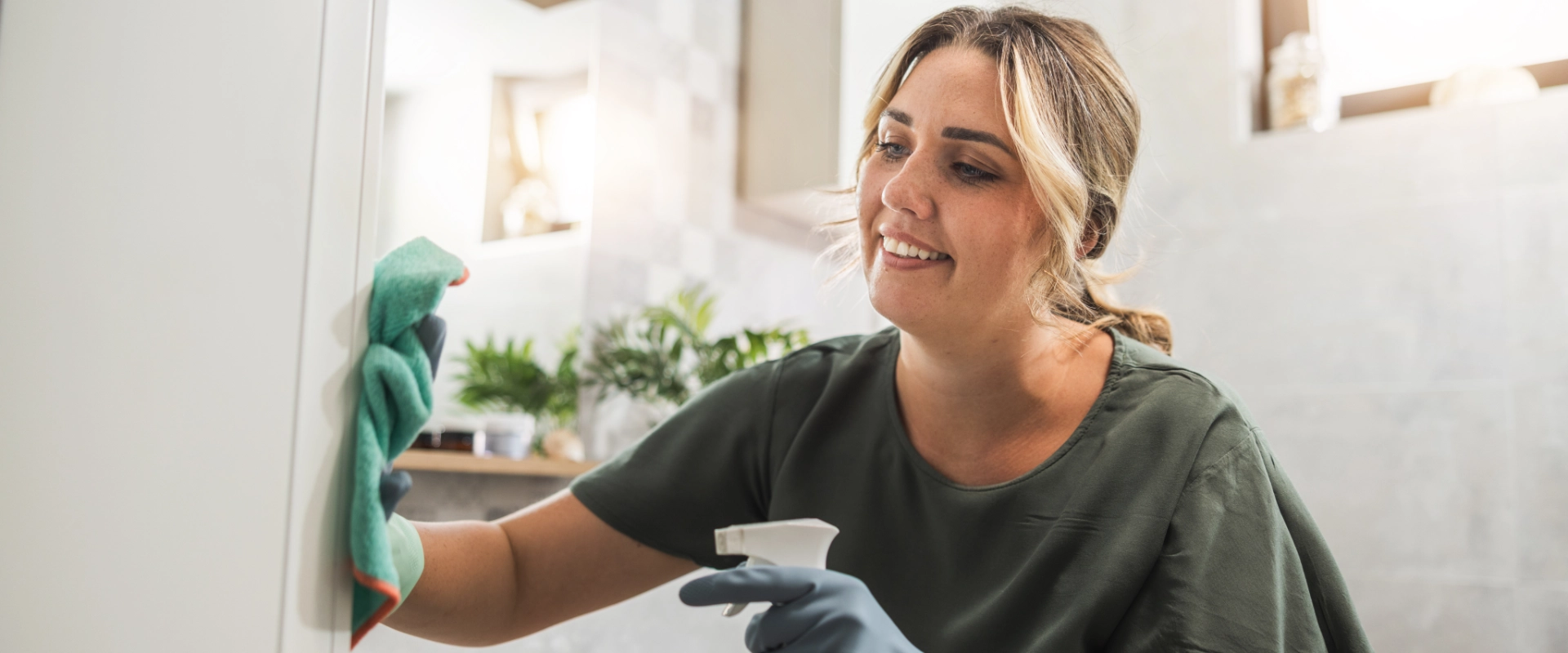

A home help supports people in situations where everyday life at home becomes a challenge, for example due to illness, surgery, old age, the need for care, in families with children or in hectic working life.
This magazin provides a comprehensive overview of all the important aspects: What does a home help do, what tasks does it take on, what are the requirements for costs to be covered, what rights and obligations exist and how high the costs can be.
What is a home help?
A domestic help is a person who takes on support work in a private household. They relieve people who cannot do all the work themselves due to certain cases or life circumstances. They are often professional cleaners, mini-jobbers, freelance helpers or employees of an agency.
For whom is domestic help useful?
A domestic helper can be a valuable support in a wide variety of life situations. After all, it is not always easy to reconcile professional demands, family obligations, health restrictions, or caring for relatives with daily household tasks. Whether you need short-term relief after an illness or long-term help in everyday life, a domestic helper creates space, keeps things tidy, and helps you maintain your usual standard of living.
Families with children - relief in a busy family life
For families with small or several children, everyday life can quickly become an organizational challenge. In addition to work, childcare and family obligations, there is often little time to do the required amount of housework. Especially when both parents work or the children are still very young, a home help can provide much-needed relief.
A domestic help typically takes over in families:
- Regular cleaning of living spaces
- Laundry care, including ironing and sorting
- Cooking or preparing simple meals
- Window cleaning and thorough basic cleaning
- Clean-up and organization
- Support with purchases
It also helps to bring structure into everyday family life, leaving more time for joint activities and relaxation. For many parents, this means a significant improvement in quality of life.
Senior citizens - support for a self-determined life in old age
Older people want to live in their own apartment or house for as long as possible. However, as they get older, doing housework becomes more physically demanding: dusting, window cleaning, floor care or carrying heavy shopping bags are often only possible to a limited extent.
A domestic help fulfills important functions here:
- She takes on physically demanding tasks such as vacuuming or cleaning the bathroom and kitchen.
- She takes care of the laundry, the cooking and the cleanliness of the living areas.
- She can take on smaller gardening tasks, such as watering flowers or sweeping paths.
- It contributes to greater safety in the home by identifying and eliminating tripping hazards.
This help enables people to live independently for longer and relieves the burden on relatives at the same time. An experienced home help also notices quickly if the condition of the person being cared for changes - an important advantage in everyday life when it comes to the classification or upgrading of a care level.
People in need of care and relatives - relief in the demanding day-to-day care routine
People in need of care People need support, often for many hours a day. Relatives who care for their loved ones are physically and emotionally challenged. A home help creates important freedom here and takes on all the work that does not belong to the area of medical care.
Typical tasks in this environment:
- Cleaning the living quarters of the person in need of care
- Organization and preparation of meals
- Laundry care and hygiene measures in the household
- Support with shopping or household organization
- Short accompaniments, e.g. to the doctor or pharmacy (by arrangement)
Even without a care degree Domestic help can be booked, for example privately through an agency. However, if you have a care degree additional financial resources are available from the care insurance fund to pay for domestic help via the relief amount or care benefits in kind.
For relatives, this support means noticeable relief, more time for the actual care and a significant reduction in everyday stress.
People after an operation or during illness - help on medical prescription
After a major operation, during the course of an acute illness or due to a chronic illness, many people are temporarily unable to manage their own household. This is exactly where home help comes into play, providing support and relief and often even being covered by health insurance.
The important thing is:
- The doctor issues a prescription for home help.
- Depending on the situation, the health insurance company will cover some or all of the costs.
- The prerequisite is that no other person living in the household can step in.
- Easier rules apply for families with children under the age of 12.
Typical benefits in this case:
- Cleaning the apartment, especially areas such as the bathroom and kitchen
- Taking over laundry and textile care
- Shopping help and cooking
- Support for light everyday journeys
- Keeping tidy, making beds, removing dust
- Basic care for pets
Example:
After a hip operation a person is not allowed to lift heavy objects or bend over for several weeks, so a home help takes over laundry baskets, cleaning or changing the bed linen completely.
Especially after an operation this relief is crucial in order to avoid complications and to be able to recover fully.
What does a home help do? - Typical areas of responsibility
Here you will find a clear list of the most important tasks of a domestic help that are permitted and common within the framework of professional standards.
Cleaning and order
- Cleaning of all rooms
- Removing dust from furniture, surfaces and walls
- Kitchen and bathroom cleaning
- Window cleaning
- Basic cleaning of heavily used areas
- Floor maintenance (vacuuming, mopping)
Laundry and textiles
- Washing and drying laundry
- Ironing and folding
- Changing the bed linen
Cooking and meals
- Preparing simple meals
- Grocery shopping
- Organization of stocks
General housework
- Tidying up and sorting
- Disposal of waste
- Caring for pets (feeding, short walks)
Gardening
- Support with gardening work such as lawn mowing or watering
- Care of flowers, plants or flower beds
Support during housekeeping
The activity does not involve direct care, but a home help can provide support, e.g:
- Accompaniment to medical appointments
- Support with purchasing
- Assistance in everyday life
Limits: What is a home help not allowed to do?
Clear boundaries are important to ensure that both the employer and the helper act in accordance with the law.
The following are not permitted:
- Medical care services (measuring blood pressure, administering medication)
- Personal hygiene for people in need of care
- Dangerous work (e.g. on high walls, on ladders without protection)
- Repairs or manual work
- Intensive animal care or professional garden maintenance
Why these boundaries are important
These rules protect both the person helping and the household and ensure that insurance policies are effective in the event of damage.
Support in the household: in which cases are I entitled?
The question of entitlement is crucial for many.
When does health insurance or care insurance cover the costs?
Home help via the health insurance fund
The health insurance company pays in many cases if:
- an illness or operation that makes housekeeping impossible
- No other person living in the household who can take over tasks
- for families: if a child under the age of 12 lives in the household
Example:
After a knee operation, household help can be prescribed for several weeks.

Home help from the care insurance fund
In the event of a need for care, the care insurance fund provides support within the framework of the relief amount or other benefits:
- 131 € monthly relief amount
- Can also be combined with long-term care benefits in kind
- Prerequisite: recognized degree of care
Professional domestic help vs. mini-jobbers - what's the difference?
Many people wonder whether they are better off working as a mini-job in a private household or whether they should hire a professional agency.
Mini-jobbers in private households
Advantages:
- often cheaper
- Flexible to use
Obligations for employers:
- Registration with the mini-job center
- Assumption of duties
- Compliance with labor law regulations
Professional cleaners through an agency
Advantages:
- Certified cleaning staff and domestic help
- More security, e.g. through liability insurance
- Clearly defined areas of responsibility
- Replacement will be organized in case of failure
What does domestic help cost?
The common question "How much does domestic help cost?" cannot be answered in general terms.
The costs depend on:
- Type of help (mini-job, agency, commercial cleaner)
- Region
- Frequency (weekly, daily, occasionally)
- Scope of activities
- Additional services such as window or garden maintenance
Average costs
- Minijobber: 12-18 € per hour
- Agency: 25-40 € per hour
- Specialists for basic cleaning: 35-60 € per hour
- Window cleaning: Flat rate or per window, e.g. €2-4/window
What requirements must be met?
Certain conditions apply to the assumption of costs:
With the health insurance company
- Medical certificate/prescription
- Temporary restriction of household management
- No other person in the household who can help
- in some cases: Children in the household
With the long-term care insurance fund
- Recognized care level (at least care level 1)
- Services must be usable within the scope of respite or care benefits in kind
- Only approved providers can be billed
Tasks of a domestic help in various life situations
A home help can provide support in various situations and can therefore help people in different circumstances.
In case of illness
When everyday life can no longer be managed without help:
- Budget takeover
- Light care services
- Shopping and cooking
- Kitchen and bathroom cleaning
After an operation
- Support for activities that are difficult with limited mobility
- Example: No turning movements → Household help takes care of the laundry and cleaning
In the event of a need for care
- Supplementary care assistance
- Relief for family caregivers
- Organization of meals and housekeeping
In families
- Cleaning, shopping, laundry
- Delivery and collection services
- Supportive supervision with school or organizational tasks
For seniors
- Household help as permanent support
- Structure in everyday life
- Elimination of physically demanding work
Hiring domestic help - how should you proceed?
Hiring domestic help is an important step that can make everyday life noticeably easier. To ensure that the support is reliable, suitable and legally secure, it is worth taking a structured approach. From clarifying personal needs and choosing the right form of help to the contract, task list and costs. If you make the right decisions in advance, you will benefit from smooth cooperation later on.
Needs analysis
- What are the regular tasks?
- How often is support needed?
- Are there any special requirements (pets, garden, windows)?
Selecting the type of support
- Minijobber
- Professional cleaner
- Agency for domestic help
Contract design
- Clear definition of activities
- Working hours
- Remuneration
- Regulations on borders and security
Advantages of a professional domestic help agency
- Certified employees
- Fixed contact persons
- Organized representation
- Transparent costs
- Advice on financing issues
- Help with applying for benefits
Frequently asked questions about domestic help
Is a domestic helper just a cleaner?
No. The duties of a domestic help include much more than just cleaning.
Can the domestic help look after pets?
Yes - basic care such as feeding is allowed. Complex animal care is not.
Does the health insurance company always cover the costs?
Only if the requirements are met and a medical certificate is available.
Conclusion: domestic helpers offer relief and security
A domestic helper can do a lot and is a valuable support in many situations. Whether it's cleaning, cooking, laundry, windows, gardening or looking after small pets. The variety of possible activities makes them an important help in the household. At the same time, there are clear rules about what domestic help is not allowed to do, as well as good opportunities for financial relief through health insurance or care insurance.