
When Mr. B. was diagnosed with Parkinson’s disease, his first thought wasn’t the disease itself, but the fear of losing his home. “How am I supposed to manage if my hands don’t work anymore?” he asked his daughter. This is a concern shared by many people living with Parkinson’s. We explain what the disease entails, how it progresses, and highlight the support available to help ensure that daily life remains manageable. This article is intended for people with Parkinson’s, their loved ones, and anyone who would like to learn more about the disease.
What Is Parkinson's Disease? A Brain Disorder
Parkinson's disease, also known as Parkinson's syndrome or tremor paralysis, is considered the second most common neurodegenerative disorder in neurology after Alzheimer's disease. In Germany alone, more than 400,000 people are affected.
What happens in the brain?
At the heart of the disease is the progressive loss of nerve cells in a small but crucial region of the brain: the substantia nigra in the midbrain. These nerve cells produce dopamine, a neurotransmitter responsible for controlling movement in the brain. When dopamine levels drop, movement patterns become disrupted.
At the cellular level, a misfolded protein called alpha-synuclein accumulates in nerve cells and forms what are known as Lewy bodies. To date, this degeneration of nerve cells is incurable, but it can be treated.
Causes: Why Do People Develop Parkinson's Disease?
The exact causes of Parkinson's disease are not yet fully understood. Based on current knowledge, several factors are involved:
- Age: The average age at onset is between 60 and 65 years.
- Genetics: Genetic factors play a significantly greater role in cases where the disease begins at an early age.
- Environmental factors: According to current knowledge, environmental toxins such as pesticides increase the risk of Parkinson's disease.
Experts believe that the onset of the disease is usually caused by a combination of genetic predisposition and external factors.

Symptoms: How Parkinson's Manifests Itself
Symptoms generally develop slowly over the course of years—a gradual process that is often not recognized as a coherent picture by those affected and their families until it is too late.
Motor symptoms
Classic motor symptoms include:
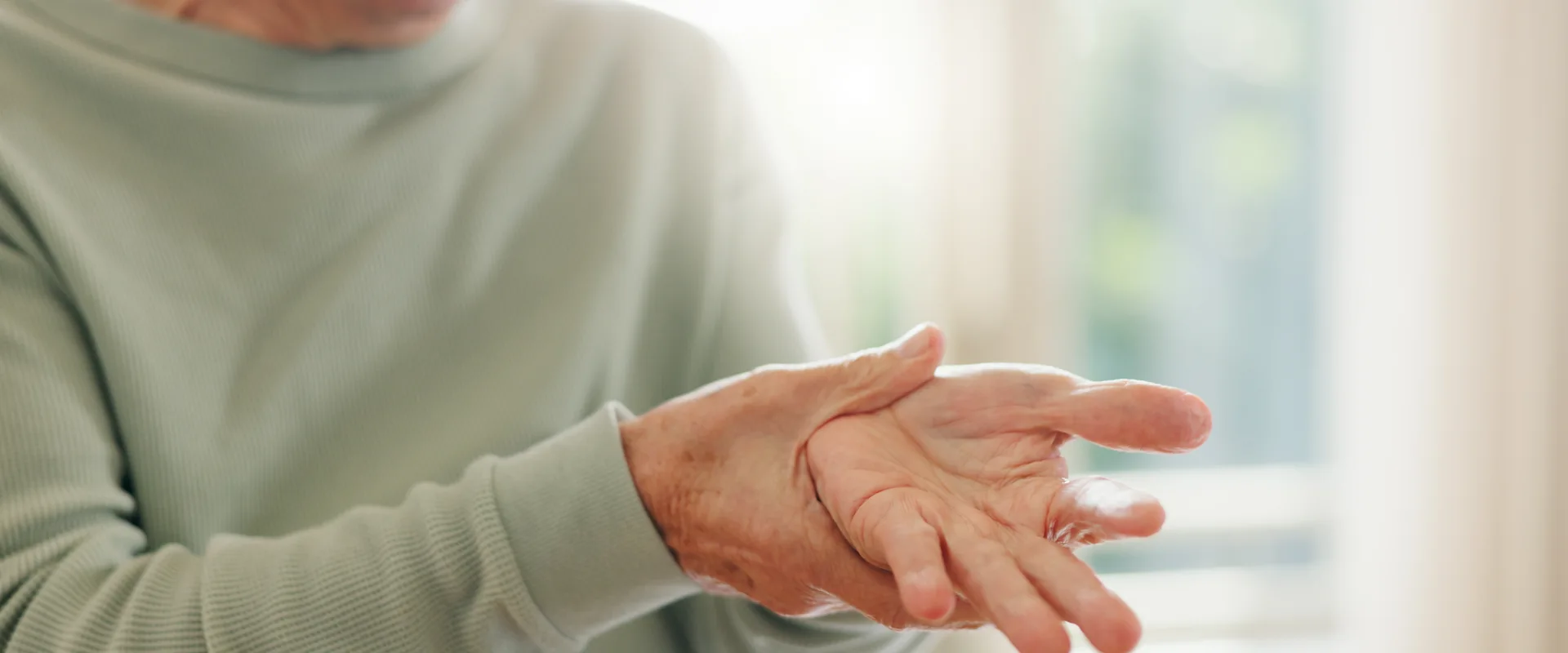
- Tremor: the characteristic shaking, usually starting on one side of a hand
- Muscle stiffness
- Slowing Down Movements
- Progressive gait disturbances as the disease progresses
Early Signs—Often Years Before Diagnosis
Non-motor symptoms often appear long before the actual movement disorders become apparent:
- Disorders of the Sense of Smell
- Sleep disorders, particularly REM sleep behavior disorders
- Depression
- Constipation
These early signs are easily overlooked or attributed to other causes. Anyone who notices several of these symptoms in themselves or a loved one should consult a neurologist.
Diagnosis: How Is Parkinson's Disease Diagnosed?
Parkinson's disease is diagnosed primarily through clinical evaluation, that is, through physical and neurological examinations conducted by a neurologist. A supplementary test is the L-dopa test: if symptoms improve significantly after administration of the medication, this is indicative of Parkinson's disease.
Course of the Disease: The Five Stages
In medicine, the progression of Parkinson's disease is often described using the five-stage Hoehn and Yahr scale. It helps to classify the progression of the disease:
- Stage 0: No noticeable symptoms of the disease.
- Stage 1: Symptoms mostly occur on only one side.
- Stage 2: symptoms on both sides, mild gait disturbances.
- Stage 3: Increasing balance problems, but still largely able to live independently.
- Stage 4: Symptoms are severe, and the ability to live independently is significantly limited.
- Stage 5: Full assistance and care become necessary.
Important to know: Not everyone with Parkinson’s disease progresses through these stages at the same rate. In some patients, the disease progresses only slowly over many years, while in others it progresses more rapidly. The effectiveness of medication can also fluctuate over time. Such fluctuations are a well-known phenomenon and should always be monitored by a doctor.
Complications Later On
As the disease progresses, complications may arise. For example, over 80% of patients develop swallowing difficulties, which in turn increases the risk of pneumonia—one of the most common causes of a more severe course of the disease.
Life Expectancy with Parkinson's: What Does the Prognosis Say?
One of the most common questions asked by people with the condition and their loved ones concerns life expectancy. The honest answer: It depends heavily on the individual’s course of the disease.
- The median survival time after diagnosis is about 15 years.
- Compared to the general population, life expectancy among people with Parkinson's is, on average, slightly shorter.
- However, with proper treatment, many Parkinson's patients achieve a life expectancy that is nearly normal.
- IfParkinson's dementia also develops, the median life expectancy is only 4 to 5 years.
- Cognitive impairments generally increase the risk of death.
- Interestingly, older patients often exhibit milder symptoms than younger patients.
These figures are averages, not a foregone conclusion. Treatment, exercise, and a well-organized daily routine make a noticeable difference.
Treatment and Therapy: What Is Possible Today
Although Parkinson's disease is currently incurable, treatment aims to alleviate symptoms and maintain quality of life for as long as possible.
Medication
The primary goal of drug therapy is to correct the dopamine deficiency in the brain, usually through the administration of L-dopa or related active ingredients.
Additional Therapy Components
- Physical therapy has been shown to improve the quality of life for people with Parkinson's disease.
- Occupational Therapy provides targeted support for fine motor skills and coordination in everyday life.
- Speech therapy helps with speech and swallowing disorders.
Because these components work most effectively in combination, they are often combined for many patients in what is known as “comprehensive Parkinson’s therapy.” Instead of individual appointments, patients receive a coordinated treatment plan. If medication alone is no longer sufficient in advanced cases or if the medication’s effects fluctuate significantly, deep brain stimulation can also be an effective option: In this procedure, fine electrodes implanted in specific regions of the brain regulate the misdirected signals, thereby alleviating tremors, rigidity, and fluctuations in movement.
In addition to medical treatment, much of the impact is in your own hands: Regular physical activity and exercise have been shown to positively influence the course of the disease, maintain muscle mobility, and also improve mood. In addition, digital aids such as sensors in wristbands or shoe soles are becoming increasingly important: They detect the risk of falls early on and provide data that can be used to continuously optimize treatment.
When Everyday Life Becomes a Challenge: Support That Lasts
Amid diagnoses, doctor’s appointments, and treatment plans, one question often goes unanswered: Who actually helps with the day-to-day tasks—like shopping, cooking, and doing laundry—when your hands and legs don’t work as well as they used to?
Ms. K. knows this issue all too well. After her husband was diagnosed with Parkinson’s, she realized that the disease affects not only his movements but the entire family’s life. Household chores were left undone, grocery shopping became a struggle, and her concern grew that a move to a nursing home might be inevitable.
The family learned from the long-term care insurance provider that they are entitled to a home care aide, even starting at Care Level 1, funded by the relief allowance. Together, we reviewed which services were available, and soon an experienced home care aide was at our door.
Now, everyday life is back on track: The apartment is clean, the fridge is stocked, we accompany him to his doctor’s appointments, and Mr. K. can focus on what really matters: his health and spending time with his family. That’s exactly why we’re here.
Frequently Asked Questions About Parkinson's Disease
How many people are affected by Parkinson's disease? In Germany, more than 400,000 people have been diagnosed with Parkinson's disease, one of the most common neurological disorders among the elderly.
Is Parkinson's hereditary? Genetic factors play a major role, particularly in cases of early-onset Parkinson's, but they are not the sole cause.
Can the progression of Parkinson's disease be influenced? Yes. Regular exercise, physical therapy, and consistent medication management can positively influence the progression of the disease and significantly improve quality of life.
Are people with Parkinson's entitled to home care assistance? Depending on their care level, many people with Parkinson's are entitled to home care assistance or support with daily living activities.