
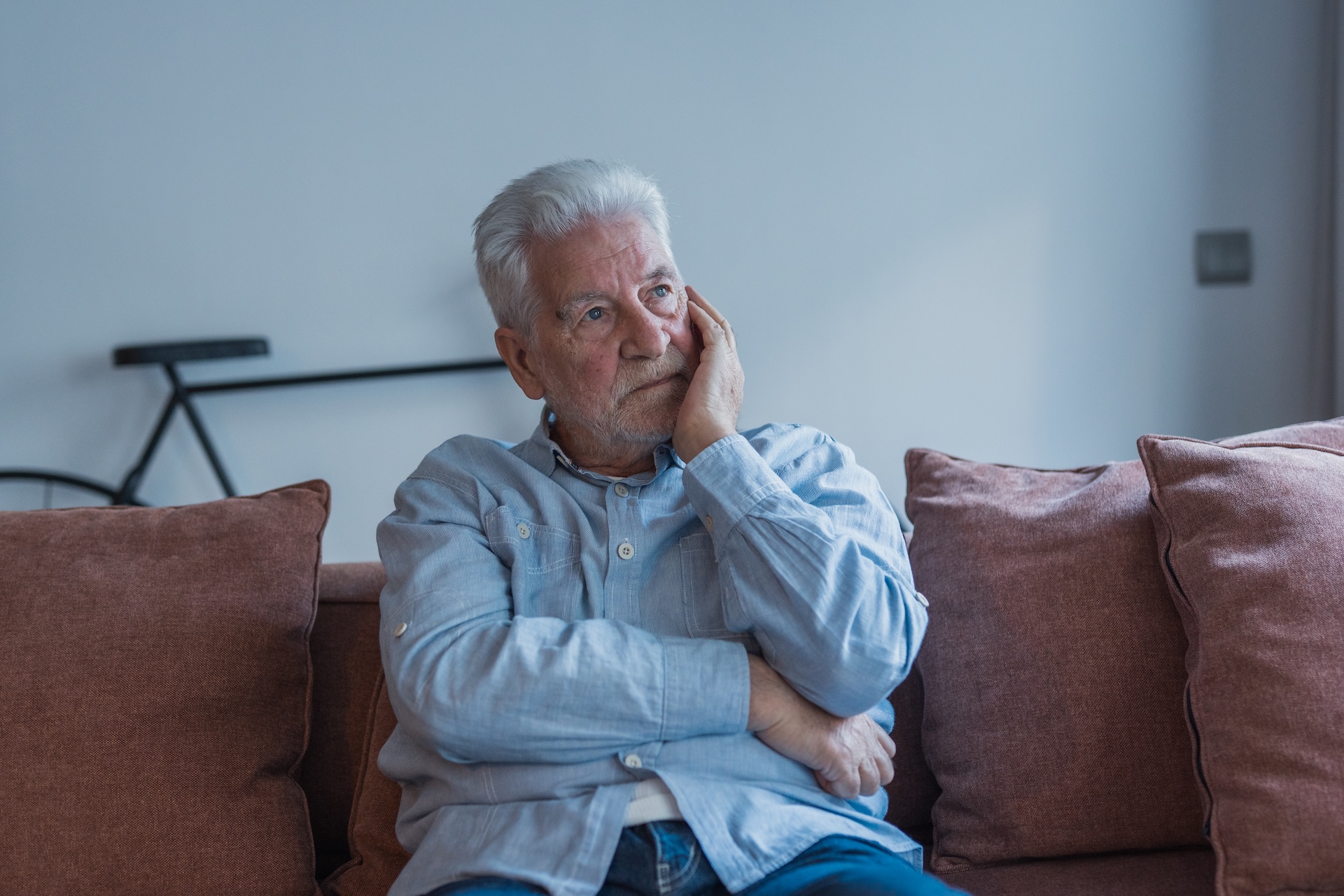

When Mr. K. visited his father after his 80th birthday, he barely recognized him. The man who had always been open to discussion suddenly became stubborn about trivial matters, reacted irritably to well-meaning suggestions, and refused any help around the house—even when the stairs in his own home had become a challenge for him. “This isn’t my father anymore,” Mr. K. thought that evening. What he didn’t know was that this change in behavior has a name: age-related stubbornness, and it affects far more people than one might think at first glance.
When parents, grandparents, or other close relatives suddenly start behaving differently than usual as they age, children, grandchildren, and other family members are often at a loss. Changes in personality as people age are among the topics that families rarely discuss openly—out of shame or uncertainty, and sometimes because no one knows how best to broach the subject.
This article at magazin explains what lies behind age-related stubbornness, how to recognize it, how it differs from dementia, and, above all, how to interact with it sensitively in everyday life.
What Is Stubbornness in Old Age? A Definition
"Old-age stubbornness" is not a medical diagnosis, but rather a colloquial term for a change in personality that occurs with age, characterized primarily by stubbornness, withdrawal, and a stubborn refusal to accept new things. The term describes the tendency of many older people to cling to cherished habits and rituals and to be reluctant to accept changes in their daily lives.
For family members , this often feels like a change in personality: a person who was once flexible and easygoing becomes someone who reacts with resistance as soon as anything in their usual routine is set to change.
This phenomenon is a normal part of aging and does not necessarily indicate an illness. Nevertheless, stubbornness associated with aging should not be hastily dismissed as a “completely normal part of the aging process” if other symptoms—such as forgetfulness, aggression, or a changed perception of one’s surroundings—also occur. In such cases, a more thorough evaluation by a healthcare professional may be advisable, for example, to rule out dementia.
Causes: Why Does One's Personality Change with Age?
The reasons for personality changes in old age are varied and rarely attributable to a single cause. In most cases, they result from a combination of physical, psychological, and social factors:
- Physical Limitations: Starting around age 75, many people begin to experience physical and mental limitations that slow down their usual pace of daily life. If you notice that hearing, vision, or mobility are declining often react by withdrawing or becoming defensive out of fear of irreversibly losing their independence.
- Loss and Grief: The loss of a partner, close friends, or familiar social contacts can trigger deep feelings of uncertainty and grief. During this stage of life, many older adults experience several significant changes in their immediate circle in quick succession.
- Fear of losing control: When people realize they are dependent on the help of others, they often perceive this as a threat to their independence. Clinging rigidly to habits then becomes a kind of defense mechanism for maintaining their autonomy.
- Changes in Life Circumstances: Moving into a nursing home, the children moving out, or even just a new caregiver in one’s own home can be perceived as a major disruption to one’s usual routine.
So, stubbornness in older adults is often rooted in fears or frustrations that aren't openly expressed. On the other hand, routines provide older adults with a sense of security and help alleviate fears in everyday life, which is why many react so sensitively when those very routines are called into question or changed.

Aggression, too, can be better understood from this perspective: It is usually a reaction to a feeling of powerlessness. When people realize that everyday tasks—such as opening a jar, reading a newspaper, or remembering a name—suddenly aren’t as easy as they used to be, they often find this humiliating. This shame often gives rise to a defiant, defensive reaction that appears to outsiders as sheer stubbornness, but at its core is an expression of vulnerability.
Recognizing Signs and Behaviors
Not every mood swing or bad day is necessarily a sign of age-related stubbornness. However, family members should take notice if certain behavioral changes persist over a longer period of time. Typical signs include:
- Stubbornness and inflexibility: Older people tend to reject change outright, even when it would clearly be beneficial.
- Aggressiveness and Malice: Aggressiveness and stubbornness are among the most common signs of senile obstinacy. Irritability, harsh remarks, or unusual malice toward others may also be present.
- Some people affected by this condition develop a growing distrust of family members, caregivers, or even longtime friends.Older adults often refuse offers of help, even when there is a genuine need.This can go as far as consistently refusing important assistive devices such as a walker or a hearing aid.
- A disrupted sleep-wake cycle can be both the cause and the result of a change in personality and further exacerbates irritability. The person avoidscontact with other generations, relatives, or friends, even though social interaction would actually be beneficial.
These behavioral symptoms rarely occur in isolation but usually as a combination of several signs at the same time. Depression in older adults plays a significant role in this context. Studies show that up to 40 percent of seniors in nursing homes develop depression in old age, compared to about 20 percent of people living in their familiar surroundings. Untreateddepression in old age can manifest outwardly in a manner very similar to age-related stubbornness, which makes careful observation difficult.
Stubbornness Due to Old Age or Dementia? The Key Differences
One of the most pressing questions for family members is: Is this just normal stubbornness that comes with age, or is it already a sign of dementia such as Alzheimer’s ? There are, in fact, significant differences between age-related stubbornness and dementia.
Age-related stubbornness is characterized primarily by a change in personality that manifests as obstinacy, withdrawal, and resistance to new things.Memory usually remains intact, and those affected are aware of their behavior. In contrast, dementia is accompanied by progressive memory problems, increasing forgetfulness in daily life, disorientation, and more profound personality changes that go beyond mere stubbornness.
While stubbornness associated with aging can be a sign of dementia, it is not necessarily so. However,a sudden, significant change in personality that occurs within a few weeks or months should be taken seriously and not dismissed as “typical of old age.” Especially in cases of sudden personality changes, it is advisable to see a doctor to rule out other illnesses or treatable causes.
An example from everyday family life
A vivid example illustrates the effects of age-related stubbornness in everyday life. Mrs. B., 79 years old, lived alone in her house after her husband’s death. Over time, her daughter noticed that her mother, who had once been sociable and good-humored, was becoming increasingly suspicious of neighbors and even her own granddaughter. When Mrs. B. indignantly rejected her daughter’s suggestions to hire a housekeeper, declaring, “I don’t need anyone; I can manage on my own,” signs began to mount that this was no longer the case. The refrigerator remained empty, appointments were forgotten, and the laundry piled up.
The daughter faced a dilemma: Should she make the decision for her mother, or should she respect her mother’s strong sense of independence? The turning point came when the daughter stopped making decisions over her mother’s head and instead sought to talk things through with her. She explained that help with household chores was not a sign of weakness, but could actually help her mother maintain the independence that was so important to her.
After several conversations, Ms. B. finally agreed to give it a try. Today, a home health aide comes twice a week to help with grocery shopping and accompany Ms. B. to doctor’s appointments. Her initial resistance has given way to a new routine, which Ms. B. now sees as a relief rather than a loss of control. Many families experience similar situations: whether with their own father, grandfather, grandmother, or an aunt, the dynamic of stubbornness, fear of being controlled by others, and ultimately a cautious opening up repeats itself in many families in a similar way.
The Role of the Family: Between Closeness and Boundaries
Stubbornness in old age rarely affects just one person; rather, it changes the entire family dynamic. Every relationship within the family—whether between parents and children, grandparents and grandchildren, or other relatives—brings with it its own history, unresolved issues, and sometimes old conflicts that can resurface as the family deals with this new situation. Children who suddenly find themselves in the role of caregivers for their parents often experience this as a reversal of familiar roles—an experience that many describe as emotionally taxing.
Conflicts often arise within the family in particular, and these have less to do with the actual issue at hand than with old patterns: Who has always been the level-headed one, and who the stubborn one? Who has never liked being told what to do? These patterns persist even in old age and sometimes make it difficult to take a clear-eyed look at the current situation.
It helps when family members coordinate with one another rather than each acting on their own. A group discussion in which everyone involved—siblings, children, and sometimes close relatives—sits around the table can provide clarity: Who will take on which task? Where does it make sense to seek additional outside support? And above all: How can we prevent a single person from shouldering the entire burden alone?
Those affected also benefit from this open dialogue. Many older adults are very attuned to when decisions are made without their input, and they react defensively as a result. However,if theyare actively involved—even if that means discussions take longer or need to be held multiple times—they become more willing to even consider new options in the first place.
Tips for Dealing with Stubborn Family Members
Dealing with stubbornness in older adults requires one thing above all else: patience. An empathetic approach is crucial for dealing with stubbornness in older adults constructively, rather than exacerbating conflicts. The following tips have proven effective in practice:
Respect routines and incorporate new elements gently. Routines and clear structures are extremely helpful in dealing with age-related stubbornness. Instead of abruptly changing familiar routines, it’s better to gently integrate new forms of assistance into existing routines rather than replacing them entirely.
Empathetic communication instead of confrontation. Empathetic communication is far more effective at fostering acceptance among stubborn people than pressure or ultimatums. Questions like “What would help you?” open more doors than statements like “You really need to…”
Show recognition and appreciation. Many behaviors in old age stem from the fear of no longer being needed. Recognizing and appreciating a person’s life so far—their experiences and decisions—greatly lessens the power of this fear.
Promote independence rather than patronizing people. Whenever possible, the focus should be on the individual’s independence. Help should be presented as support, not as taking over.
Small steps instead of major changes. Instead of immediately proposing comprehensive support, even a little help with everyday tasks—such as grocery shopping or dealing with government agencies—can serve as a first step that those affected can get used to.
Don’t forget about yourself. Family members often find themselves caught between a rock and a hard place: the desire to help and the exhaustion caused by constant conflicts. If you notice that your own strength is waning, don’t hesitate to seek professional help to ease the burden—both for the person affected and for yourself.
Choose the right moment. Important conversations about getting help with daily life rarely go well when rushed. A quiet moment when everyone involved can take their time reduces the likelihood that the situation will escalate into a full-blown argument.
Don't take every reaction personally. A harsh word or a dismissive gesture is rarely directed at the person who is trying to help. Often, it is the situation itself—the palpable loss of control over one's own affairs and decisions—that triggers this reaction. If you keep this in mind, it will be easier to stay calm.
When It's a Good Idea to Seek Medical Help
Not every change in behavior requires an immediate visit to the doctor. However, you shouldn't wait too long if you notice the following signs:
- A sudden, marked change in behavior occurs within a short period of time.
- Stubbornness is accompanied by increasing forgetfulness or disorientation.
- Aggressive behavior increases noticeably or becomes dangerous to the person affected or to others.
- Signs of depression in older adults, such as a lack of motivation, social withdrawal, or hopelessness, begin to appear.
- The sleep-wake cycle changes significantly.
The primary purpose of a doctor’s visit is to rule out other illnesses and, if necessary, to initiate the appropriate treatment early on. For family members, this step can also be a great relief, as clarity about the cause often provides more reassurance than uncertainty.