

Depression in the elderly is quite common, but is often overlooked or misjudged. Depression in older people has its own characteristics that can make it difficult to recognize. Often relatives, doctors or carers consider depression to be a natural consequence of ageing or associate it with dementia.
It becomes particularly difficult when the person affected is already suffering from physical ailments that limit mobility and access to medical care. It is important to recognize depression in its early stages, understand its unique characteristics and seek professional help to get the right treatment for those affected. Depression can be treated in older people, and everyone deserves compassion and understanding in the fight against this mental illness.
Symptoms and frequency of depression in old age
Depression does not have to be an inevitable part of getting older. Contrary to popular belief, studies on the mental health of older people confirm that severe forms of depression are less common in older adults than in younger people. The study by the Robert Koch Institute (DEGS) on the health of people aged 18 to 79 in Germany found that only 8.1% of them suffered from severe depression within a year. Among 70- to 79-year-olds, this rate has fallen to 6.1%, which is a major achievement, but even milder forms of depression or subclinical depression are more common among seniors and have serious consequences for their physical health and quality of life.
The issue of depression in old age is complex, particularly when the symptoms of depression overlap with physical illnesses caused by the stresses of ageing. Depression can be difficult to recognize due to its many manifestations, with sleep or drive disturbances being two of the most common expressions. To make matters worse, these types of symptoms can occur as part of a physical illness without the presence of an independent depressive illness. It is therefore important to look out for more subtle signs.
Age-related depression: additional symptoms alongside the classic symptoms of depression
People with depression perceive many real-life circumstances as particularly threatening. Younger people with depression are particularly affected by fear of work pressure. Older people with depression are particularly affected by fear of health problems. For example, back pain or noises in the ear are perceived as increasingly stressful and exacerbate depression.
Many people worry about dementia, especially if they have problems concentrating or understanding. However, if the doctor doesn't ask about the psychological symptoms of depression, such as hopelessness, guilt, social isolation or suicidal thoughts, the underlying illness may be overlooked and not treated properly. Therefore, it is important that all adults know what signs and symptoms to look out for when it comes to depression and dementia.
Physical complaints can really affect a person's well-being. It can be physical pain, sleep disturbances or digestive problems. These physical ailments can be frightening for seniors as they don't yet fully understand why their body hurts and it is beyond their control. In addition, while older people may have physical illnesses, they may also be reluctant to accept mental illness or see it as something separate because of the stigma attached to it. Here it is particularly important to take a caring and empathetic approach and always convey the feeling that depression is not an invented disease of the modern age. We must not forget that the generation affected grew up in completely different circumstances and that there was no room for mental illness in society. In this generation, mental illness is often still seen as a sign of weakness, a lack of willpower and is exclusively associated with a person's failure. Take this to heart when communicating with those affected and show them that there are possibilities and that it is not a bad thing.

Age-related depression: Diganostics
Geriatric depression is a serious problem, and when it comes to elderly patients, an accurate diagnosis must be made. Fortunately, there is a special questionnaire, the Geriatric Depression Scale (GDS), which was developed specifically for this group of people. There are now even studies in German-speaking countries!
However, when diagnosing age-related depression in older people, doctors or therapists should not forget to rule out any physical illnesses that may be at play. For example, an MRI scan or other laboratory tests can help to identify thyroid disorders that could be causing the depression.
Depressive disorders in old age can be difficult to recognize and diagnose due to the similar symptoms to dementia. Depressive pseudodementia can be recognized by inhibited speech and thinking, concentration problems and memory problems. Depressed older people often feel overwhelmed by their inability to concentrate, which can manifest itself in statements such as "I don't know".
It is important that those suffering from the effects of such a disorder seek professional help and support. Talking to a counselor or psychologist can offer treatments aimed at improving slow thinking and speech, concentration and memory problems. You should always be kind to those affected by depressive disorders: understanding their plight is sometimes half the battle!
Distinguishing between depression and dementia can be difficult as they share many of the same symptoms. However, a key difference seems to be how they deal with their own emotionally charged experiences. Depressed patients tend to express their underlying sadness with words, while dementia sufferers may downplay or even ignore it. Medical tests such as EEGs and imaging techniques such as CT scans/MRIs can help us make a more informed diagnosis. Ultimately, however, it is up to the healthcare professional to use all the information available to us to determine exactly what disease is present.
Treatment of depression in old age
The treatment of depression is crucial regardless of your age. It is very important that the doctor chooses the right antidepressant, as older patients may already be taking more than one medication. Both medication and psychotherapy have been shown to be effective in treating depressive illness in older patients, and it is important that older people have access to quality treatment so that they can lead healthy lives.
Treating depression in older people is more complicated than in younger patients, but it is particularly important and requires consistent attention. Fortunately, there is strong evidence that older people can also benefit from psychotherapeutic interventions such as cognitive behavioral therapy, but shockingly only 6% of patients over 60 receive such treatment. Mental health in old age should be taken seriously and treated well; the risk of bedriddenness and suicide is significantly increased in older people, making treatment all the more important. It is vital that we prioritize the mental health needs of our older citizens and provide them with the accurate diagnosis and effective treatment they deserve.
Old-age depression: Suicide in old age
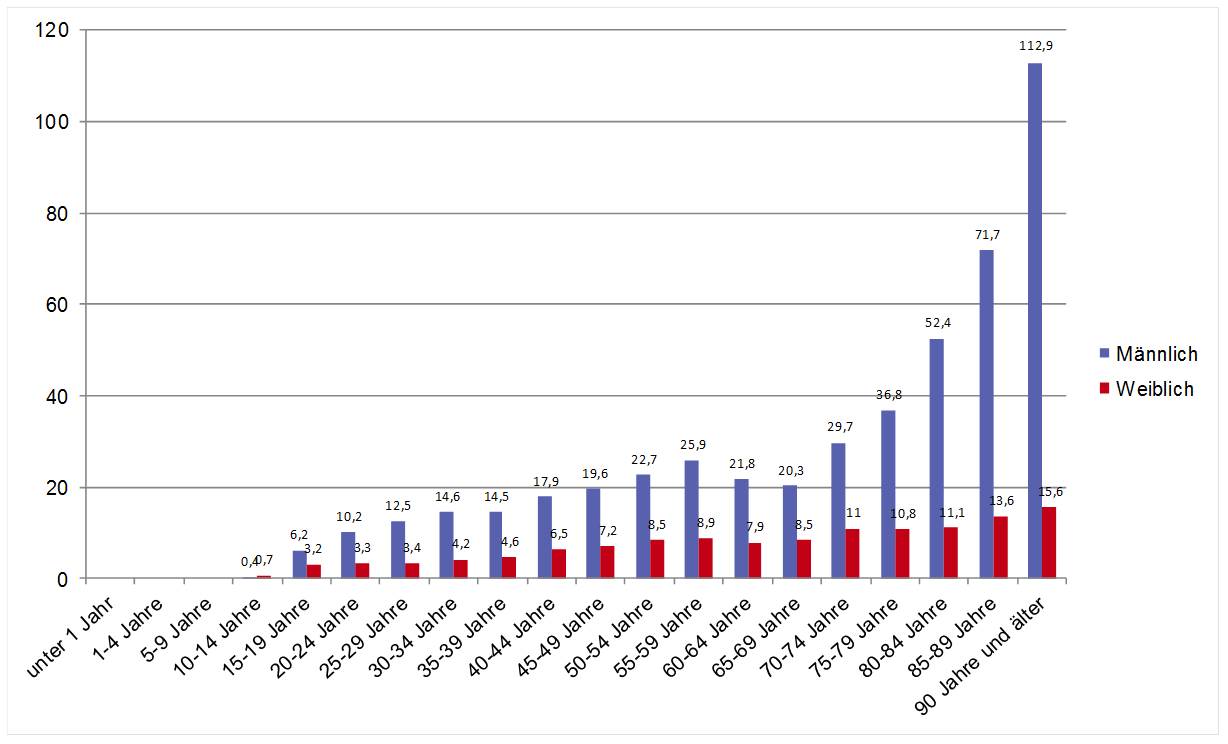
Suicide has always been a difficult subject, and it is particularly worrying to see the rates among older people. According to the official cause of death statistics from the Federal Statistical Office, the suicide rate among older people is extremely high, accounting for 35% of all suicides. This figure is alarming, as this age group makes up only 21% of the population. Suicide in old age is a very dangerous game, as such acts can be committed "quietly" or "secretly". The number of unreported cases and the numerous borderline cases of deaths due to accidental injuries make it even more difficult to get an accurate picture of what is happening.
Important information for caregiving relatives and caregivers
- Always take warnings and statements such as "I can't go on" and "I don't want to go on" seriously and address them.
- Suicides in old age most often occur as a result of mental illness
- If you experience suicidal thoughts, seek professional help from doctors immediately and also contact Deutsche Depressionshilfe, which will help you to find local contacts and self-help groups
- The most effective treatment against suicide in old age is treatment by a specialist at the earliest possible stage of depression
The risk of suicide among older men has increased dramatically, and it is not yet entirely clear why. Probably one of the reasons is that depression often goes untreated, especially in older men. A study has even been carried out on this! The Bavarian Association of Statutory Health Insurance Physicians investigated this and shockingly found that over 60% of men over 60 did not receive any help for their depression - such as antidepressants or psychotherapy.
Depression is the most common reason for suicide in old age
Although serious physical illness is thought to increase the likelihood of suicide, studies have shown the opposite. In fact, people who died by suicide were no more likely to have serious physical illnesses than those who did not. Even if you suffer from an illness such as strokecancer, cardiovascular disease, diabetes mellitus, high blood pressure, chronic lung disease or osteoporosis, the likelihood of this affecting your suicide risk is actually quite low.
This study is an important reminder of the complexity of mental health and illness. It can be easy to hastily attribute despair, suicidality and hopelessness to physical illness, but this study encourages us to slow down and really look at what's going on with a person before making drastic decisions. That's not to say that physical illness can't cause depression, not at all.
We still have to take physical illnesses into account when analyzing a person's mental state. But we must not forget how important it is to make an accurate diagnosis and treat it appropriately - especially when it is something as serious as depression. Statistically, illnesses cause significantly fewer suicides in old age than untreated depression.
Age-related depression: Entitlement to household help & everyday assistance
If you or your relatives are affected by the serious issue of age-related depression, you should know that you can get support in the household and everyday life. Home helpers help those affected to manage the household, which is often left undone due to a lack of energy. Everyday companions can help affected seniors participate in social life or curb neglect.
Domestic help and everyday assistance can often be financed by health insurance and long-term care insurance companies. This means that you will not incur any additional costs. You will need a so-called certificate of necessity issued by a doctor. Do not hesitate to contact us, we will help you with the application and processing with the care and health insurance companies.