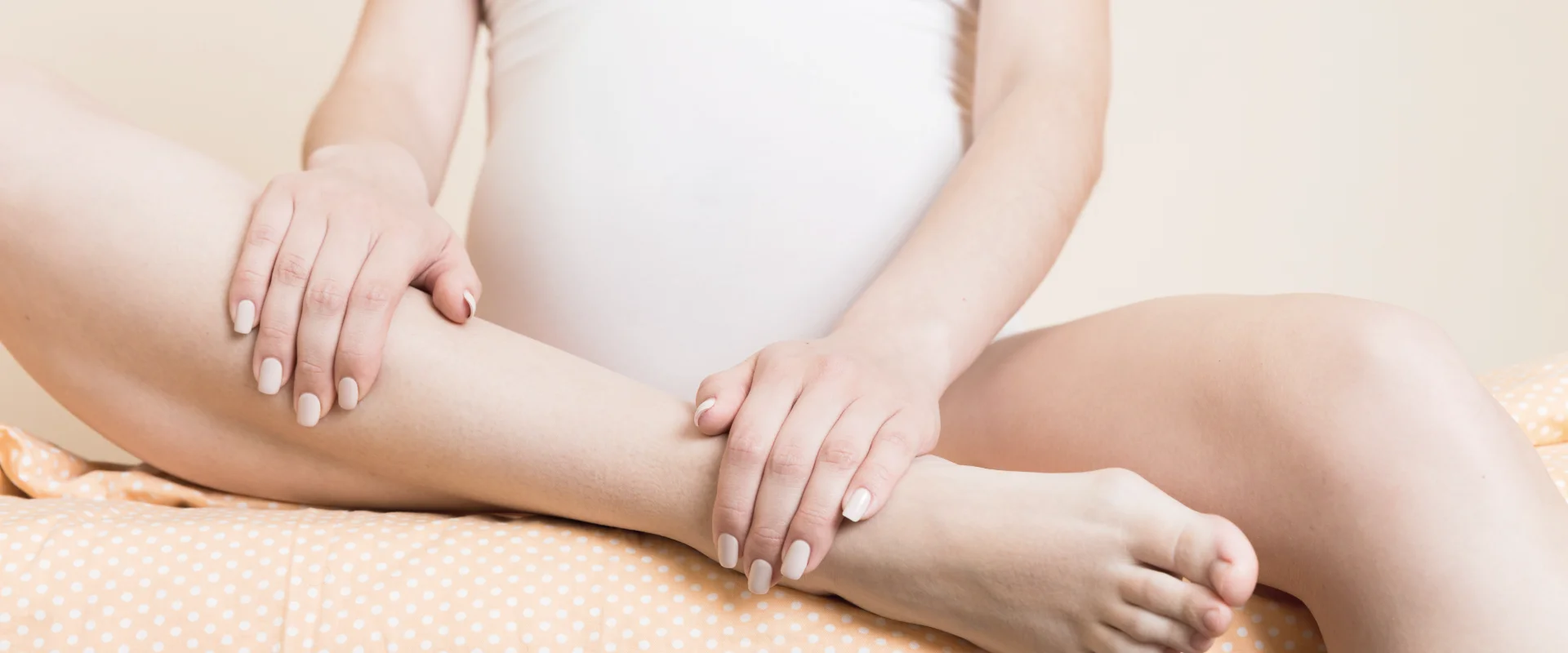

Many pregnant women are familiar with this feeling: after a warm afternoon, they take off their shoes and socks—and are left with distinct marks above their ankles. Swollen feet and heavy legs are a part of everyday life for many women.
About 80% of women experience water retention during pregnancy. This swelling, which can account for up to 2.5 kilograms of body weight, has a significant impact on daily life during pregnancy.
What causes edema during pregnancy?
Water retention during pregnancy is caused by natural changes in the body that support the baby's growth.
Several factors come into play here:
- Increased blood volume and fluid: The body produces significantly more blood and body fluids, which can cause fluid to accumulate in the tissues.
- Hormonal changes: Pregnancy hormones make the blood vessel walls more permeable, allowing fluid to leak into the surrounding tissue more easily.
- Pressure from the uterus: As pregnancy progresses, blood flow back from the legs becomes more difficult.
- Slowed lymph flow: Lymph fluid is drained more slowly and accumulates in the tissue.
The causes of water retention during pregnancy are varied. The main reasons are hormonal changes, an increase in blood volume, and increased pressure on the pelvic veins. These factors cause fluid to leak from the blood vessels into the body’s tissues. Certain parts of the body, such as the legs, feet, hands, and face, are particularly affected, as fluid accumulates in the tissues there. In most pregnant women, fluid retention becomes more common starting in the 30th week of pregnancy. By the end of pregnancy, the body contains between four and six kilograms more fluid.
The result: fluid builds up in the tissues, especially in the legs, feet, and ankles.
Lymphatic Drainage During Pregnancy: Gentle Relief for Water Retention
Lymphatic drainage during pregnancy is a specialized, medically recognized form of massage. It helps the body remove excess fluid from the tissues, thereby improving overall physical well-being.
This treatment can provide noticeable relief, especially for water retention in the legs, feet, or hands.
Recognizing Symptoms of Water Retention During Pregnancy
Swelling during pregnancy often develops gradually. This makes it all the more important to recognize the signs early on.
Typical symptoms are
- swollen legs, feet, or ankles
- A sensation of pressure in the skin and tissue
- Markings from clothing or shoes
- A feeling of tightness in the hands or face
- limited mobility
In most cases, these changes are harmless. Nevertheless:
If you experience sudden, severe swelling—especially in the face or hands—you should always consult a doctor to rule out risks such as preeclampsia.
Lymphatic Drainage During Pregnancy: Effects and Benefits
Lymphatic drainage targets the lymphatic system and supports the body’s natural drainage of fluid. The treatment is usually performed with the patient lying on their back or side. Deep massage of the abdominal and pelvic areas must be avoided at all costs, as it could trigger premature labor.
Lymphatic drainage should begin no earlier than the 13th week of pregnancy, i.e., in the second trimester, and only after consulting a doctor. The treatment is particularly effective starting in the second trimester of pregnancy. It should be performed exclusively by qualified physical therapists who are specially trained in lymphatic drainage during pregnancy.
In cases of thrombosis, acute inflammation, or cardiovascular disease, lymphatic drainage should be avoided.
Benefits of lymphatic drainage during pregnancy:
- Reduction of swelling and edema
- Promotes blood circulation
- Relief for tissues and blood vessels
- Improving well-being
- Supports circulation
It is important to note that:
Treatment should always be performed by trained therapists and only after consulting a doctor or midwife.
How Lymphatic Drainage Is Performed: What Happens During a Treatment
Many pregnant women wonder how lymphatic drainage works in water retention and what to expect during the treatment. Lymphatic drainage during pregnancy is a particularly gentle and soothing form of massage that is specifically tailored to the needs of expectant mothers.
Lymphatic drainage begins with gentle, rhythmic stroking motions on the skin. This technique is not comparable to a traditional massage: no strong pressure is applied; instead, light, circular, and pumping motions are used. The goal is to move the lymph fluid in the tissue toward the lymph nodes, thereby promoting the removal of excess fluid from the legs, feet, or hands.
During treatment, many pregnant womenfeel the swelling slowly subside and a pleasant sense of lightness take its place. Blood circulation is stimulated, the tissue feels less tight, and the discomfort subsides.
After the treatment, it is recommended that you rest for a while and make sure to stay well-hydrated. This helps your body continue to flush out the stimulated lymph fluid. Light exercise, such as a short walk, can also help enhance the effects of lymphatic drainage.
Important: Lymphatic drainage should always be performed by experienced professionals who are familiar with the specific needs of pregnant women. This ensures that the treatment is not only effective but also safe.
Small steps with a big impact – tips for everyday life
In addition to lymphatic drainage, there are simple steps you can take to help reduce water retention:
- regular exercise, such as walks in the fresh air
- Elevate your legs several times a day
- drink enough fluids
- Wear comfortable clothes and appropriate shoes
- Contrast showers to improve blood circulation
- Avoid direct sunlight and heat as much as possible, as these can increase the risk of water retention
- Wearing custom-fitted compression stockings is perceived as providing relief
Household Help During Pregnancy: Requirements, Costs, and Support in Daily Life
A household helper during pregnancy is always an option when health issues make it impossible to manage daily life on your own.
It is important to note that the need for assistance must be medically justified and confirmed by a doctor. This is typically based on a doctor’s prescription certifying that the individual is temporarily unable to manage their household on their own.
Entitlement to home help often arises when several factors come together. These include, above all, a significant physical limitation and the fact that no other person living in the household is able to take on the necessary tasks. This is not uncommon during pregnancy, particularly in cases of high-risk pregnancies, medically prescribed rest or bed rest, or when symptoms worsen as the pregnancy progresses.
Who covers the costs of a housekeeper during pregnancy?
In many cases, public health insurance covers the costs of a home care aide either in full or in part. This usually requires a doctor’s note and a corresponding application to the health insurance provider.
After reviewing each individual case, the health insurance provider determines the scope and duration of the assistance. Factors taken into account include the severity of the limitations and the specific assistance needed in daily life.
Apply for household help
The process of hiring a housekeeper is usually clearly structured and, in many cases, straightforward:
First, the attending physician issues a prescription confirming the need. This is then submitted to the health insurance provider. Once approved, the assistance can be arranged.
Especially in cases of urgent need, it is often possible to begin treatment promptly. The key factor is that the medical necessity is clearly documented.
Why Hiring a Housekeeper During Pregnancy Is a Good Idea
Domestic help is not a luxury service, but a form of support regulated by law with a clear goal: to protect the health of the mother and child.
This is because, especially when dealing with conditions such as swelling during pregnancy, limited mobility, or severe fatigue, overexertion can quickly have negative consequences. When the body is already under significant strain, any additional physical demands in daily life become a challenge.
Targeted relief can make a significant difference here: it creates space for rest, supports circulation, and helps prevent physical discomfort from worsening.

How we support you in your day-to-day life
When pregnancy symptoms make daily life more difficult, it’s not just about individual tasks , but about the big picture: relief, structure, and security.
When it comes to housework, we handle tasks such as cleaning, doing laundry, and grocery shopping. This provides significant physical relief, especially for those with heavy legs, swollen feet, or limited mobility.
We’re also here to support you in your daily life. Whether it’s doctor’s appointments, short walks outside, or running small errands, we make sure you don’t have to handle everything on your own and provide support whenever you need it.
In addition, we help establish a daily routine. When the body needs more rest, we help organize daily activities in a way that prevents burnout.