
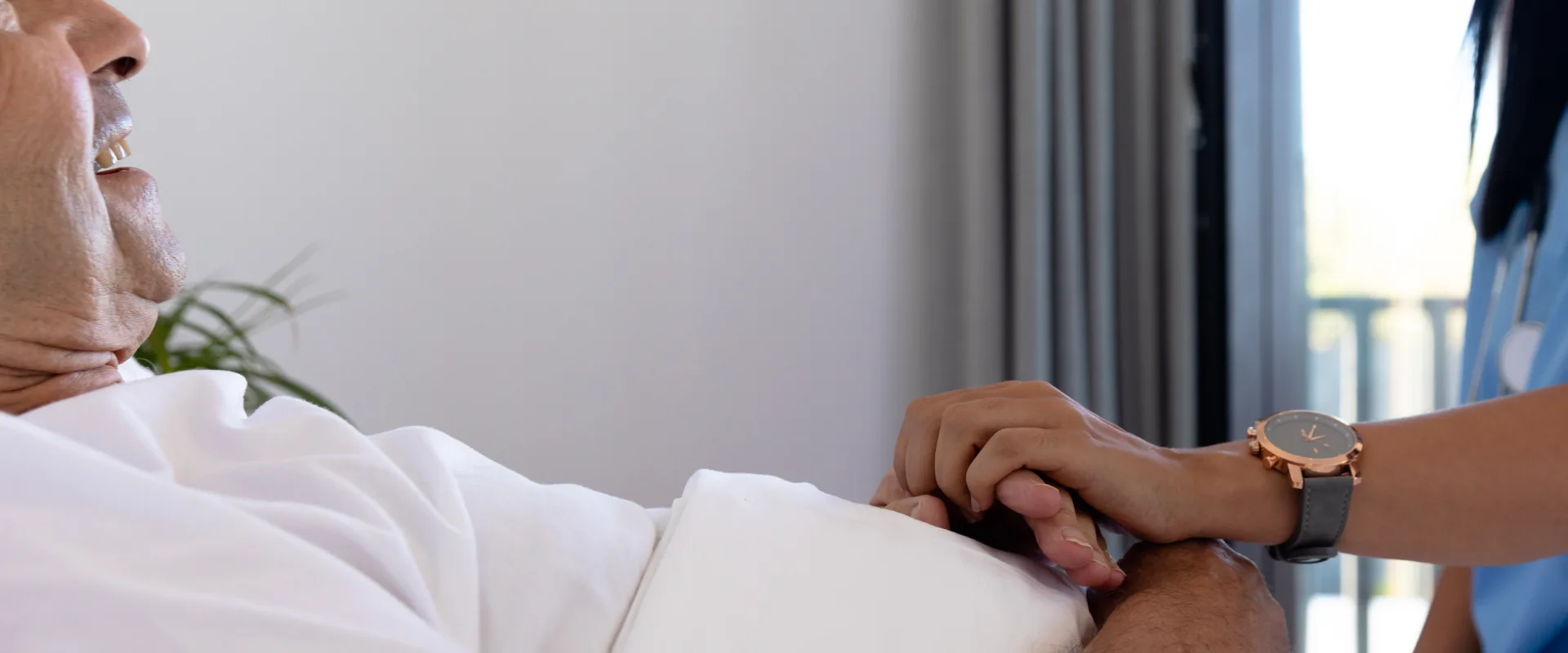

When Ms. W., 74 years old, learned after a long battle with cancer that a cure was no longer possible, her family was faced with a question familiar to many relatives: What now? To the hospital? To a nursing home? Or should she stay at home—with the right support? Together with a palliative care team and the home care agency, the family found a way that allowed Ms. W. to do exactly what mattered most to her: to spend the last months of her life in her own home, cared for and with dignity.
Palliative care is a topic that many people don’t think about until it directly affects them. However, it’s worth understanding early on what palliative care means, what types of care are available, and what professional support might look like in everyday life.
What Is Palliative Care? Basics and Definition
The term “palliative” is derived from the Latin word “pallium”—meaning “cloak.” The cloak symbolizes enveloping, protecting, and alleviating. Palliative care, also known internationally as palliative care, refers to a holistic approach to caring for people with a serious, progressive illness in which a cure is no longer the primary goal. Instead, the focus is on the patients’ quality of life.
Palliative Medicine and Palliative Care: What's the Difference?
Palliative care refers to the medical aspect of care: the medical treatment of pain, shortness of breath, nausea, difficulty breathing, and other symptoms caused by the illness.
Palliative care encompasses the nursing, supportive, and human aspects: the support in daily life, the companionship, and the care that go beyond the medical. These two areas are closely intertwined and together form the concept of palliative care.
Goals of Palliative Care: Not a Cure, but Dignity
The primary goal of palliative care is not to cure the disease; this is what fundamentally distinguishes it from other forms of treatment. Unlike curative therapies, palliative care focuses on relieving pain, managing symptoms, alleviating anxiety, and supporting patients and their families during an exceptionally difficult phase of life. It takes a holistic approach to the person’s needs, addressing physical symptoms as well as psychological, social, and spiritual concerns.
Who is eligible for palliative care?
Palliative care is intended for people with a life-threatening illness, regardless of age, diagnosis, or level of care. Typical conditions for which palliative care is provided include advanced cancer, severe heart failure, chronic lung diseases, and neurological conditions such as ALS or advanced dementia. Palliative care patients are individuals for whom treatment is no longer aimed at a cure, but rather at ensuring a life that is as free from suffering as possible during the time they have left.
Types of Care: Where Is Palliative Care Provided?
At home—the most common wish of palliative care patients
Most people would like to spend the final stage of their lives at home, in familiar surroundings, surrounded by the people who love them. For many patients, their own bed, their own room, and the familiar scent of their home are more valuable than any medical facility. Outpatient palliative care makes this wish a reality. It brings professional care, therapy, and support directly into the home.
Specialized Outpatient Palliative Care (SAPV): What Is It All About?
Specialized outpatient palliative care is a service covered by statutory health insurance. Palliative care is intended for people with particularly complex care needs, such as pain that is difficult to control, severe shortness of breath, wounds that are slow to heal, or other distressing symptoms. Palliative care patients and their families do not have to pay for these services themselves: Specialized outpatient palliative care (SAPV) is a recognized benefit covered by health insurance.
Who prescribes SAPV, and how does the process work?
SAPV is prescribed by a doctor, usually a primary care physician or a specialist. The prerequisite is an incurable, advanced illness with a limited life expectancy and needs that go beyond general outpatient palliative care. Once the prescription is issued, the health insurance provider reviews eligibility and arranges contact with an approved SAPV team in the region.
General Outpatient Palliative Care: The First Point of Contact
Not all palliative care patients require highly specialized outpatient palliative care (SAPV). For many people, general outpatient palliative care is sufficient: It includes care provided by a family doctor, an outpatient nursing service, and, if needed, additional services such as hospice care, psychological support, or spiritual care. General outpatient palliative care is the first—and often sufficient—step for most people and can be usefully supplemented by household assistance, such as that offered by the Agency for Household Assistance.
Palliative Care Unit at the Hospital: When Care at Home Is No Longer Possible
Sometimes, despite all the support available, care at home is no longer feasible—for example, in cases of very complex symptoms, a lack of family support, or a temporarily unstable health condition. In these cases, admission to a palliative care unit at a hospital is advisable. Palliative care units are specifically designed to meet the needs of seriously ill patients: a calm atmosphere, time for conversations, round-the-clock visits from family members, and interdisciplinary teams from various specialties. The goal is to stabilize symptoms and, if possible, facilitate a return home or to a long-term care facility.
Hospice: A Temporary Home
The hospice admits people who wish to be cared for at home during the final stage of their lives, without being admitted to a hospital, but for whom care at home can no longer be guaranteed. Unlike in a hospital, the focus at a hospice is not on treatment but on holistic care: relieving pain, preserving dignity, and supporting family members. Most hospice residents spend their final weeks there in peace, receiving professional care.
Palliative Care in Long-Term Care Facilities
Palliative care is also provided in nursing homes and long-term care facilities. Many facilities have developed their own palliative care programs and work with specialized teams. However, experience shows that many patients, despite needing care, would prefer to stay at home. For these individuals, a combination of outpatient palliative care and household assistance to support daily living is often the better solution.
Responsibilities and Services in Palliative Care
Pain Management and Symptom Relief: The Medical Foundation
Pain, shortness of breath, difficulty breathing, and nausea—these are the most common symptoms that affect palliative care patients. Consistent pain management is the foundation of all palliative care. This involves not only administering pain medication but also planning the overall management of symptoms in an individualized and proactive manner. Palliative care physicians and nurses work closely together to identify pain early, control nausea, treat wounds, and maintain the highest possible quality of life. Modern pain management has advanced to the point where most symptoms can be controlled, provided treatment is initiated in a timely manner.
Psychological Support: Talking About Fears, Grief, and Dying
Psychological support is an indispensable part of palliative care. Addressing fears, allowing oneself to grieve, and reflecting on the end of one’s life—all of this requires a safe space and people with expertise and empathy. Psychologists, chaplains, and specially trained nurses support patients and their families on this journey.
Nutrition and Personal Care in the Final Stage of Life
In the final stage of life, the body undergoes fundamental changes, and with it, the way we approach nutrition, personal care, and daily routines. In palliative care, this means respecting needs rather than imposing rules. If someone no longer wishes to eat, this is not a failure on the part of the caregivers; it is a natural part of the process. At the same time, providing loving and dignified personal care is one of the most important aspects of caregiving.
Household Assistance: When Everyday Life Becomes a Burden
Imagine coming home after a hospital stay: exhausted, weakened, and knowing that your time is limited. And then: the laundry is piling up, the fridge is empty, and the apartment is a mess. This burden drains energy that you need for what really matters. This is exactly where the household support services from the Agency for Agency for . Grocery shopping, cooking, cleaning, laundry—we take care of it all so that patients and their loved ones have the strength for what really matters: time together, conversations, and closeness.
The Palliative Care Team: Who Is Involved?
Palliative care is never a one-person effort; it is always a team effort. Palliative care teams consist of professionals from various fields and disciplines: doctors, nurses, social workers, psychologists, chaplains, physical therapists, and volunteers all work together. Each person contributes their specific expertise, and the focus is always on the individual and their unique needs.
Pastoral Care and Spirituality: More Than Just Religion
Spiritual care in palliative care does not necessarily mean religious support, although that is important to many people. It addresses life’s deepest questions: What has my life meant? What will remain after I’m gone? Have I done the right thing? Chaplains in palliative care teams are trained to create a space for these questions without judging or imposing their views. For many people who are dying and their families, this kind of support is among the most valuable forms of assistance available.
Volunteer Hospice Services: Humanity Without a Mandate
In addition to the professional team, volunteer hospice services play an important role in palliative care. Volunteers visit regularly, read aloud, go for walks, and listen—all without the pressure of a professional mandate. For many patients and their loved ones, these visits are especially valuable because they bring a sense of normalcy. And for loved ones, they mean an hour’s break, a deep breath, and time for themselves.
Frequently Asked Questions About Palliative Care
When should palliative care begin?
One of the most common questions—and one of the most important: Many people and their loved ones hesitate to seek palliative care because they fear it means giving up hope. The opposite is true. Early palliative care has been shown to improve quality of life and can even extend the remaining time of life—not by treating the disease, but by better managing pain, anxiety, and fatigue. The right time is not “when there’s no other option”—but as soon as the illness begins to significantly impact daily life.
What are the costs—and who covers them?
The costs of palliative care, particularly home-based palliative care (SAPV), are covered by statutory health insurance provided the eligibility requirements are met. Hospice services are also largely financed by health insurance plans. Depending on your situation, you may be eligible for general household assistance and daily living support through either the long-term care insurance fund or your health insurance plan. Here at the Agency for Household Assistance, we have a thorough understanding of the available services and can help you determine what support you are entitled to.

How the Agency for Domestic Help Provides Support
We are not a medical care service, but we are an indispensable part of the network that supports people in the final stages of life. The Home Care Agency handles the everyday tasks that go beyond medical care: housekeeping, grocery shopping, meal preparation, laundry, and daily companionship. In this way, we relieve the burden on family members, who often find themselves at the limits of their strength. And we lay the groundwork that makes it possible for many patients to stay at home, surrounded by what is familiar and dear to them.
Quick help when you need it
When Son M. called us, he had barely slept for several nights. His mother had been discharged from the palliative care unit with the recommendation that she be cared for at home if possible. But what about the housework? Meals? Day-to-day tasks? It was simply too much to handle anymore. That very same day, we checked which services were available through the long-term care insurance, and soon a caregiver was at the door. Son M.: “I no longer had to shoulder everything on my own. That allowed me to truly be there for my mother.”
Conclusion: Palliative care is life—until the very end
Palliative care is the opposite of giving up; it is the decision to make life as fulfilling, dignified, and pain-free as possible during the time that remains. It is about viewing dying as part of life: accompanied, supported, and not alone. This includes pain relief, treatment of shortness of breath and nausea, psychological support, spiritual care, and support for family members. All of this is part of the concept of palliative care, which in Germany is supported by a well-developed system of family doctors, SAPV teams, hospices, and complementary services.