
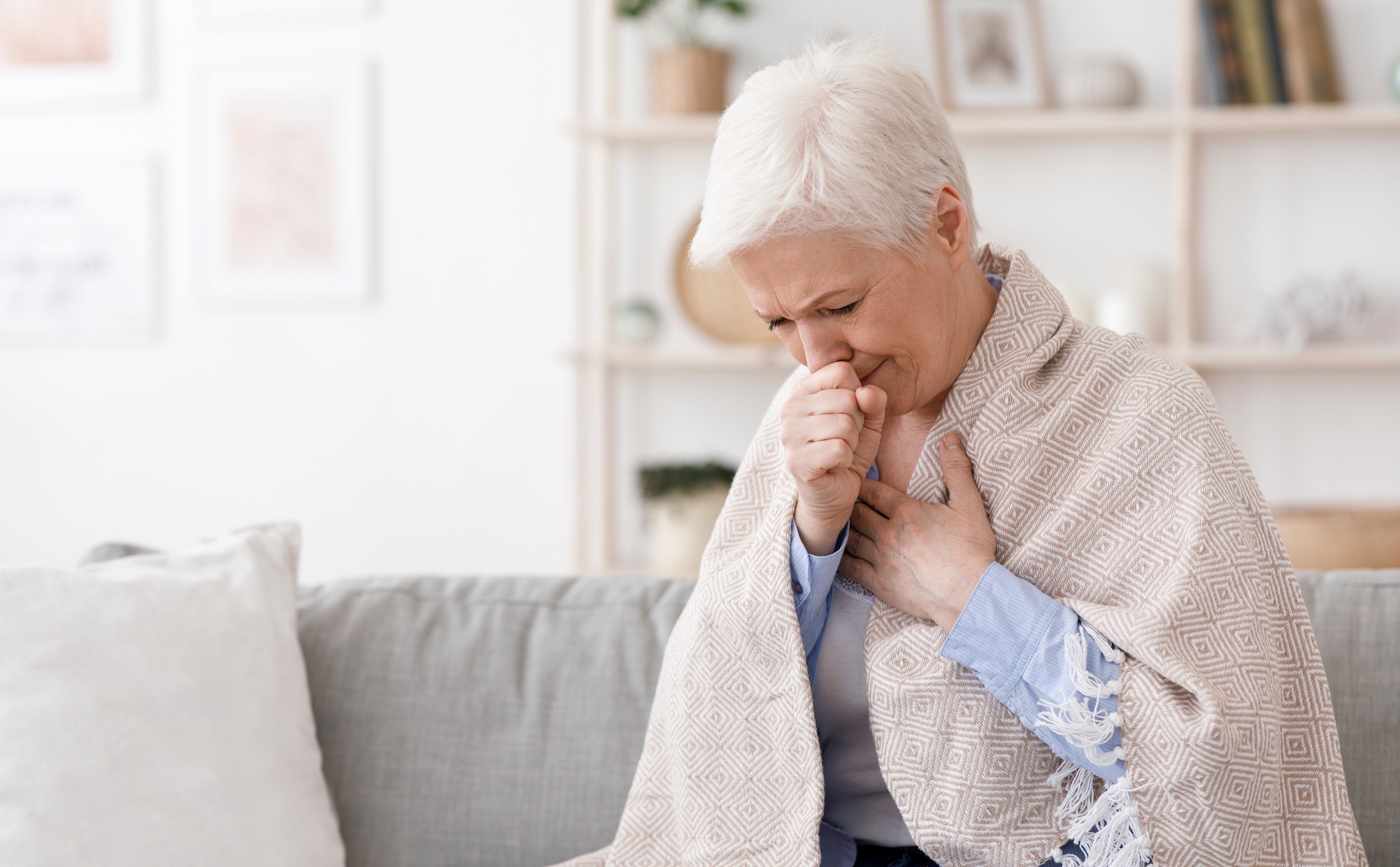

It’s winter. The cold seems to have run its course, but the cough just won’t go away. A scratchy throat, a tightness in the chest—many people are familiar with this unpleasant sensation. Often, bronchitis is the cause. This magazin explains everything you need to know about this common respiratory illness: from its causes and symptoms to treatment and the warning signs that indicate you should see a doctor.
Bronchitis at a Glance
Bronchitis is an inflammation of the bronchi—that is, the lower respiratory tract—more specifically, the bronchial mucosa. The main symptom is a cough, often accompanied by mucus or phlegm. There are two main forms: acute and chronic bronchitis. While the acute form usually resolves on its own, the chronic form can be a serious condition (source: https://www.apotheken-umschau.de/krankheiten-symptome/atemwegserkrankungen/akute-bronchitis-anzeichen-verlauf-behandlung-736657.html).
Facts and Figures:
- About 90% of acute bronchitis cases are caused by viruses ( Source: https://www.gelbe-liste.de/krankheiten/akute-bronchitis).
- Acute bronchitis often occurs during the winter months as a result of a cold ( Source: https://www.helios-gesundheit.de/magazin/news/03/bronchitis-chronisch-akut/).
- It usually clears up without medication within two to three weeks ( Source: https://www.ndr.de/magazin/gesundheit/Akute-Bronchitis-Symptome-erkennen-und-behandeln,bronchitis132.html).
- Smoking is a major risk factor for chronic bronchitis ( Source: https://www.lungeninformationsdienst.de/krankheiten/virale-infekte/akute-und-chronische-bronchitis/risikofaktoren).
What Is Bronchitis? The Structure of the Respiratory Tract and What Happens When It Becomes Inflamed
A Brief Digression: The Structure of the Respiratory Tract
The air we breathe enters the trachea through the nose and throat. The trachea then divides into two main bronchi, which lead to the left and right lungs. Inside the lungs, the bronchi branch out further and further into smaller bronchi and eventually into tiny bronchioles. At the ends of these branches are the alveoli, where oxygen is absorbed into the blood and carbon dioxide is released (Source: https://www.lungenaerzte-im-netz.de/unsere-atemwege/aufbau/die-unteren-atemwege/?nodeid=18&cHash=95c8cc8fca1ef75a80b17d8786a74a18).
The mucous membranes that line the airways play an important role. They moisten the air we breathe, filter out dust and dirt particles, and protect us from pathogens. The mucous membranes normally produce a certain amount of mucus, which keeps the airways moist and aids in this cleansing process.
What happens when you have bronchitis?
Bronchitis is an inflammation of the bronchial mucosa. This inflammation leads to irritation, swelling, and increased mucus production. The mucous membranes swell, causing the airways to narrow. The body tries to clear the mucus from the airways by coughing. This cough may start out dry and irritating but later becomes productive, with phlegm (Source: https://www.lungeninformationsdienst.de/krankheiten/virale-infekte/akute-und-chronische-bronchitis/grundlagen).
Important: It is important to distinguish between bronchitis, bronchiolitis, and pneumonia. Bronchitis affects the large airways (bronchi), bronchiolitis affects the small airways (bronchioles, common in infants), and pneumonia affects the lung tissue itself (alveoli).
An Overview of Types of Bronchitis
| Feature | Acute Bronchitis | Chronic Bronchitis |
| Duration | A few days to a few weeks (up to 3 weeks) | At least 3 months in 2 consecutive years |
| Cause | Mostly viruses, rarely bacteria or irritants | Mainly smoking and air pollution |
| History | Self-limiting, often with complete recovery | Slowly progressive, often with flare-ups |
| Treatment | Symptoms, Rest, Fluids | Medication, smoking cessation, rehabilitation |
| Risk | Minor, usually harmless | May lead to COPD and other complications |
Acute Bronchitis
Definition and Prevalence
Acute bronchitis is an inflammation of the bronchi that usually occurs in connection with an upper respiratory tract infection. It is particularly common during the cold winter months.
Causes and Triggers
- Viruses: Rhinoviruses (common cold viruses), adenoviruses, coronaviruses, influenza viruses (flu), RSV (respiratory syncytial virus).
- Bacteria: Less common, often as a secondary infection following a viral infection.
- Fungal infections: Very rare, especially in people with weakened immune systems.
- Irritants: smoke, dust, chemicals, gases, workplace exposure.
(Source: https://gesund.bund.de/akute-bronchitis#symptome)
Symptoms and signs
The typical course of acute bronchitis can be divided into phases:
- Onset: Similar to a cold: runny nose, sore throat, body aches, and possibly a slight fever.
- Dry, irritating cough: Often accompanied by a burning sensation or pain behind the breastbone.
- Cough with phlegm: sputum, coughing up phlegm, rattling sounds. The color of the sputum can vary—a greenish-yellow color does not necessarily indicate a bacterial infection.
- Resolution: Acute bronchitis usually resolves after about two to three weeks, although the cough may persist for a little longer.
Other symptoms may include chest pain when coughing, abnormal breathing sounds (wheezing, rumbling), mild shortness of breath, and fatigue.

Contagiousness: Is bronchitis contagious?
The infection that causes bronchitis (e.g., a virus) is contagious and is usually spread through droplet transmission. Be sure to maintain a safe distance, wash your hands thoroughly, and cough into the crook of your elbow (Source: https://www.praktischarzt.at/magazin/bronchitis-ansteckend/).
Diagnosis: Doctor's Examination
During a doctor's visit, the doctor will first take a detailed medical history (a discussion of your medical history). The doctor will ask you about the duration of your symptoms, your symptoms themselves, any previous medical conditions, your smoking habits, and your workplace. The doctor will then listen to your lungs with a stethoscope to assess any abnormal breathing sounds.
In some cases, further tests may be necessary, such as an X-ray, blood test, lung function test, or sputum analysis. These are particularly useful when pneumonia, whooping cough, or COPD is suspected.
Treatment of Acute Bronchitis
In most cases, acute bronchitis resolves on its own without medication. However, the following measures can help relieve symptoms:
- Self-Care: Rest, Relaxation, and Adequate fluid intake (water, tea), inhalation with saline solution, avoiding smoking, and avoiding irritants.
- Medications: Pain relievers and fever reducers as needed; expectorants to help clear mucus; cough suppressants only in exceptional cases of a persistent, irritating cough. Antibiotics are not effective for viral bronchitis! They are used only for bacterial infections and only after a doctor’s decision.
- Herbal remedies: Ivy, thyme, primrose, or geranium may have a supportive effect. However, the evidence is mixed.
- Home remedies: Honey, onion juice, inhalation, or chest compresses can also help relieve symptoms.
When to see a doctor?
- A cough lasting longer than three weeks
- High or persistent fever
- Severe shortness of breath, chest pain, wheezing
- Bloody sputum
- Pre-existing conditions (asthma, COPD, heart disease), weakened immune system
- Infants, toddlers, older adults
Chronic Bronchitis
Chronic bronchitis is defined as a cough and phlegm lasting at least three months in two consecutive years. It involves persistent inflammation and increased mucus production in the bronchial mucosa, which requires medical treatment (Source: https://flexikon.doccheck.com/de/Chronische_Bronchitis).
Causes and Risk Factors for Chronic Bronchitis
The main cause of chronic bronchitis is smoking. Air pollution, fine particulate matter, and irritants in the workplace can also contribute to its development. Recurrent infections and a weakened immune system also play a role (Source: https://www.lungenaerzte-im-netz.de/krankheiten/bronchitis-chronisch-obstruktive/ursachen-risikofaktoren/).
What are the symptoms of chronic bronchitis?
Typical symptoms of chronic bronchitis include a morning cough with phlegm (Source: https://www.lungeninformationsdienst.de/krankheiten/virale-infekte/akute-und-chronische-bronchitis/grundlagen)
Connection to COPD
Chronic bronchitis can lead to COPD (chronic obstructive pulmonary disease). COPD is a progressive disease characterized by narrowing of the airways. It is important to detect and treat chronic bronchitis early to prevent the development of COPD.
How is chronic bronchitis diagnosed?
The diagnosis is made based on the patient's medical history, auscultation of the lungs, and a pulmonary function test (spirometry). If necessary, additional tests such as X-rays or blood gas analysis may be performed.
Treatment of Chronic Bronchitis
The most important step in managing chronic bronchitis is to quit smoking. In addition, medications to dilate the airways, anti-inflammatory inhalers, and mucolytics may be used. Vaccinations (flu, pneumococcal, COVID-19), respiratory physical therapy, pulmonary exercise, and rehabilitation are also important components of treatment.
Bronchitis in Children, Infants, and Toddlers
Children are more susceptible to bronchitis because their immune systems are not yet fully developed and their airways are narrower (Source: https://www.lungenaerzte-im-netz.de/krankheiten/bronchitis-akut/besonderheiten-bei-kindern/). Common pathogens include RSV, rhinoviruses, and adenoviruses. Children of parents who smoke are at higher risk of developing respiratory illnesses (Source: https://www.lungenaerzte-im-netz.de/news-archiv/meldung/passivrauchbelastung-von-kindern-erhoeht-gesundheitsrisiken-auf-lebenszeit/).
Specific symptoms in children may include difficulty drinking, rapid breathing, chest retractions, and fever. In infants and toddlers, these symptoms are particularly alarming and require immediate medical attention.
Treatment includes drinking plenty of fluids, nasal care, maintaining humidity, and reducing fever as directed by a doctor. Cough medicine should be used with caution in young children.
Differential Diagnosis: Bronchitis, the Common Cold, the Flu, and Pneumonia
| Illness | Start | Fever | Cough | Limb pain | Shortness of breath | Duration |
| Cold | Slowly | Low | Dry/Light | Rare | Rare | 7–10 days |
| Flu | Suddenly | High | Dry | Frequently | Frequently | 1–2 weeks |
| Acute Bronchitis | Slowly | Light | Productive | Rare | Rare | 2–3 weeks |
| Pneumonia | Suddenly/Slowly | High | Productive | Frequently | Frequently | Several weeks |
Prevention: How Can You Protect Yourself from Bronchitis?
- Quit smoking or don't start, and avoid secondhand smoke.
- Boosting the Immune System: Exercise, Sleep, and a Balanced Diet.
- Hygiene: Wash your hands; keep your distance from people who are sick.
- Vaccinations (flu, pneumococcal, COVID-19, for at-risk groups).
- Workplace Safety: Respiratory Protection, Ventilation.
- Indoor Climate in Winter: Ventilate regularly and monitor humidity levels.
Frequently asked questions (FAQ)
How long does bronchitis last?
Acute bronchitis usually clears up within 2–3 weeks.
Is bronchitis contagious?
The infection that causes this condition is contagious.
Do I need antibiotics for bronchitis?
No, antibiotics are ineffective for viral bronchitis.
What helps relieve a cough?
Rest, fluids, inhalations, cough suppressants.
When does bronchitis become chronic?
For cough and phlegm lasting at least 3 months in 2 consecutive years.
Can you exercise if you have bronchitis?
No, physical exertion is contraindicated during the acute phase.
How can I tell the difference between bronchitis and pneumonia?
Be on the lookout for a high fever, severe shortness of breath, and blood in the sputum.