
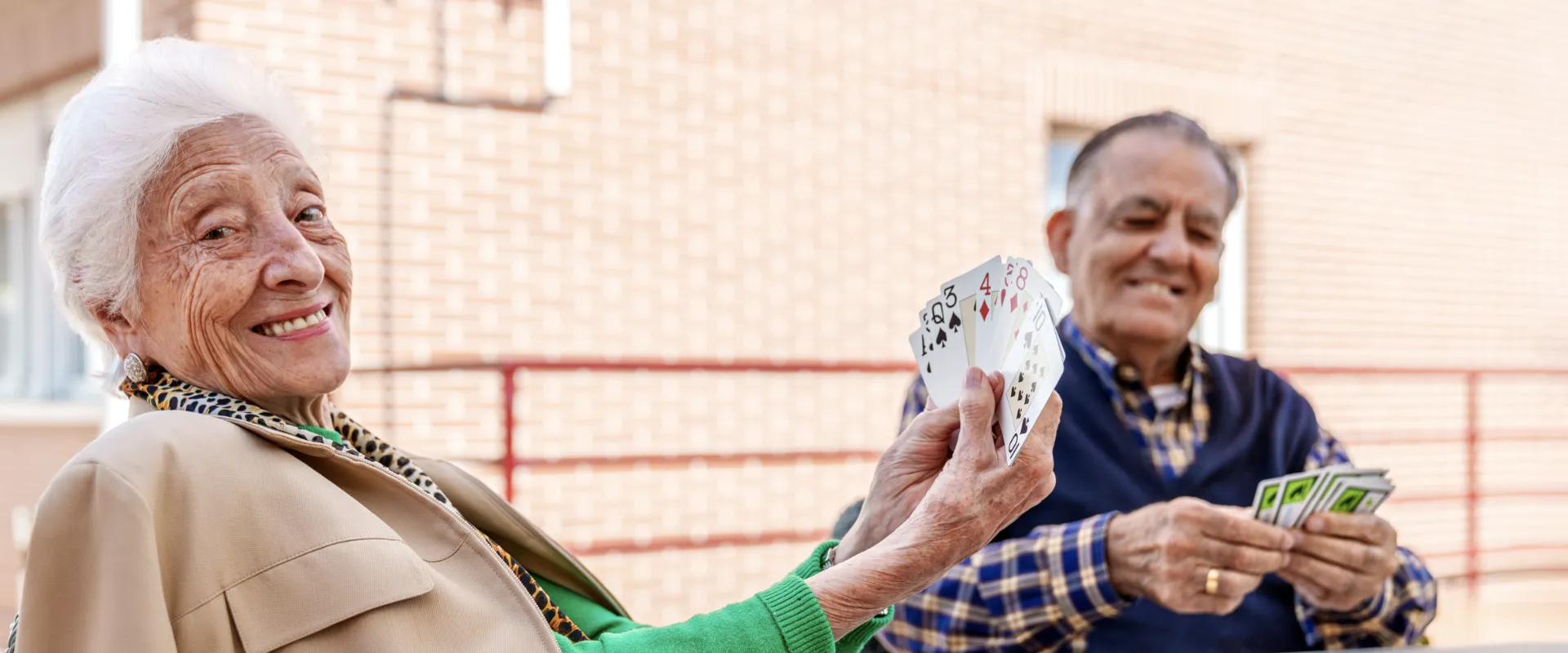

Imagine living in a community where support and self-determination go hand in hand - that's exactly what a senior shared apartment offers. Here, older people find a new home where they can master life's challenges together. The costs for outpatient care are often covered by cost bearers so that you can concentrate fully on the positive aspects of living together.
Discover how a senior living community not only makes everyday life easier, but also enables you to lead a fulfilling life in your own four walls.
What is a senior shared flat?
A senior citizens' shared apartment allows you to live independently and in a community at the same time. Similar to a student flat share, this is a shared flat with different people who share an apartment or house. In such a shared apartment, you can live together with like-minded people in a caring environment, which not only strengthens social interaction, but also increases your quality of life.
Best agers benefit from outpatient care from qualified care services that cater to everyone's individual needs. This ensures that you are well looked after even if you have health challenges and that you can remain at home for as long as possible.
The costs for senior shared flats are often affordable and can be partially supported by cost bearers, which provides financial relief. Living in a senior shared apartment not only promotes independence, but also safety and security in a familiar environment. This form of living is ideal for people who value community and professional support.
Advantages of a senior shared flat
A senior citizens' shared apartment allows you to live independently yet communally in old age. Here, people in similar life situations find a home where they can organize their everyday lives together.
With outpatient care services and the support of a care service, you are able to remain in your familiar surroundings while your needs are optimally taken into account. In a senior living community, residents benefit not only from social interaction, but also from a structured daily routine that provides a sense of security.
The costs are often more transparent than in conventional care facilities, and financial relief can be created through cooperation with cost bearers. Many senior citizens find it enriching to share their home with like-minded people and to benefit from the support of care staff in order to lead a fulfilling life. This makes shared senior living an attractive life model for many people over the years.
Types of senior shared flats
A senior citizens' shared apartment allows you to live independently yet communally in old age. Here, people in similar life situations find a home where they can organize their everyday lives together.
With outpatient care services and the support of a care service, you are able to remain in your familiar surroundings while your needs are optimally taken into account. In a senior living community, residents benefit not only from social interaction, but also from a structured daily routine that provides a sense of security.
The costs are often more transparent than in conventional care facilities, and financial relief can be created through cooperation with cost bearers. Many senior citizens find it enriching to share their home with like-minded people and to benefit from the support of care staff in order to lead a fulfilling life. This makes shared senior living an attractive life model for many people over the years.
Residential care communities
In a shared senior care home, older people have the opportunity to live together in a familiar environment and maintain their independence.
These shared apartments not only offer a family atmosphere, but also the necessary support from outpatient care services. Residents can actively participate in social life in old age and help each other, which significantly increases their well-being.
The costs for shared care homes are often transparent and can be partially covered by various cost units, which reduces the financial burden. In addition, residents have the freedom to maintain their own lifestyle and still be able to call on help at any time. In a senior shared apartment, a home is created in which everyone is valued and can feel safe. This form of living not only promotes independence, but also significantly improves the quality of life in old age.
Outpatient assisted living communities
Assisted living communities offer a combination of independent living and professional support. This form of living is aimed specifically at people in need of care who would like to live in a community but are not dependent on the round-the-clock care of a retirement home.
If the senior citizens are unable to cope with all the tasks that arise in the shared apartment, they can hire an outpatient care service to provide support in the retirement home community.
Senior living communities
A senior living community allows you to live in a communal environment that promotes self-determination and social interaction. In such a shared apartment, you will find like-minded people who can organize everyday life together and support each other. This is particularly beneficial for older people who are looking for a familiar home after years of independence.
Outpatient care services can help to customize the necessary care services so that you can continue to actively participate in life. The costs for a senior shared apartment are often more transparent and easier to plan than in traditional care facilities.
In addition, many funding agencies have special programs that offer financial support. Shared living not only promotes social interaction, but also facilitates access to assistance and creates a feel-good atmosphere.
Living in a senior shared flat
Living in a senior citizens' shared apartment offers an excellent opportunity to live a self-determined life in a community. Residents find a home here that gives them a high degree of independence as well as valuable support from outpatient care.
In such a shared apartment, people live together, supporting and enriching each other. Shared activities not only promote social contact, but also contribute to quality of life.
The costs for a senior shared apartment are often transparent and can be facilitated by various cost units. This means that access to a harmonious and sociable everyday life remains possible even for seniors with limited financial resources.
Costs and prices
A senior shared apartment allows you to live in a safe and communal environment, which is particularly important in old age. Living together with like-minded people not only promotes social interaction, but also strengthens the feeling of belonging. In such a shared apartment, residents can organize their everyday lives largely independently and at the same time benefit from outpatient support from care services.
The costs for a senior shared apartment are often lower than for traditional care facilities, as the residents can share the expenses. In addition, various cost bearers such as health insurance companies cover some of the costs incurred, which reduces the financial burden. It is important to find a suitable senior shared apartment that meets your individual needs and wishes so that you can spend your golden years in a loving and supportive home.
Support from cost units for senior citizens' shared flats
Support from cost units plays a central role for senior shared flats and enables many people to lead a self-determined life in old age. In a senior shared apartment, several residents live together in one house, which not only promotes social contact, but also significantly increases the quality of life. The costs of accommodation and care can often be covered by health insurance companies or other cost bearers, minimizing financial worries.
This relieves the burden on both senior citizens and their relatives. Outpatient care services are on hand to provide individual support and thus guarantee needs-based care. In a senior shared apartment, people have the opportunity to actively shape their everyday lives and live in a familiar environment. The different types of shared apartments offer flexible solutions that are tailored to the needs of the residents. This means that the resident's own home remains within easy reach, while professional help is available.
Alternatives to a senior shared flat
There are various forms of housing for older people that can be considered as alternatives to senior shared accommodation. The most common options include
- Retirement home: In a retirement home, senior citizens live in a communal environment and receive professional support in everyday life. The focus here is also on social activities and community activities.
- Assisted living: This form of living combines independence with assistance. Senior citizens have their own apartment, but can call on support if necessary, for example from a care service.
- Outpatient care: With this option, people in need of care remain in their familiar home and receive professional care and support services there without having to move to a community facility.
- Family care: In this form, older people live with their relatives. relatives or in a foster family. This can provide both emotional and practical relief.
It is important to obtain detailed information about the various options in order to make the best choice. Pay particular attention to the advantages of each option, such as the fact that certain support services are free of charge and that professional support is available.
Open a senior shared flat in 7 steps
Setting up a senior shared apartment can be a great way to provide older people with a shared, supportive living environment. Here are the basic steps to opening a senior shared apartment:
1. determination of requirements
Analyze the needs in your region. Talk to potential residents and their relatives to find out what their requirements and wishes are.
2.clarify financing
Create a financing plan that takes into account your own funds as well as possible subsidies and grants.
3. search for location
Choose a suitable property that is barrier-free and offers enough space for the residents. Make sure it is well connected to public transport and shopping facilities.
4. renovation and equipment
Plan and carry out necessary renovation work carry out. Make sure that the rooms are comfortable and suitable for senior citizens. Shared common areas promote togetherness.
5. obtain the necessary permits
Find out about the legal framework and obtain all the necessary permits, such as an operating license for outpatient care.
6. care providers and personnel
Cooperate with an outpatient care service or employ qualified staff to provide residents with individual care.
7. resident acquisition
Use social networks, local media and information events. Offer consultations to introduce the senior shared apartment to interested parties.
Frequently asked questions
How much does a senior shared flat cost per month?
The costs for a senior shared apartment vary depending on the location, facilities and services offered. On average, the monthly costs are between EUR 800 and EUR 2,500. Prices are generally higher in urban areas, while rural regions often offer cheaper options.
The costs usually include rent, ancillary costs, meals and care services. The rent can vary depending on the size of the room and the shared flat environment. Utilities such as electricity, water and internet are often included in the total price, but can also be charged separately.
Meals are often provided in the form of communal meals, which can incur additional costs. Another important aspect is the care services, which vary depending on the individual care level and needs. In many cases, cost bearers such as health insurance companies or care insurance funds cover part of the care costs, which reduces the financial burden for residents.
Who is a senior shared flat suitable for?
A senior shared apartment is ideal for older people who want to lead an independent life but do not want to miss out on the benefits of communal support. This form of living is particularly suitable for senior citizens who want to maintain social contacts and avoid loneliness. Living together with like-minded people can provide emotional and practical support in everyday life.
Furthermore, a senior shared apartment is suitable for people who want to maintain a certain degree of independence but still need help with everyday living. This can be particularly true for people who are looking for support after a serious illness or operation.
The individual care and the opportunity to help each other create a safe and trusting environment. Family members of those in need of care will also find a sensible solution in a senior shared apartment. They can rest assured that their loved ones are living in a professionally cared-for environment that offers both security and companionship.
Who pays for a senior citizens' shared flat?
The costs for a senior living community can be covered by various cost bearers, depending on the individual situation of the residents. In many cases, the care insurance companies cover part of the costs, especially if a care degree is available.
The level of care is decisive, as it determines which respite services can be claimed. Social assistance can also be claimed if the financial means are not sufficient to cover the costs yourself.
In some federal states, there are special funding programs that support the costs of senior shared flats. It is important to note that the rent and running costs for the shared apartment usually have to be paid by the residents themselves. Applications for housing benefit can also be helpful here to reduce the financial burden. In order to clarify the individual options, it is advisable to seek personal advice.
What is the concept of a senior shared apartment?
A senior shared apartment is a communal living concept that has been specially developed for older people. In such a shared apartment, several senior citizens live under one roof and share living space and everyday activities. The aim is to increase the residents' quality of life, reduce social isolation and promote a self-determined life.
The senior shared apartment offers numerous advantages. It allows residents to live in familiar surroundings while benefiting from the support of their flatmates. This can include emotional support as well as practical help with everyday tasks such as cooking or shopping. In addition, the cost of rent and utilities can be reduced by sharing rooms and resources.
Another important aspect is the promotion of community activities. Joint activities, such as games evenings or excursions, strengthen social interaction and contribute to mental and emotional health. The organization and administration of the shared flat can be supported by professional care so that residents can concentrate on their personal development.