
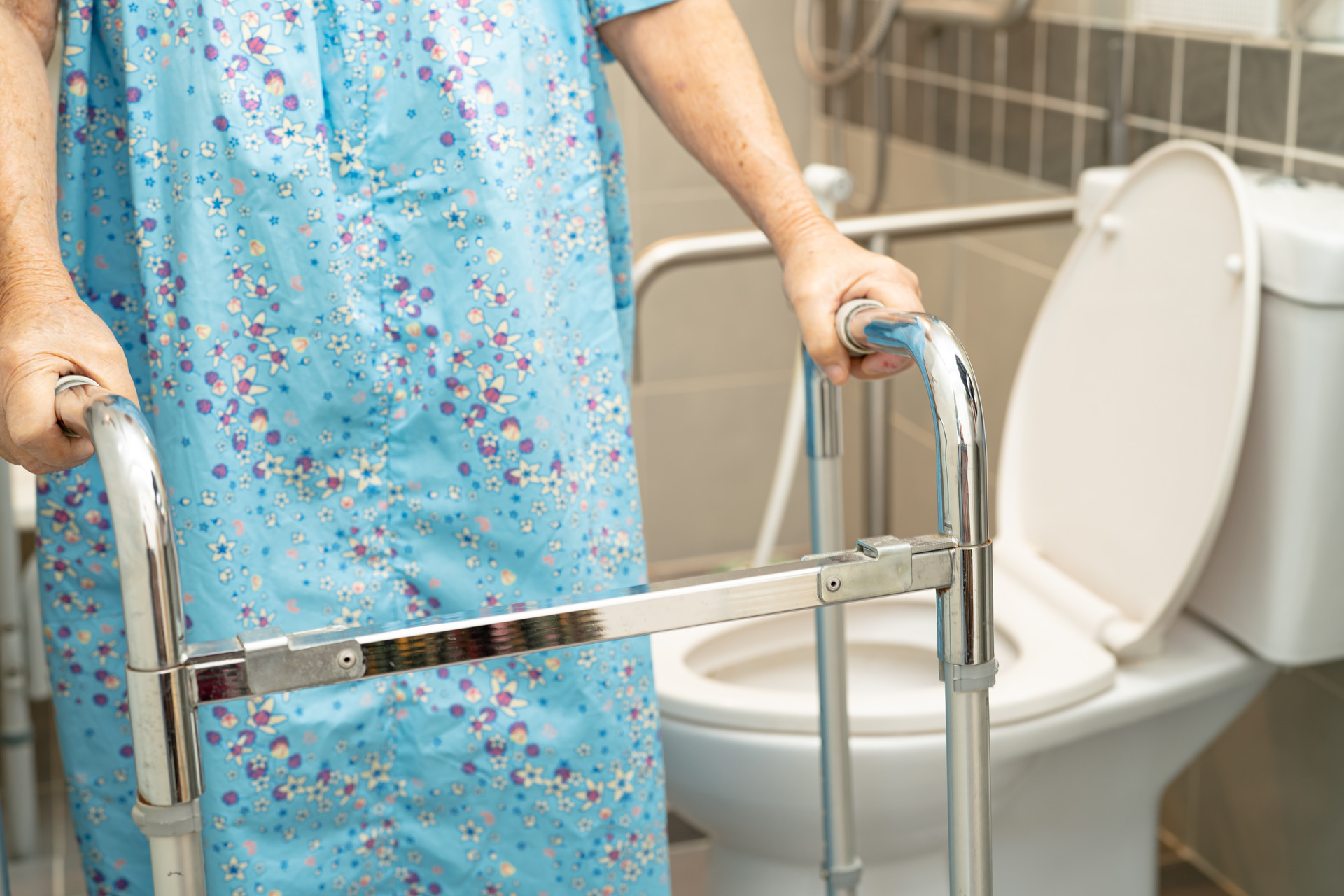

When Ms. K. tried to use the restroom for the first time after her fall on her hip, she felt her legs give way beneath her. “It’s not as easy as it used to be,” she told her daughter, who rushed to her aid. The toilet seat riser was a small step, but a crucial one for her safety and independence.
For many people, sitting down on the toilet is an unremarkable action—until pain, loss of strength, or unsteadiness make it difficult to stand up. When knee or hip mobility is limited, or in cases of dizziness, general muscle weakness, or after surgery, this simple task becomes a challenge. A toilet seat riser can make it easier to sit down and stand up in a controlled manner, thereby helping to ensure greater safety.
In this guide ( magazin ), you’ll learn which toilet seat riser is right for you, how to choose the correct height, which models with armrests or lids are most useful, how to install the seat riser safely, and whether your health insurance might cover the cost. We’ll show you how the right toilet seat riser can help you gain more safety and independence in the bathroom.
What is a toilet seat riser?
A toilet seat riser is an assistive device that is attached to an existing toilet bowl. It raises the actual seat height by several centimeters so that the hips and knees do not have to bend as much when using the toilet.
Especially when mobility is limited, after surgery or when leg strength is declining, the higher seat helps the user sit down in a more controlled manner and stand back up with less effort. For family members, this means less physical strain when providing assistance and makes care planning easier, allowing the person to remain in their familiar surroundings for longer.
Toilet Seat, Toilet Lid, and Toilet Bowl: The Differences
Before you choose a toilet seat riser, it's important to understand the terminology:
- Toilet bowl: the permanently installed ceramic part of the toilet.
- Toilet seat: the seat— with or without a lid—that is placed on top of the toilet bowl.
- Toilet seat riser: an additional attachment or replacement seat that raises the seat height.
Toilet Seat Riser: Attachment or Replacement Seat?
There are various options available for raising the toilet seat to make daily life easier for the person receiving care and their family members. The main distinctions are between the design and the installation method.
Toilet Seat Riser: This is an attachment that is placed directly on top of the existing toilet bowl and then secured using screws, clamps, or brackets. This option is particularly suitable when the seat needs to be raised for a specific period of time, such as after surgery or in a rental property where modifications are not permitted.
The Replacement Toilet Seat: The replacement toilet seat is a replacement part for your existing toilet seat. This riser is designed for long-term use.
Booster seat with armrests: In this model, the raised seat is complemented by armrests to provide additional support and make it even easier to stand up.
Benefits of Toilet Seat Risers
After her hip surgery . “I spent hours trying to sit down without feeling pain,” she said. “It wasn’t until we ordered the toilet seat riser that I felt more secure.” This is because a higher seating position can make it easier to move while using the toilet and thus help ensure greater safety.
- Easier Standing Up: A higher seat reduces the effort required to stand up, especially after hip or knee surgery.
- More Controlled Sitting: People with balance issues or declining leg strength can sit down more slowly and safely.
- Relief for limited mobility: Reduced deep flexion can be particularly important after hip surgery or in cases of painful knee and hip joints.
- Greater independence: People who are able to use the restroom again with little or no assistance gain privacy and self-confidence.
- Relief for Caregivers: The right standing aid can make it easier to assist with transfers.
Types of Toilet Seat Raisers
- Choose a toilet seat riser based on seat height
The correct height is crucial for safety and comfort:
* 5 cm: typically used for minor limitations or when only a slight adjustment is needed.
* 10 cm: a common standard height, often relevant after hip surgery or in cases of significant loss of strength.
* 15 cm to about 17 cm: for high demand, long legs, or severely limited mobility; always check carefully to make sure the feet are still firmly on the floor.
Ms. M. decided on 10 cm because she could brace herself well with her feet. “It’s not too high, but just right,” she said.
- With a lid, armrests, or handles?
| Features | Advantage | Suitable for | What to Look for in the Text |
|---|---|---|---|
| With lid | It often looks more unobtrusive in the bathroom and can provide additional storage space when the lid is closed | Long-term use in a private bathroom | Only mention this if the specific model has a sturdy lid designed for that purpose |
| With armrests | Provides lateral support when standing up and sitting down | People with limited leg strength or who feel unsteady during transfers | Armrests are not universal grab bars and are not necessarily designed to support a person's full body weight |
| With handles | Additional assistance with positioning | Users with mild to moderate disabilities | Describe position, stability, and tangibility |
| Without armrests | Greater freedom of movement, often in a more compact design | People who do not need lateral support | Suitable only if the person can stand up safely without additional support |
Material, Hygiene, and Durability
The quality of the booster seat is crucial for safety:
- Smooth, easy-to-wipe plastic surface —makes cleaning easier
- Skin-friendly, durable seat —provides comfort and support
- Rounded edges – prevents injuries
- Easily accessible fasteners —make cleaning a breeze
- Corrosion-resistant fasteners —guarantee durability
Always take the weight capacity into account: Many standard models have a weight capacity of around 120 kg; for individuals with a higher body weight, bariatric models are required.
Assembly and Installation
Explain Types of Fasteners
- Side clamps or clamp wings: The attachment is secured to the sides of the toilet bowl.
- Clamping screws: Screw connections ensure a secure hold.
- Installation using the rear toilet mounting holes: The original seat is removed, or the existing mounting points are used.
- Clamps or latching mechanisms: Common in certain clip-on models.
Installation in Five Simple Steps
- Clean and dry the toilet bowl and surrounding surfaces.
- Check whether the shape, width, and mounting points of the toilet bowl match the model.
- Center the booster seat.
- Secure the clamps, screws, or brackets evenly according to the manufacturer's instructions.
- Check the seat stability before using it for the first time: The attachment must not slide sideways, tip over, or wobble.
Safety check before each use
- All fasteners are securely in place.
- The seat is dry and free of cleaning product residue.
- There are no cracks, deformations, or loose parts.
- Armrests are fully locked in place, if present.
- The maximum allowable load is not exceeded.
Coverage by Health Insurance
- Toilet seat risers are classified under Product Group 33 ofthe GKV Medical Aid Catalog.
- The statutory health insurance provider may cover the cost if the booster seat is medically necessary.
- People with public health insurance often pay the statutory copayment of 10 percent of the retail price, with a minimum of 5 euros and a maximum of 10 euros.
The Most Important Selection Criteria
| Criterion | What should you look out for? | Why It's Important |
|---|---|---|
| Increase in cm | Check the total height of the toilet and the seat | Feet should be steady, and standing up should be easier |
| Load capacity | Compare body weight, including the safety margin, with the manufacturer's specifications | Protection Against Material Failure and Instability |
| Armrests | Honestly assess your need for lateral support | They can help you stand up, but they require enough space |
| Lid | Consider hygiene, appearance, and everyday use | Not everyone needs a lid |
| Mounting | Check the toilet shape, width, installation type, and tools required | Prevents accidental purchases and slipping |
| Hygiene | Choose smooth, sturdy, easily accessible surfaces | Regular cleaning becomes easier |
| Space in the bathroom | Measure the distance from the wall, the space for side-to-side movement, and the door opening | Particularly relevant for armrests and small bathrooms |
| Prescription eligibility | Clarify the medical device number, contract coverage, and prescription | Important Information Regarding Scheduled Health Insurance Benefits |
Recommendations by Use Case
- After hip or knee surgery: A higher seat height is often recommended to avoid sitting too low.
- For scoliosis or back pain: Focus on comfort, controlled movement, and a seat height tailored to the individual.
- For people with dementia or impaired orientation: A familiar routine and a clear environment are more important than a wide range of products.
- For older adults who have lost strength: a moderate height adjustment and, if necessary, armrests for support.
Factors Affecting the Price of Toilet Seat Risers
The price of a toilet seat riser depends primarily on its height, mounting type, armrests, lid, and maximum weight capacity. However, the decision should not be based solely on price; rather, it should be based primarily on which model meets your needs and can provide the necessary support.
- Height and Height Adjustability
- Lid: Models with lids may be more expensive
- Armrests or handles: Additional features increase the price
- Material Quality
- maximum load capacity
Frequently Asked Questions About Toilet Seat Risers
How high should my toilet seat riser be?
The appropriate height depends on the existing toilet height, body height, mobility, and medical guidelines. The feet should rest securely on the floor, and the seating position should allow for controlled sitting down and standing up. After hip surgery, the height must be determined in consultation with the treatment team.
Does health insurance cover a toilet seat riser?
If medically necessary, the public health insurance provider may cover the cost of a toilet seat riser. Generally, a doctor’s prescription is required, and the riser must be provided by a contracted provider. Individuals with public health insurance often pay the statutory copayment, unless they are exempt.
Does a toilet seat riser fit on every toilet?
No, not automatically. Many models fit standard toilet bowls, but the shape, width, interior dimensions, wall clearance, and mounting method must be compatible with the product. Before purchasing, check the manufacturer’s specifications and, if necessary, the dimensions of the toilet bowl.
How durable are toilet seat risers?
The weight capacity varies by model. For many standard products, it ranges up to about 120 kg; for higher-capacity needs, there are models designed to handle heavier loads. The maximum total load specified by the manufacturer is always the determining factor.
Can I install it myself?
Many toilet seat risers can be installed without any prior technical experience. However, you must follow the instructions and check before use that the seat is centered, securely fastened, and does not wobble. If you are unsure, have limited upper body strength, or are dealing with complex mounting procedures, it is advisable to seek assistance from family members, caregivers, or a medical supply store.
Conclusion: Toilet seat riser: when it becomes necessary
The right toilet seat riser can make a significant difference in a person’s safety and independence. Whether for short-term use after surgery or for long-term use in cases of limited mobility, choosing the right height and features is crucial. In cases of surgery, a high risk of falls, pain, or dementia, you should not leave the selection of the right seat to chance. Seek expert advice.