

When Ms. B., 67, suddenly felt pain in her back after making her bed—a seemingly harmless movement—she had no idea what was wrong. It wasn’t until her doctor’s diagnosis that it became clear: a vertebra had fractured—osteoporosis. “I felt like I was made of glass,” she says. Today, a year and a half later, Ms. B. goes to specialized exercise classes three times a week. She stands more steadily, walks more confidently, and has left her fear behind. What has changed? Not the disease itself, but how she deals with it.
This website, magazin , explains the connection between exercise and osteoporosis and why physical activity is often the most effective form of support for those affected, in addition to medication and sound medical advice. Under the heading “Exercise and Osteoporosis,” you’ll find many programs, videos, and recommendations; we’ll help you understand what really matters, with tips, exercises, and an honest assessment of what works and what doesn’t.
Ms. B., 67 — How Exercise Restored Strength to Her Bones
Ms. B. is not an isolated case. Postmenopausal women are particularly affected: As estrogen levels drop, bone resorption accelerates, bone metabolism becomes unbalanced, and bone mass decreases. The result is silent bone loss until a first fracture changes everything. Commonly affected areas: the spine, hip, and femoral neck.
The turning point for Ms. B. was her conversation with her doctor. She said, “Medication helps, but we won’t get very far without exercise.” Today, Ms. B. knows that her bones need tension, pressure, and stress to rebuild themselves. That’s exactly what a targeted exercise program provides.
What Happens in the Body with Osteoporosis
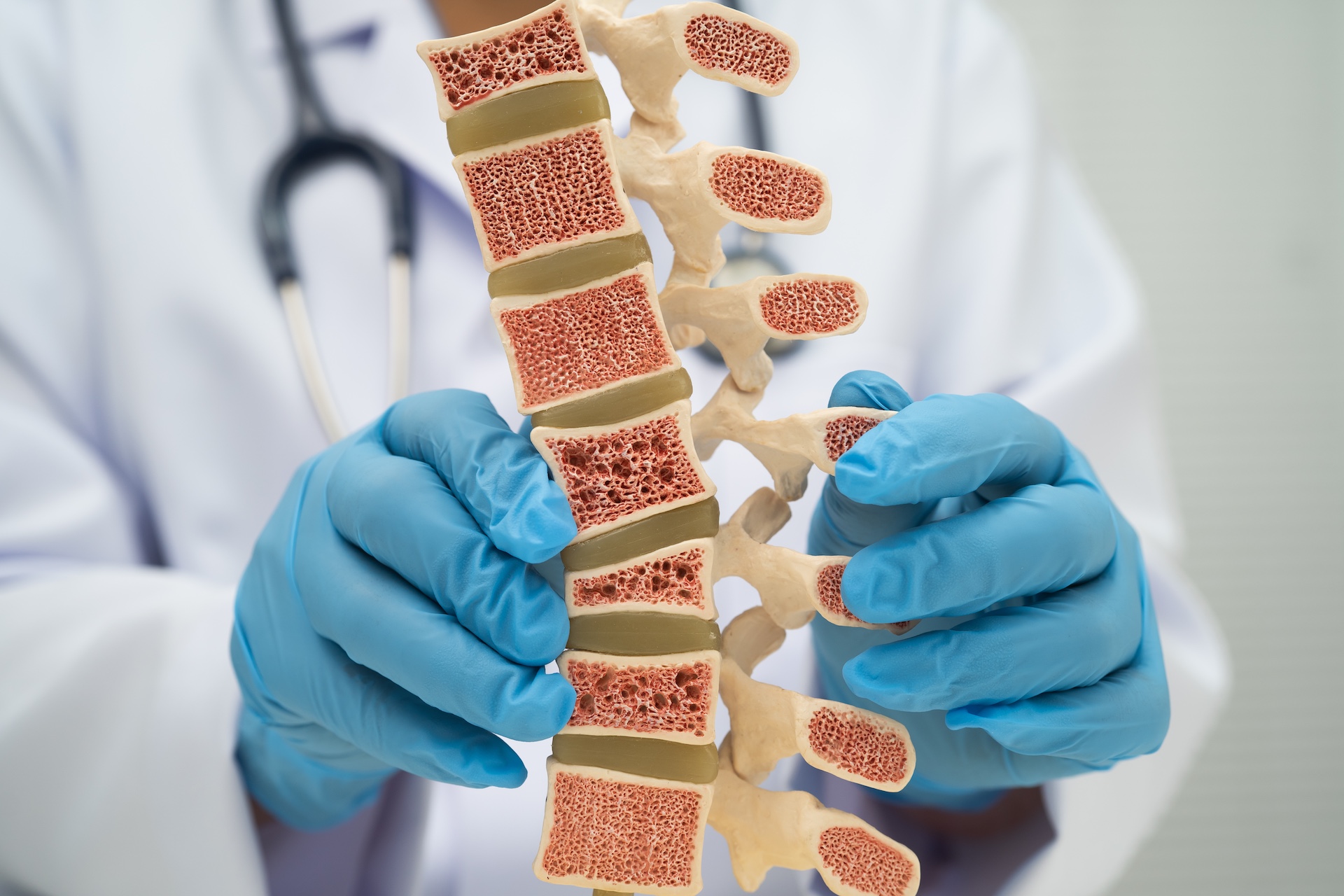
Osteoporosis is a disease affecting the entire musculoskeletal system: Bone tissue becomes more porous, the structure becomes more porous, and stability decreases. The bone loses density; bone density is the key measure your doctor assesses. If bone resorption and formation are out of balance, the risk of fractures increases significantly. As a rule, bone loss goes unnoticed for years until the first fracture occurs.
Why Exercise Is So Important for Osteoporosis
Bones are not dead material, but living tissue. They respond to stress in much the same way as muscles. Sports and exercise send a signal: “We’re needed.” The body responds by storing minerals and developing denser bone tissue. Muscles and bones work together as a unit: Where the muscle contracts, the bone responds. That’s exactly why exercise is so much more than just a recommendation for osteoporosis—it’s part of the treatment.
Studies clearly show that a combination of strength training, balance exercises, and endurance activities measurably improves bone health, even in old age. Exercise is therefore one of the best strategies for the prevention and treatment of osteoporosis. People who exercise regularly not only slow down bone loss but can even shift bone metabolism back toward bone formation.
The Best Sports and Exercises for Osteoporosis
There is no single "right" sport. The choice depends on your age, your fitness level, and how far the disease has progressed. It's important to find the right mix of different types of exercise so that both your muscles and bones benefit equally.
Strength Training—The Foundation for Strong Bones
Strength training is essential for osteoporosis prevention. Regular exercise builds muscle, which in turn strengthens bones. Muscle development acts as a protective shield: Strong muscles support the spine and hips, protect against falls, and significantly reduce the risk of falling. Two to three sessions per week are recommended, ideally under the guidance of a professional. Even simple exercises using your own body weight or TheraBands can lead to initial improvements.
Sample exercises to do at home:
There’s plenty you can do at home, too. Three proven exercises for osteoporosis: squats while holding onto a chair (for the leg muscles), wall push-ups (for the chest, back, and hands), and standing up from a chair without using your hands (for the hips). If you’re looking for a good instructional video, you can find various programs through health insurance providers or rehabilitation sports clubs. Important: Start with just a few repetitions and gradually increase the number.
Gymnastics, Pilates, and balance exercises for flexibility
In addition to sheer strength, flexibility and balance are essential. Gymnastics and Pilates strengthen the deep core muscles, improve posture, and increase spinal flexibility. Balance exercises in particular—such as standing on one leg, the tandem stand, or taking light steps along a line—are a real lifesaver. The more stable you are, falls less often. And those who fall less often have a significantly lower risk of hip and femoral neck fractures.
Nordic walking and other types of exercise
Nordic walking is one of the gentlest forms of exercise for people with this condition: it’s easy on the joints, takes place outdoors, and allows for easy control of intensity. The poles provide support, the steady rhythm strengthens the heart and lungs, and the entire musculoskeletal system is mobilized. Hiking, dancing, and water aerobics are also good options. What you should avoid: sudden twisting movements, deep forward bends while carrying a load, and sports with a high risk of falling—especially those on slippery surfaces. Duration and regular repetition are key: it’s better to do half an hour of Nordic walking three times a week than one long, strenuous hike once a month. Repetition helps the bones adapt, and the body rewards you with greater stability.
Prevention and Prophylaxis—What You Can Do Yourself
The good news: Prevention is possible at any age. The sooner you start, the better—but even those who have already been diagnosed and undergone treatment can benefit. Prevention rests on three pillars: exercise, nutrition, and medical supervision.

Vitamin D, Calcium, and the Recommended Intake
Bones need building blocks. Calcium provides the substance, while vitamin D ensures that it reaches the body. The daily calcium requirement for adults is about 1,000 mg, which can easily be met through dairy products, green vegetables, or calcium-rich mineral water. The body produces vitamin D on its own when exposed to sunlight, but in winter, exposure is often insufficient in our part of the world. Have your levels checked by a doctor before taking supplements. A sensible combination of exercise, a healthy diet, and, if necessary, medication is the most effective strategy against bone loss.
Tips for Getting More Exercise in Your Daily Life
You don’t have to become an athlete to do something for your bone health. Small steps count: take the stairs instead of the elevator, walk a little faster, and make a point of standing up and stretching once a day. If you have a garden, a dog, or a grandchild, you’re already halfway there. The rule is: 20 minutes a day is better than an hour once a week. Duration and regularity matter more than intensity.
Reducing the Risk of Falls – Small Steps, Big Impact
Remove tripping hazards in your home, wear non-slip shoes, get regular eye exams, and check for medications that cause drowsiness. Also: Incorporate balance exercises into your daily routine—stand on one leg while brushing your teeth, or take a few steps while talking on the phone. Balance can be trained. Any improvement in stability reduces the risk of falling and, with it, the risk of serious bone fractures. If you stand well, you walk more confidently, and if you walk confidently, you’ll feel more capable again.
Ms. B. says: “At first, every step outside the front door was a struggle. After three months of targeted training, I realized that my body was supporting me again.” Small successes like these are the real reward of any exercise therapy. Bones become denser, muscles stronger, self-confidence grows, and the musculoskeletal system once again becomes a reliable foundation for other daily activities.
When Should You See a Doctor? An Overview of Therapy and Treatment
If you are over 50, going through menopause, or have already had a fracture with no apparent cause, talk to your doctor. A bone density test will provide clarity about your current bone mass. Depending on the results, treatment with medication may be an option, always in combination with exercise, a healthy diet, and vitamin D. The treatment is effective when all these components work together.
Take your time during the consultation; ask about rehabilitation exercise groups, approved exercises, and an honest assessment of your situation.
Important to know: Even medication cannot replace daily exercise. Studies show that patients who combine exercise with osteoporosis treatment are significantly less likely to suffer new fractures than those who rely solely on medication. You should work with your doctor to choose the right types of exercise, especially if you have already had a vertebral fracture.
Exercise as a Daily Companion
Perhaps, like Ms. B., you’ve received a diagnosis that has frightened you. Or perhaps you’re here just as a precaution. Either is fine. Because the truth is: No one has to sit idly by and watch their bones grow weaker. Exercise and physical activity aren’t miracle cures, but they’re the most effective daily help we have.
Start with the first step: a walk, a few exercises at the kitchen table, or a call to a rehabilitation exercise group. Talk to your doctor about your bone health and determine your vitamin D and calcium needs. And remember: Every step, every exercise, every repetition is a small “yes” to your own musculoskeletal system.
Ms. B. says today: “When I get up in the morning, I don’t think about my bones anymore. I think about my walk.” It is precisely this small shift—from worry to routine—that makes all the difference when it comes to exercise and managing osteoporosis in everyday life.