

At the end of a long workday, Lena sits at her desk, her legs feeling as heavy as lead, and the painful throbbing in her calves is getting worse. She wonders, “Does it have to be this way? Is this just the beginning of something worse?” She worries about vein problems or even thrombosis keeps her awake at night. But then a friend tells her about her recent experience with compression stockings, and Lena decides to look into it further.
But what actually happens in the leg when a stocking applies constant pressure? How does this affect the venous system and blood and lymph circulation? These are exactly the questions we’ll be addressing today, and we’ll show you how compression stockings can make a real difference in your daily life.
What are compression stockings—and what are they used for?
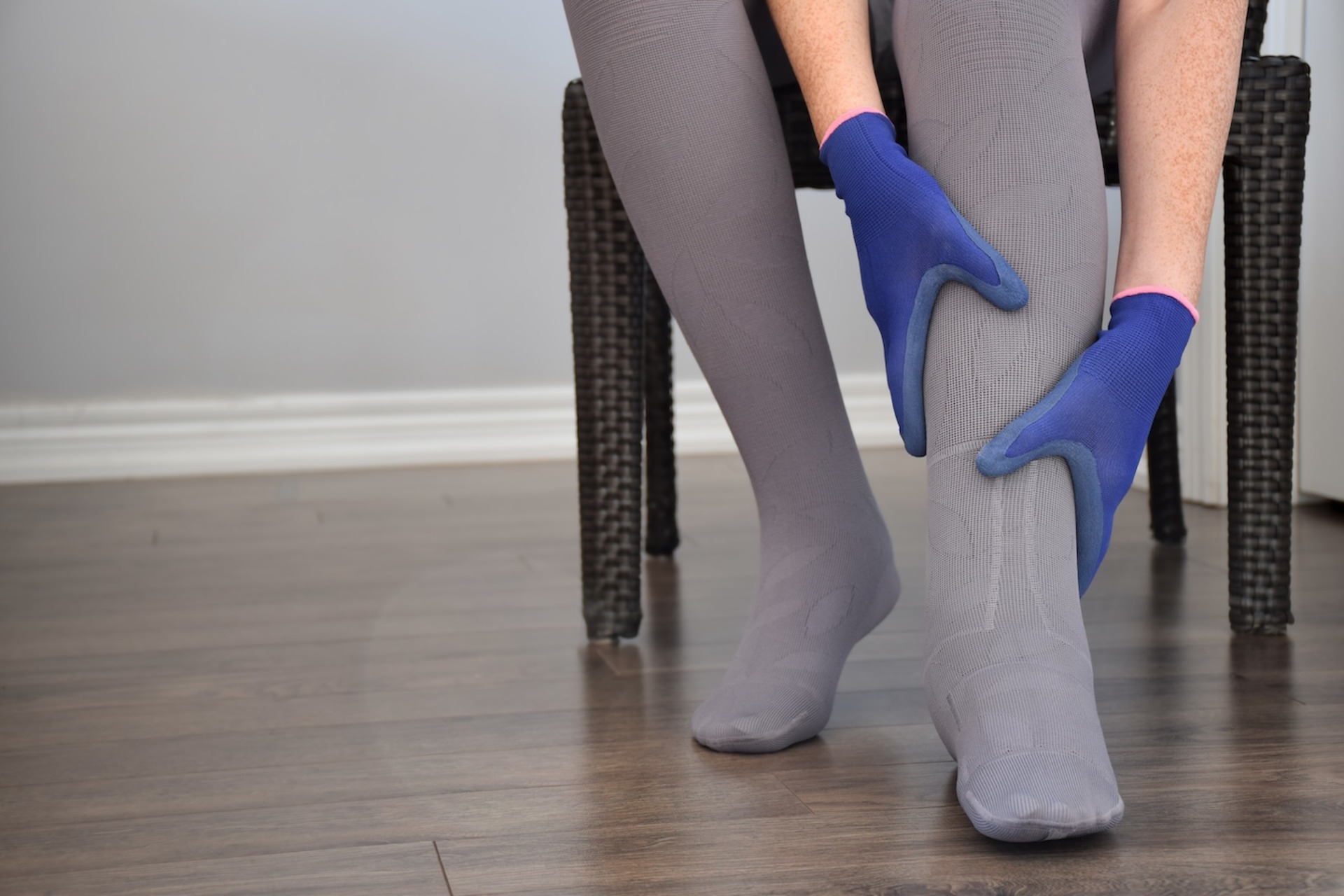
Compression stockings are not a new invention, but a tried-and-true aidthat is indispensable in the daily lives of many people today. They are among the so-called medical compression products that support blood and lymph flow in the legs.
Unlike conventional stockings, compression stockings apply targeted, graduated pressure—usually stronger at the ankle and decreasing toward the top. This pressure helps venous blood flow against gravity by relieving pressure on the venous valves and surrounding tissue. The pressure gradient of the stockings is key to their compression effect: The highest pressure at the ankle ensures that blood flows back from the deep veins against gravity, while the pressure decreases toward the top to simulate a natural flow pattern.
This is not a niche product, but rather a tool used by everyone from athletes to patients with leg vein conditions. The effect is not mystical, but physiologically understandable: Targeted pressure optimizes blood flow and circulation, and reduces tissue swelling.

How It Works in the Body: How Pressure Helps the Legs
Imagine how blood normally flows back up through the leg against gravity toward the heart. Compression stockings support this system in three ways:
- Heart: Supports the heart with every step by reducing the strain on the muscles.
- Blood Flow: Optimizing blood flow so that blood flows through the legs more quickly and evenly. This promotes venous return.
- Tissue: Reduces fluid retention in the tissue, which prevents swelling.
Medical Compression Stockings vs. Support Stockings vs. Thrombosis Stockings
Support stockings
- Purpose: To prevent swelling caused by prolonged sitting or travel
- Regulatory Status: Available over the counter; no doctor's prescription required
- Where to use: Office, long-haul flights, travel
Medical Compression Stockings
- Purpose: Treatment of venous disorders and varicose veins
- Prescription: medically prescribed, with a defined compression class (I–IV)
- Setting: Everyday life, support during vein treatments
Compression stockings
- Purpose: Prevention of blood clots following surgery or during bed rest
- Prescription: Clinically prescribed, usually after surgery
- Setting: Hospital, follow-up care for patients with limited mobility
Although all types of compression stockings use the same basic principle, they differ in terms of compression levels and intended uses, and this is crucial for selecting the right product and ensuring effective treatment.
Who Benefits—From People With Vein Disorders to Athletes
Patients with venous disorders
Maria, a teacher with severe varicose veins, suffered from heavy legs, especially after a long day of teaching. She was concerned that her venous condition was getting worse. After consulting with a vein specialist, she was prescribed Class I compression stockings. After just one week, she noticed the swelling had gone down, and after two weeks, she was able to teach her classes without that constant feeling of pressure in her leg.
Athletes and the Use of Compression Stockings
Lisa, an ambitious runner, experienced long recovery times after intense training. She added compression socks to her recovery routine and noticed that her legs were less swollen after workouts, allowing her to return to training sooner and perform at her best more often. For Lisa, compression socks became an integral part of her athletic routine.
Both had different starting points, but the principle was the same: compression as a supportive measure, not as the sole solution. Compression therapy is often part of a more comprehensive treatment plan that also includes exercise therapy, hydration, and nutrition.
Common Symptoms and Indications for Use
Swelling in the evening, a feeling of heaviness in the legs, or concerns about blood clots are common symptoms that compression stockings can help alleviate by supporting the muscles and providing relief for various conditions of the venous system.
There are many causes of these symptoms: weakened venous valves, a genetic predisposition, or a lack of exercise; at the same time, the stockings promote recovery, stabilize overall physical performance, and—depending on the diagnosis—may also be beneficial for conditions affecting the lymphatic system.
Proper Use in Everyday Life
Imagine putting on your stockings in the morning, before your legs even start to feel heavy. This is an effective way to prevent swelling. A common question is when compression stockings are recommended: often not only for tired legs caused by weak venous valves, but also for conditions affecting the venous system. Depending on the diagnosis, compression stockings may also be used to treat conditions of the lymphatic system.
Dressing
- Put them on in the morning, before your legs get swollen
- Use aids such as sock aids to make putting on socks easier
Care
- Hand wash at 30°C to maintain the compression effect, or follow the specific instructions on the stocking
- Do not tumble dry; air dry instead
- Replace every 3–6 months, as the compression effect may diminish over time
Material
- Breathable fabrics for warm seasons
- Wool Blends for the Cold Season
- Non-slip soles for everyday use
Models
- Knee-high socks: for support of the ankle and calf
- Thigh-high stockings: for thigh support
- Tights: for support along the entire leg
- Compression pants: for support in the groin and thigh area
Compression Class, Prescription, and Costs
A specialist determines the appropriate compression class, usually based on a physical examination and medical history. For patients with mild venous conditions, Class I is generally sufficient, while those with more severe symptoms would need a higher class to achieve greater compression and thus experience a noticeable improvement. The exact fitting is ideally done at a medical supply store.
The key point: Medical compression stockings are generally covered by health insurance if they are prescribed by a doctor. Support stockings, on the other hand, are mostly paid for out of pocket. This point is often misunderstood, but with the right information, you can prepare for any potential costs.
- Care: Hand washing or a gentle cycle are generally acceptable; it is important to wash compression stockings after each use. Before putting them on, you should apply moisturizer to dry or sensitive skin.
- Styles: Knee-highs, thigh-highs, and pantyhose are available depending on the intended use; compression pantyhose provide continuous compression all the way up to the abdomen.
FAQ – Frequently Asked Questions About Compression Stockings:
How long should you wear compression stockings each day?
For most people, wearing the stockings all day is ideal. It is generally recommended to put them on in the morning and not take them off until the evening to achieve the full effect.
Does health insurance cover the cost of compression stockings?
Yes, medical compression stockings are generally covered by health insurance if they are prescribed by a doctor. Support stockings are usually paid for out of pocket.
Can healthy people without vein problems also wear compression stockings?
Yes, healthy people can also wear compression stockings as a preventive measure, especially during long trips or when sitting for long periods at the office. They are not intended solely for patients with venous disorders, but you should still discuss their use with a doctor.