

When Mr. T., a 48-year-old office clerk, woke up one morning and could barely lift his arm, he didn’t know at first what was wrong with him. A dull, tingling sensation ran from his neck to his fingertips. It wasn’t until he saw a specialist that he learned he had a herniated disc in his cervical spine—commonly known as a cervical disc herniation. In this comprehensive magazin, you’ll learn what that means, what the typical symptoms are, which treatments are effective, and how targeted exercises can help relieve pain.
The Cervical Spine: Structure and Function of the Intervertebral Discs
The cervical spine is the most mobile section of the entire spine. It consists of seven cervical vertebrae, designated C1 through C7, and supports the weight of the head, allows for rotational and flexion movements, and at the same time protects the sensitive spinal cord and the nerve roots that emerge from it. Between the individual vertebral bodies are the intervertebral discs, which act as natural shock absorbers.
What are intervertebral discs, and what role do they play?
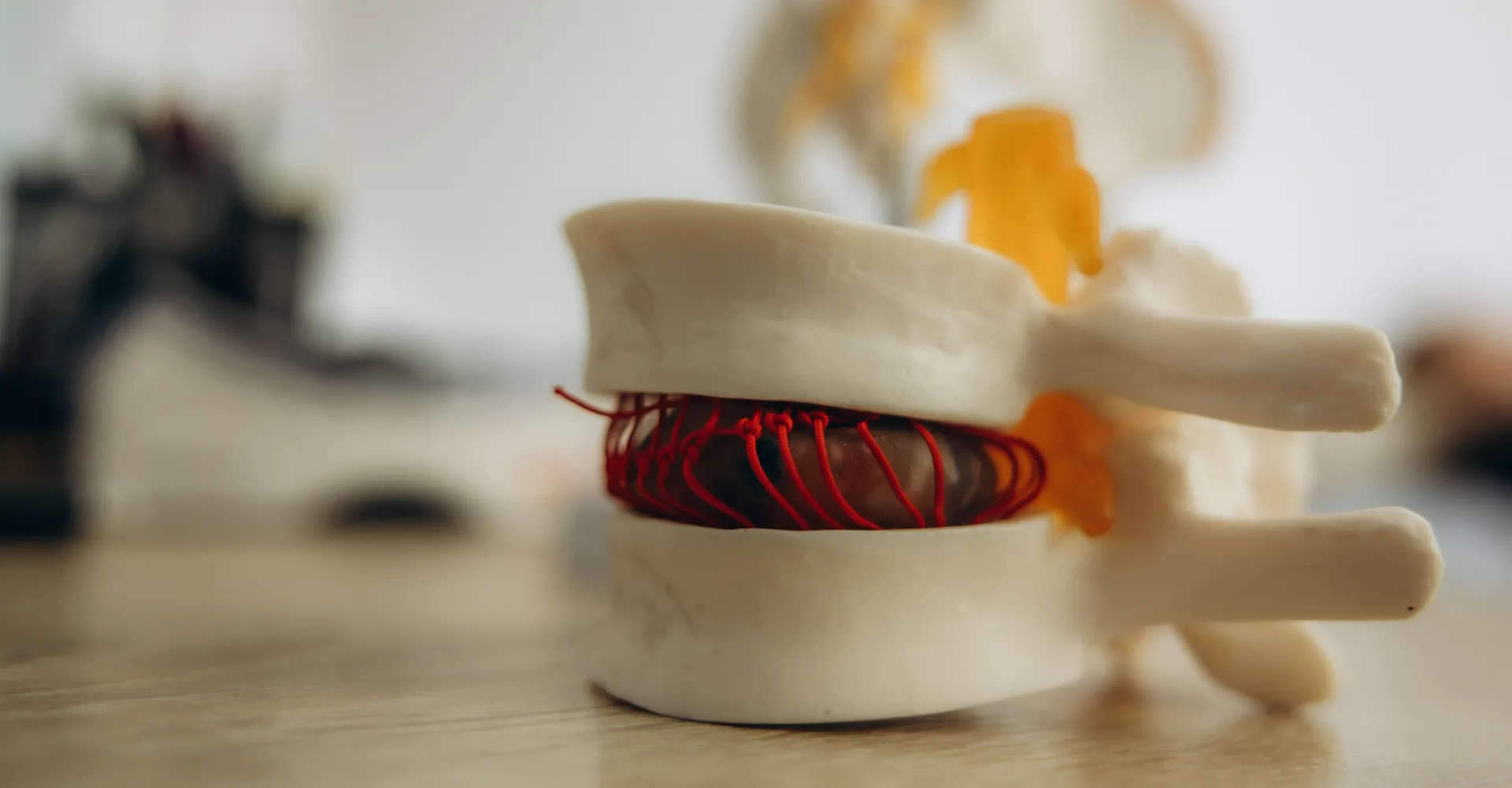
Intervertebral discs are flat, elastic discs made of connective tissue that act as cushions between the vertebral bodies. Each intervertebral disc consists of two main components: the outer fibrous ring (annulus fibrosus) and the inner gel-like nucleus (nucleus pulposus). The fibrous ring surrounds the soft, gelatinous nucleus and provides the disc with stability. The gel-like nucleus consists largely of water and absorbs compressive forces by distributing them evenly across the fibrous ring.
This ingenious structure, made up of connective tissue and intervertebral disc tissue, allows us to go about our daily lives pain-free despite the constant strain on our spine—provided the tissue remains intact.
The Special Importance of the Cervical Discs from C1 to C7
In the cervical spine, the intervertebral discs are particularly small and compact structures. This section of the spine is extremely mobile: it can rotate up to 90 degrees to the left and right and flex forward and backward. It is precisely this high degree of mobility that makes the intervertebral discs in the cervical spine susceptible to wear and tear and injury. In clinical practice, the segments between C5/C6 and C6/C7 are most commonly affected by a herniated disc.
Shock Absorbers Under Constant Stress: Why the Cervical Spine Is Under Particular Strain
Unlike the lumbar spine, which supports the body’s weight in the torso, the cervical spine is primarily exposed to dynamic stresses. Working at a computer screen for hours on end, looking down at a smartphone, or sleeping in an awkward position with the wrong pillow—all of these put strain on the delicate structures in the cervical spine. Over the years, this persistent strain can lead to wear and tear on the intervertebral disc tissue.
What is a herniated disc in the cervical spine?
A herniated disc (disc prolapse or disc herniation) occurs when the gel-like center (nucleus pulposus) protrudes through tears in the fibrous ring and enters the spinal canal. The protruding disc tissue can press against the spinal cord or the exiting nerve roots, sometimes with serious consequences for those affected.
Herniated Disc, Disc Protrusion, and Disc Prolapse: What's the Difference?
In medical terminology, a distinction is made between various stages of intervertebral disc damage. In the case of a disc protrusion, the nucleus pulposus bulges outward without completely breaking through the annulus fibrosus. In a true herniated disc (disc prolapse), on the other hand, the annulus fibrosus tears, and parts of the nucleus pulposus protrude into the spinal canal. In some cases, fragments detach completely; this is referred to as a sequestrum. All three forms can occur in the cervical spine and cause symptoms.
Cervical Disc Herniation vs. Lumbar Disc Herniation
Herniated discs occur more frequently in the lumbar spine, but a herniated disc in the cervical spine is particularly serious due to its proximity to the spinal cord and the nerve roots that supply the arms and hands. The symptoms differ significantly from those in the lower back and primarily affect the neck, shoulder, and arm area.
Causes of a Cervical Disc Herniation
There are many causes of a herniated disc in the cervical spine. In most cases, it is not caused by a single event, but rather by a gradual process that weakens the disc tissue over the course of several years.
Wear and Degeneration: The Most Common Cause
As we age, the intervertebral discs lose water content and, consequently, elasticity. The nucleus pulposus shrinks, and the annulus fibrosus becomes brittle and prone to tearing. This natural wear-and-tear process, known as degeneration, is the most common cause of herniated discs, including those in the cervical spine. Degenerative changes increase significantly after age 40, but younger people are not exempt either.
Improper Posture, Body Alignment, and the Wrong Pillow
Chronic poor posture—such as sitting at a desk for long periods with the head jutted forward—significantly increases pressure on the front portions of the intervertebral discs. Sleeping on an unsuitable pillow that does not keep the neck in a neutral position can also place permanent strain on the intervertebral discs in the cervical spine. Similarly, being overweight and having weak back muscles play a role, since in these cases the intervertebral discs must compensate for the stabilizing work that the muscles would otherwise provide.
Trauma and Acute Injuries
In rarer cases, an acute trauma—such as a car accident resulting in whiplash or a fall—can trigger a cervical disc herniation. In such cases, the annulus fibrosus tears due to a sudden, massive force. Such traumatic incidents can also affect younger, physically active people and require immediate medical evaluation.
Genetic Factors and Connective Tissue Quality
Last but not least, genetic factors play a role. People with a congenital weakness of the connective tissue or a family history of intervertebral disc disorders are at increased risk. The quality of the annulus fibrosus is partly genetically determined and influences how resilient the intervertebral discs remain over the course of a person’s life.
Symptoms of a Herniated Disc in the Cervical Spine
Ms. K., a 52-year-old teacher, initially noticed only a slight tingling sensation in her right arm. Then she began to experience pain in her neck, and eventually she realized that she could barely perform certain gripping movements. Her story is typical of the progression of symptoms associated with a cervical disc herniation: they often begin inconspicuously and gradually increase in intensity.
Pain in the neck and shoulder area
The most characteristic symptom is a deep, piercing pain in the cervical spine, which often radiates into the shoulders and upper back. The pain may intensify with certain neck movements and result from pressure on the affected nerves. Many patients describe the pain as stabbing or burning, which tends to worsen especially at rest or at night.
Tingling, numbness, and radiating pain in the arm and hand
Since the nerve roots of the cervical spine supply the arms and hands, a herniated disc in the cervical spine often leads to tingling and numbness that radiate from the neck down the arm to the fingers. Depending on which segment is affected (such as C6/C7), the exact location of these symptoms varies. Tingling in the thumb and index finger suggests C6, while symptoms in the ring finger and little finger are more indicative of C7.
Paralysis and Loss of Strength: A Serious Warning Sign
In severe cases, pressure on the nerve roots or the spinal cord can lead to paralysis. Those affected may notice that they can no longer grip objects firmly, that their arm feels weak, or that they are no longer able to perform fine motor tasks. Paralysis is a medical emergency and requires immediate medical evaluation. If left untreated, it can lead to permanent nerve damage.
Headaches, dizziness, and other symptoms
Less well-known but quite common symptoms of a cervical disc herniation include headaches—especially at the back of the head—as well as dizziness and visual disturbances. These symptoms result from irritation of the nerve roots or from impairment of the blood vessels that run through the cervical spine. Difficulty swallowing has also been reported in isolated cases.
Symptoms by Segment: What C5, C6, and C7 Mean
The exact location of the symptoms depends on which cervical vertebra and nerve root are affected. A herniated disc between C4 and C5 often affects the shoulder muscles. A herniated disc at C5/C6 causes pain and tingling in the thumb area. The most commonly affected area, C6/C7, manifests as symptoms in the middle and ring fingers, as well as numbness along the outer side of the forearm. Understanding this correlation helps doctors with diagnosis and targeted treatment planning.
Diagnosis of a Cervical Disc Herniation: When Should You See a Specialist?
If neck pain persists and radiates into the arm or hand, those affected should see a specialist without delay. An orthopedist or neurologist is usually the first point of contact.
Clinical Examination and Medical History
The specialist begins the diagnosis with a detailed medical history: How long have the symptoms been present? Are there any triggering events? Does the pain radiate into the arm or leg? This is followed by a physical examination to assess reflexes, muscle strength, and sensation in the arm and hand. In many cases, initial clues about the affected nerve roots can already be obtained at this stage.

Imaging Techniques: MRI and CT
Imaging tests are essential for confirming the diagnosis. MRI (magnetic resonance imaging) is considered the gold standard because it provides highly detailed images of the intervertebral discs, spinal cord, and nerve roots. A CT scan may be used as a supplement to assess bone changes. The information obtained from imaging is crucial for selecting the appropriate treatment.
Treatment of a Cervical Disc Herniation
The good news for most patients: Surgery is usually not necessary. The vast majority of cases can be successfully treated with conservative measures. It is crucial that treatment be tailored to the individual and combine several components.
Pain Relievers and Medications: Pain Relief During the Acute Phase
During the acute phase, the primary focus is on reducing pain and relieving pressure on the irritated nerve roots. Anti-inflammatory pain relievers can help stop inflammatory processes and alleviate pain. In severe cases, cortisone injections can be administered directly into the affected area of the spine. Muscle relaxants reduce painful tension in the back muscles, which often develops as a protective response to a herniated disc. Medications should always be taken in consultation with the treating physician, as long-term use of pain relievers carries its own risks.
Physical Therapy and Exercise: The Cornerstone of Conservative Treatment
Physical therapy is at the heart of treatment for a cervical disc herniation. Targeted exercises under the guidance of a physical therapist strengthen the back muscles, improve mobility in the cervical spine, and promote blood flow in the affected area. It is important to continue moving, within reasonable limits, despite the pain. Complete bed rest is no longer recommended, as it tends to slow down rather than speed up the healing process.
Heat, Cold, and Physical Therapies
Physical therapies are used to complement physical therapy. Heat treatments relax the back muscles and improve blood circulation. Cold treatments can reduce acute inflammatory reactions. Ultrasound and electrotherapy are also used in orthopedics to relieve pain and support tissue regeneration.
Manual Therapy and Osteopathy
Manual therapy, performed by specially trained physical therapists, can help release blockages in the cervical spine and restore mobility. Gentle mobilization techniques improve blood flow to the intervertebral disc tissue and can shorten the duration of symptoms. Some patients use osteopathic treatments as a complementary therapy, although the scientific evidence for this is still limited.
Relief and Relaxation: Underestimated Measures
In addition to active therapies, conscious relief also plays an important role. The importance of the right pillow should not be underestimated: An orthopedic neck pillow that supports the natural curve of the cervical spine can significantly alleviate discomfort and reduce pain at night. Relaxation techniques such as progressive muscle relaxation or yoga can loosen the back muscles and lower overall stress levels—an important factor, since stress significantly intensifies the perception of pain.
Exercises for Cervical Disc Herniation: Gentle Movement as Therapy
Mr. M., 55, was skeptical when his physical therapist suggested he start doing gentle exercises despite his severe neck pain. But after just a few weeks, he realized that regular, targeted exercise relieved his symptoms far more effectively than rest. This is not an isolated case; science confirms that active exercise plays a crucial role in recovery.
Stretching Exercises for the Cervical Spine
Gentle stretching exercises improve mobility in the cervical spine and relieve pressure on the compressed nerve roots. Here’s a simple exercise: While sitting, slowly tilt your head toward your right shoulder, hold for 20 seconds, and then switch sides. Another exercise is chin retraction: Slowly pull your head back as if you were trying to create a double chin; this stretches the cervical spine and relieves pressure on the posterior portions of the intervertebral discs. All exercises should be performed without pain; stop immediately if pain increases.
Strengthening exercises for the neck and back muscles
Strong back muscles relieve pressure on the intervertebral discs over the long term. Isometric exercises, in which the muscles are tensed against light resistance without movement , are particularly effective. For example, place your hand against the side of your head and press your head against your hand without moving your head. Hold the tension for 5 seconds and repeat the exercise on both sides. These exercises strengthen the deep neck muscles, which act as a natural support structure for the cervical spine.
Shoulder and Chest Stretches to Correct Poor Posture
Since poor posture—especially a head that is pushed forward—significantly contributes to disc problems, exercises to straighten the upper body are important. Shoulder circles, squeezing the shoulder blades together, and actively opening the chest help counteract the typical office chair posture. Such exercises can be easily incorporated into daily life and should be performed regularly, ideally several times a day.
When Not to Exercise: Complete Rest in Cases of Paralysis
If you experience acute paralysis, severe numbness in the leg or arm, or bladder or bowel incontinence, seek immediate medical attention. In these cases, doing exercises on your own is contraindicated, and you must see a doctor right away. The exercises described are suitable only for patients with mild to moderate symptoms and no neurological deficits.
Surgery for Cervical Disc Herniation: When Is Spinal Surgery Necessary?
In a small number of cases, conservative treatment is not sufficient. If paralysis worsens, pressure on the spinal cord reaches critical levels, or the pain does not subside after several weeks despite intensive therapy, surgery may be necessary.
Surgical Procedures in Spinal Surgery
Various procedures are available in spinal surgery. In an anterior discectomy with fusion (ACDF), the herniated disc tissue is removed from the front, and the intervertebral space is filled and stabilized with a cage or bone graft. Alternatively, in suitable cases, an artificial disc prosthesis can be implanted to preserve natural mobility. Minimally invasive techniques have revolutionized back and neck surgery in recent years, enabling shorter hospital stays and faster recovery.
Risks and Rehabilitation After Surgery
Like any surgical procedure, spinal surgery carries risks: infections, postoperative bleeding, and, in very rare cases, injury to the spinal cord or nerve roots. Postoperative rehabilitation with targeted physical therapy is crucial for a good long-term outcome. Typically, patients who have undergone an uncomplicated procedure can be discharged from the hospital after just a few days and return to their daily lives within a few weeks.
Prevention: How to Protect Your Cervical Spine Long-Term
Prevention is the best treatment. If you want to keep your cervical spine healthy in the long term, you should incorporate a few basic measures into your daily routine. This doesn’t involve elaborate programs, but rather sensible habits that have a lasting positive effect on the health of your intervertebral discs.
Workplace Ergonomics and Choosing the Right Pillow
The monitor should be at eye level to avoid having to tilt your head up or down. Your shoulders should be relaxed, and your elbows should be close to your body. Taking short breaks to move around every 30 to 45 minutes provides the necessary relief for your intervertebral discs. When sleeping, you should use an anatomically shaped pillow that keeps your neck in a neutral position and supports the natural lordosis of the cervical spine.
Regular exercise and strengthening the back muscles
Endurance sports such as swimming, cycling, and Nordic walking strengthen the back muscles and improve blood flow to the intervertebral discs. Targeted strength training that takes the spine into account builds up the deep muscles that serve as natural support for the cervical vertebrae. Yoga and Pilates also promote body awareness and help identify and correct poor posture early on.
Stress Reduction and Relaxation as Protective Factors
Chronic stress increases muscle tension in the neck and shoulder area, thereby contributing to long-term disc problems. Relaxation techniques such as autogenic training, meditation, or regular walks in nature can help reduce everyday stress. People who pay attention to their inner balance not only protect their mental health but also their cervical spine.
Living with a Cervical Disc Herniation: What Those Affected Should Know
Ms. S., 61, overcame her herniated disc in the cervical spine three years ago. Today she says, “I never thought I’d be pain-free again. But with patience, the right exercises, and good support from my doctor and physical therapist, I’m fitter today than I was before.” Her story shows that a herniated disc in the cervical spine doesn’t have to be a lifelong limitation.
Duration of Symptoms and Prognosis
In most cases, symptoms of a cervical disc herniation improve significantly within six to twelve weeks with conservative treatment. The duration of symptoms depends on the severity of the herniation, the consistency of treatment, and individual factors. Studies show that the protruding disc tissue is often reabsorbed by the body on its own, a process that is accompanied by a reduction in pain and numbness.
Emotional Relief and Social Support
Chronic back and neck pain takes a toll not only on the body but also on the mind. Sleep disturbances, difficulty concentrating, and low mood are common side effects. Those who receive support during this time—whether from family, friends, or a professional—typically recover more quickly. If you or someone close to you is limited in daily life due to a cervical disc herniation, don’t hesitate to seek help. It is a sign of strength to honestly assess your situation and accept support.
Preventing Relapse: A Long-Term Assessment of Your Spinal Health
Anyone who has ever had a herniated disc is at increased risk of experiencing symptoms again. Keeping track of and paying attention to your own body’s signals over the long term—such as tingling, muscle tension, or uneven strain—helps you take early action to prevent a recurrence. A regular exercise program, maintaining good posture, and occasional check-ups with a specialist are the best ways to prevent a relapse.
Conclusion: Cervical Disc Herniation—Working Together to Regain Your Daily Life
A herniated disc in the cervical spine is a serious condition that can significantly impact the lives of those affected. Pain, tingling in the arm, numbness, and—in severe cases—paralysis highlight just how important a prompt diagnosis and targeted treatment are. The good news is that most patients make a full recovery with conservative treatments. Regular exercise, proper ergonomics, a suitable pillow, and medical supervision form the foundation of recovery.
If you or a loved one is currently struggling with a cervical disc herniation and daily life has become a challenge—for example, because you can no longer manage household chores, trips to the doctor, or simple everyday movements on your own—then you are not alone. We support people in exactly these situations: with practical help in daily life, compassionate caregivers, and the knowledge of what services you are entitled to.