
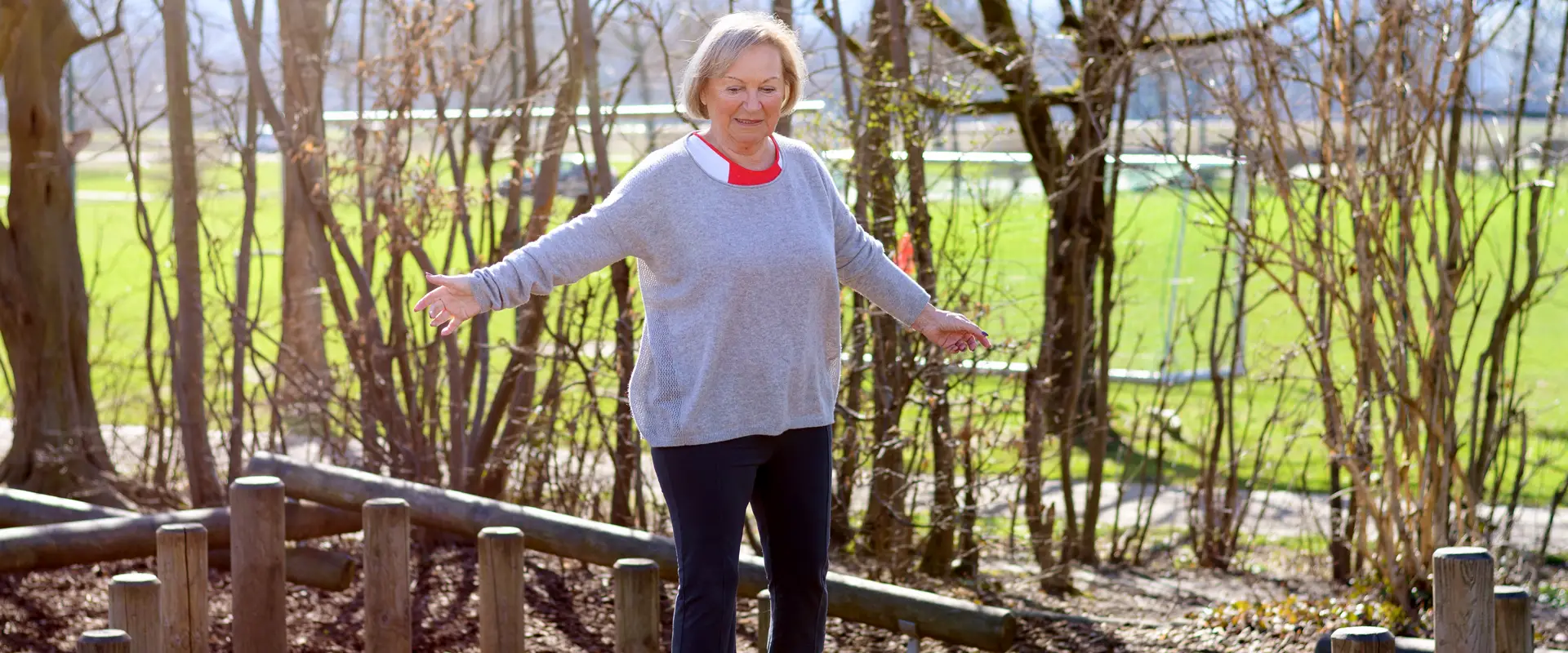

As we get older, the challenges for our bodies increase, especially when it comes to balance. Our muscles become weaker as we age, our ability to react decreases and the risk of falls increases. But it's important to stay active and train our balance, especially as we age, to improve stability and avoid injury.
In this guide, we will introduce you to some effective balance exercises for seniors that are specifically designed for seniors. Whether you are just starting out with regular exercise or are more experienced, these exercises can have a positive impact on your everyday life. Our aim is to inform you so that you can maintain your mobility and strength in old age for as long as possible.
Why is balance training important for older people?
As we get older, we naturally lose muscle mass and our bones become more fragile. Seniors know that stability decreases with age, which can lead to an increased risk of falls. Balance training therefore offers a number of benefits for seniors who want to live a self-determined and physically fit life for as long as possible:
Avoiding falls
The greatest risk of injury for senior citizens are falls. Whether at home, while cleaning or out and about. Falls are more likely to end in fractures or even open fractures in senior citizens, as our bodies are simply less resistant in old age than they were at 25.
Regular balance training can therefore help seniors to improve their stability and reduce the risk of falling in the long term. Another advantage is that these exercises are easy to incorporate into daily routines and can be done at home in your own living room. Of course, anyone who wants to can also attend a senior exercise class or special exercise programs for older people.
Improving posture through balance exercises
Balance training strengthens the muscles, especially the core muscles, which are important for good posture. An upright posture helps you to breathe more easily and can reduce back pain. It also helps you avoid annoying tension and the resulting slouching.

Increasing coordination
Balance exercises not only improve your stability, but also your coordination. This is crucial for performing everyday tasks safely and efficiently.
Increase in self-confidence
Improving your balance and feeling more confident in your ability to move will increase your self-confidence. You will feel braver to try new activities and be more socially engaged. For example, you can also combine your daily vein exercises with balance exercises. The exercises go hand in hand.
Balance exercises for seniors: suitable exercises for balance training in old age
There are a variety of balance exercises that have been specially developed for seniors. Here are some recommended exercises that you can easily do at home:
Standing on one leg
Stand on one leg and keep your balance for 30 seconds. Repeat this with the other leg. If necessary, hold on to a wall or chair to make the exercise easier.
Heel-toe gait
Walk slowly while placing the ball of your foot on the floor and then your heel. This exercise promotes balance and coordination. Make sure you perform each movement consciously.
Balance Board
Use a balance board to train your balance and stability. Stand on the board and try to maintain your balance. Start with short exercise times and gradually increase the duration.
Arboriculture
Stand on one leg and place the other leg against the thigh of the supporting leg. Hold this position and concentrate on your breathing. This exercise promotes balance and strengthens the leg muscles.
Summary of balance exercises for seniors
Balance exercises for senior citizens are very important to prevent falls and increase safety in everyday life. Regular balance training can improve your stability, coordination and posture. Start with the exercises presented and adapt them to your fitness level. If you have any concerns or health problems, always consult your doctor before starting new exercises.
Frequently asked questions (FAQ)
How often should I do balance exercises?
Ideally, you should do balance exercises three to four times a week to achieve the best results. However, make sure you recover sufficiently and give your body enough rest.
Can I do these exercises with restrictions?
Yes, many of the exercises presented can be adapted to individual needs and can be performed safely even with certain limitations. If you feel unsure, consult a physiotherapist for suitable adaptations.
Do I need to buy special equipment for balance training?
No, most balance exercises can be performed without special equipment. Some exercises only require a stable piece of furniture or a wall for support.
Should I warm up before balance training?
Yes, it is advisable to do a short warm-up before balance training. This can include simple walking or light stretching exercises to loosen up the muscles and promote blood circulation.
Can I measure my progress with balance training?
Yes, it can be helpful to track your progress. Look out for improvements in how long you can hold your balance or your general sense of balance. Record your results in a training diary or app.