
Around 20 million people in Germany suffer from vein disease, making venous disorders a widespread disease. Eight out of ten Germans have more or less severe vein changes, which means that around 80% of the population are affected by vein problems. Find out now how you can support your veins to remain intact and effectively alleviate existing vein problems with vein exercises.
What is venous gymnastics and for whom is it recommended?
Venous gymnastics is a form of physical activity that aims to activate the muscles in the legs and promote blood flow in the veins. Venous gymnastics is particularly recommended for people who suffer from venous disorders such as venous insufficiency, varicose veins or thrombosis. thromboses thrombosis. It is also suitable for people who spend long periods of time sitting or standing, as this can increase the risk of vein problems. Regular vein exercises can help seniors and those suffering from vein problems to improve their vein health and alleviate symptoms such as tired legs and swelling. Those affected are always advised to perform vein exercises regularly, always accompanied by treatment from a vascular specialist (phlebologist).
Who is vein gymnastics particularly suitable for?
- People who spend long periods sitting down, such as office workers or travelers, to promote blood circulation and prevent venous congestion
- People who are bedridden to activate muscles and improve blood flow
- People with predominantly sedentary jobs who should stand up more often to support vein health
- People who sit or stand a lot at work to facilitate blood return and relieve the venous valves
- People who suffer from venous disease and want and need to proactively improve their state of health
Which risk groups should start vein exercises in good time?
- Smokers whose lifestyle increases the risk of vein problems
- Pregnant women, as hormonal changes and the extra weight can increase the risk of vein problems
- Overweight people, where the extra weight can increase the strain on the veins
- Older people (seniors), as age can reduce the elasticity of the veins and increase the risk of venous disorders
- People who have recently undergone surgery, especially on the legs, to support vein health and prevent complications
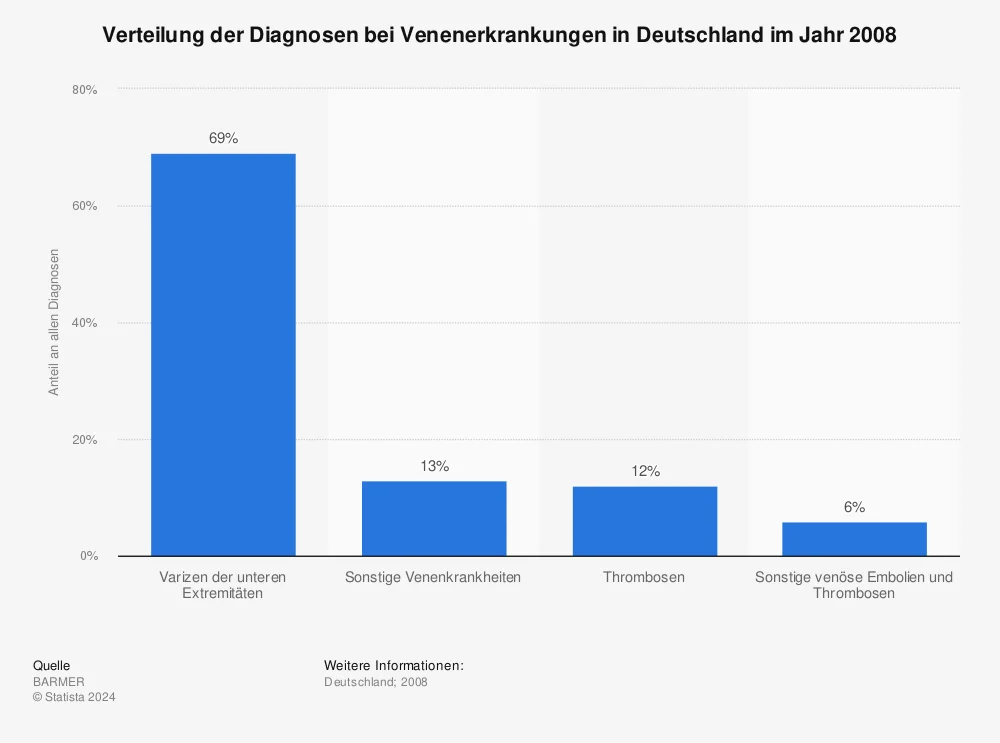
Distribution of diagnoses for venous diseases in Germany
The BARMER health insurance company has determined the distribution of diagnosis codes for venous diseases in Germany in its 2011 report on remedies and aids (page 71). It is clear to see that, at 69%, venous disorders occur most frequently in the varicose veins of the lower extremities.
What are the benefits of regular vein exercises?
Regular vein exercises offer a variety of benefits for vein health and well-being:
- Improved circulation: Targeted exercise activates the veins, improving blood flow and preventing congestion.
- Strengthening the veins: The exercises strengthen the muscles of the legs and help the veins to transport blood back to the heart efficiently, which reduces the risk of venous disorders.
- Prevention of venous disorders: Regular exercise and promoting blood flow can help prevent venous disorders such as varicose veins, phlebitis, and thrombosis can be prevented.
- Relief from discomfort: Vein exercises can help to alleviate symptoms such as tired and heavy legs, swelling and tightness by stimulating blood circulation and reducing pressure in the veins.
- Improved quality of life: By improving vein health and reducing discomfort, regular vein exercises can lead to an increased sense of well-being and a better quality of life.
Daily vein gymnastics exercises for your health
Here are some simple vein exercises that at-risk groups and those affected by vein disease can incorporate into their daily routines:

Foot circles
- Sit down comfortably and stretch out your legs.
- Slowly circle your feet clockwise and then counterclockwise.
- Repeat this exercise 10-15 times.
Toe lifters and lowerers
- Sit or stand with your back straight.
- Slowly raise your toes as far as you can and then lower them again.
- Repeat this movement 10-15 times.
Calf pump
- Sit up straight and stretch your legs forward.
- Pull your toes towards you to tense your calf muscles and hold this position for 5 seconds.
- Then relax your muscles and repeat the exercise 10-15 times.
Foot rocker
- Sit on a chair and place your feet flat on the floor.
- Lift your toes while keeping your heels on the floor.
- Then lower your toes and raise your heels.
- Repeat this movement slowly 10-15 times.
Exercise video vein gymnastics without aids with gymnastics instructor Gabi Fastner
State-certified gymnastics teacher Gabi Fastner from Bad Tölz is a YouTube icon. With more than 709,000 subscribers on YouTube, Gabi Fastner has built up one of the most successful and professionally qualified YouTube channels on the subject of gymnastics. In this 13-minute video, Ms. Fastner shows how you can train your veins healthily and properly at home without any aids.
Tips for effective vein exercises
- Perform the exercises slowly and in a controlled manner.
- Breathe evenly and deeply during the exercises.
- Take regular breaks to relax and promote blood circulation.
- Wear loose clothing that does not restrict movement.
Conclusion on vein gymnastics
Vein exercises are a simple and effective way for those affected by and at risk of vein problems to support their vein health and reduce the risk of vein problems. By doing these exercises regularly, you can improve circulation, strengthen your veins and relieve leg pain. Remember to always consult your doctor before starting a new exercise program, especially if you already suffer from vein problems.