
In critical moments, every second often counts - which is why it is essential to be able to provide first aid and react correctly in an emergency. Many people are unaware of the importance of first aid courses, which not only provide valuable information but can also significantly improve your skills as a first aider.
In this blog post, you will learn how to find the right courses to help you effectively in emergencies and what services various organizations offer in this area. Let's work together to expand the knowledge that can save lives.
The importance of first aid in care
First aid skills are very important for family caregivers, as they have to act quickly and competently in unexpected situations. First aid courses provide you with the necessary information, tools and measures to be able to help effectively in an emergency. In these first aid training courses, you will learn important techniques for stabilizing people and preventing further injuries.
You will also be fully informed about common emergencies in day-to-day care. If you know how to react, you can not only promote the well-being of the person in need of care, but also reduce your own safety concerns.
Contact local organizations to find suitable first aid courses and gain confidence in your role as a first aider. Regular practice and refreshed knowledge from the courses will keep you well prepared. Take the opportunity to continue your training and make a valuable contribution to helping people in emergency situations.
Introduction to first aid
First aid is a crucial part of caring for people, especially the elderly and those in need of care. In emergency situations, it is important to act quickly and correctly in order to save lives or protect the health of those affected. First aid courses offer you the opportunity to learn these important measures.
First aid includes all the necessary steps that are taken in a critical situation to ensure the well-being of a person. This knowledge is not only important for professional caregivers, but also for relatives and volunteers. Anyone can find themselves in an emergency situation, which is why it is essential to be well prepared to be able to help in such moments.
Principles of first aid
The principles of first aid are:
- Personal safety: Before you help an injured person, it is important to ensure your own safety first. Check the scene of the accident for hazards such as fire, electrical cables or other potential risks. Only when you are sure that there is no danger to you should you attend to the injured person.
- Make an emergency call: Inform the emergency services immediately if the situation requires it. A quick emergency call can be crucial in mobilizing professional help. Give clear information about the location of the accident, the type of injury and the number of people involved. This will enable the emergency services to arrive optimally prepared.
- Provide first aid: Start providing first aid as soon as it is safe to do so and the emergency call has been made. This may include checking consciousness, checking breathing, placing the person in the recovery position or, if necessary, performing resuscitation measures. Act calmly and deliberately to ensure the best possible support for the injured person.

What are first aid measures?
First aid measures are basic, immediate assistance measures that are taken in the event of a medical emergency to save a person's life or stabilize their condition until professional help arrives. These measures are crucial as they can often make the difference between life and death.
The most important first aid measures include ensuring your own safety and the safety of the person concerned, checking consciousness and breathing, and initiating resuscitation measures such as cardiopulmonary resuscitation (CPR) (in the event of respiratory arrest) if necessary.
If the wound is bleeding heavily, it is important to apply pressure to stop the bleeding. If unconscious, the person should be placed in the recovery position to minimize the risk of aspiration. In addition, first aid should also include applying dressings, cooling injuries and treating shock. It is important to remain calm and give clear instructions to control the situation. First aid skills are beneficial for everyone and can be life-saving in many emergencies.
First aid basics
The basics of first aid are very important for family caregivers in order to be able to react appropriately in emergencies. First aid courses provide you with valuable information and practical measures to help people in difficult situations.
These courses not only teach you how to use first aid techniques effectively, but also how to contact medical professionals quickly and safely. Knowledge of first aid can save lives and gives you the confidence to act correctly in an emergency. In addition, such training courses offer an ideal opportunity to exchange ideas with other family caregivers and share experiences. Learning how to deal with emergencies correctly can also provide valuable support for you as a carer, as you can react more calmly in emergency situations thanks to your confidence in your abilities.
What is the correct order of the rescue chain?
The correct sequence of the rescue chain comprises several crucial steps that must be carried out quickly and efficiently in an emergency. First, the emergency situation should be recognized. People present must then act quickly by dialing the emergency number 112.
It is important to provide clear information, such as the location, the nature of the emergency and the number of people involved. After the emergency call, it is crucial to provide first aid as far as the situation allows.
Life-saving measures such as cardiopulmonary resuscitation (CPR) or stabilization of the affected person can be carried out. At the same time, a person should be made aware that they are waiting for the emergency doctor and can call for further assistance if necessary. As soon as the emergency services arrive, the first aiders hand over responsibility to the trained professionals. They will then carry out the necessary medical measures and ensure that the person concerned is transported to hospital.
Common emergencies in day-to-day care and how you should react
Unexpected emergencies can occur at any time in day-to-day care, which is why it is important to be prepared for such situations. You should be familiar with first aid measures so that you can help quickly and efficiently.
Quick action is required in frequent emergencies such as falls, breathing difficulties or heart problems. In such cases, you can save lives by taking specific measures, which you can learn on a Red Cross course, for example. It is advisable to attend regular first aid courses to refresh your knowledge and obtain up-to-date information. The services provided by various associations offer you the opportunity to acquire practical skills and familiarize yourself with the necessary steps to take in an emergency. If you are in an emergency, do not hesitate to provide assistance and contact the emergency services if necessary. A sound knowledge of first aid is essential for family caregivers and helps to ensure the safety of the person being cared for by taking immediate action.
Emergencies in everyday care
Various emergencies can occur in day-to-day care that require quick action. Here are some common emergencies that care staff and relatives should be prepared for:
- Fall injuries: Accidents in which a person falls, injures themselves and suffers pain, often in older people.
- Cardiovascular problems: symptoms such as chest pain, shortness of breath or unconsciousness, which can be signs of heart attacks or strokes.
- Shortness of breath: Acute respiratory diseases or allergies that lead to breathing difficulties. Ingestion can also lead to shortness of breath.
- Allergic reactions: Severe reactions to medication or food that lead to a deterioration in health and need to be treated quickly.
- Seizures: Epileptic seizures or other neurotic seizures that require an immediate response.
- Wounds and bleeding: Cuts or lacerations that need to be treated quickly to prevent blood loss.
- Confusion or loss of consciousness: disorders that may indicate serious health problems.
- Dehydration: symptoms such as confusion, dizziness or dry mucous membranes, which indicate a lack of fluids.
- Vomiting or diarrhea: Acute gastrointestinal complaints that can lead to exhaustion.
- Drug overdose: Overdose of prescription or over-the-counter medication.
It is important to remain calm in such emergencies, to recognize the symptoms correctly and to take the necessary measures immediately. Targeted training and instruction in first aid can provide valuable support here.
Basic first aid knowledge
Thorough first aid knowledge is crucial to be able to respond effectively in emergency situations. Here are some basic skills and knowledge that family caregivers should have and which are taught in courses.
ABC of first aid:
- A (Airway): Clear the airway. Check that the person is breathing.
- B (Breathing): Ensure that the person is breathing normally. If necessary, support the airway.
- C (Circulation): Check pulse and perform cardiopulmonary resuscitation (CPR) if necessary.
Cardiopulmonary resuscitation (CPR):
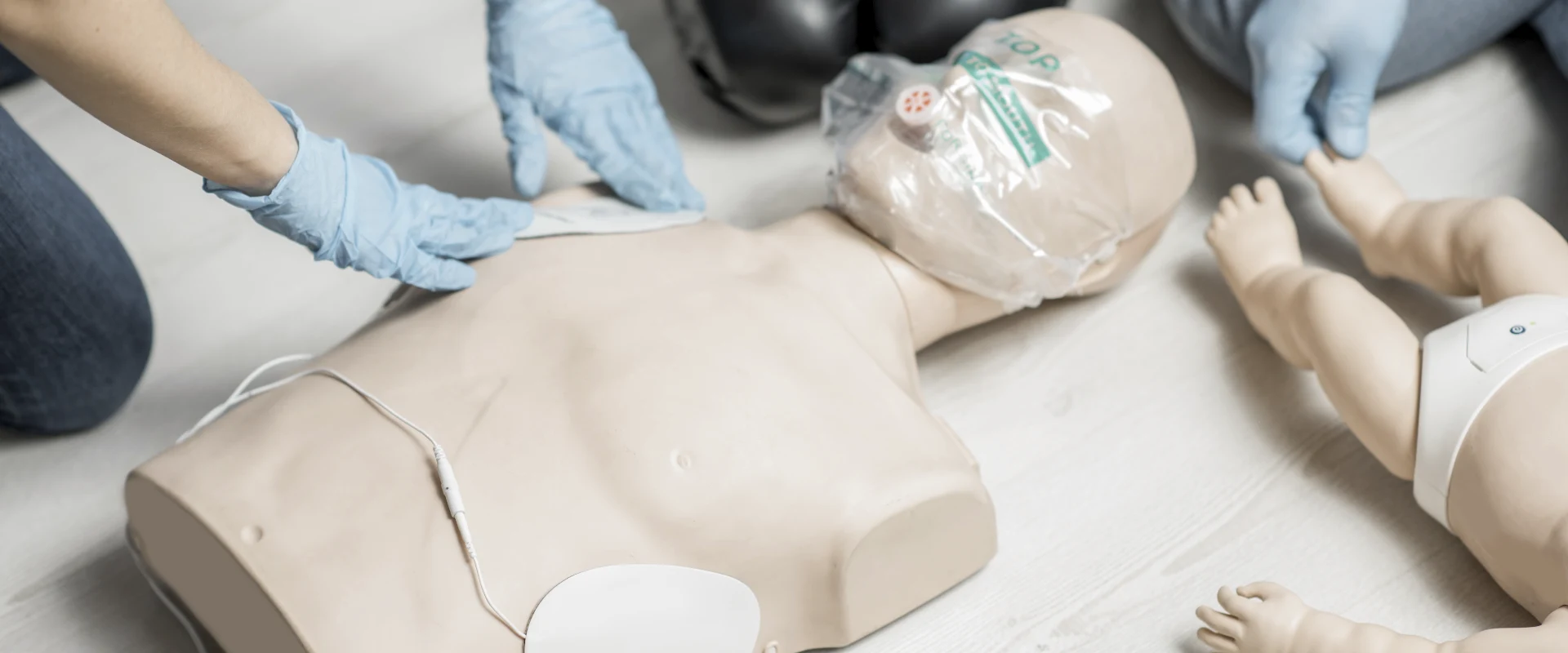
- Knowledge of performing CPR on both adults and children. This includes the correct technique for chest compressions and ventilations.
Stable lateral position:
- Know how to place an unconscious but breathing person in the recovery position to minimize the risk of choking.
Hemostasis:
- Techniques to control bleeding, including pressure bandaging and elevation of the injured area.
Wound care:
- Knowledge of cleaning and dressing wounds to prevent infection.
Dealing with shock:
- Recognize the symptoms of shock and take measures to calm the affected person and keep them warm.
Dealing with shortness of breath:
- Recognize the symptoms and, if necessary, change the person's position to make breathing easier.
Allergic reactions:
- Identify signs of allergy and know how to react in the event of anaphylaxis, e.g. by using an adrenaline pen (EpiPen).
First aid for burns:
- Know how to treat burns properly, including cooling the affected area and covering it with a sterile dressing.
First aid measures for injuries and accidents
Comprehensive knowledge of first aid is of great importance when dealing with injuries and accidents in day-to-day care. As a family caregiver, you should be aware that a quick response is often crucial to ensure the well-being of the person in need of care. First aid courses offer valuable information and practical exercises.
You will not only learn basic measures for wound care or how to deal with bleeding, but also how to act calmly in emergency situations. These courses are accessible to everyone and help you to feel more confident in stressful moments. In addition, knowing the right steps in first aid is a support that can help people in critical situations. Find out about the courses available and take this opportunity to develop your skills to provide optimal care.
First aid for acute illnesses: What you need to know
Knowledge of first aid for acute illnesses is very important for family caregivers. In emergencies, you must act quickly to provide effective help to the person in need of care. For example, sudden breathing difficulties or heart problems can be life-threatening.
A quick and appropriate response is essential here. Taking part in first aid courses provides you with valuable information and practical measures to enable you to act competently in such situations. These courses not only provide theoretical knowledge, but also practical exercises that help you to apply what you have learned directly.
Many companies and organizations promote such training courses to spread knowledge about first aid. Make sure you regularly refresh your knowledge so that you can react safely in an emergency. Contact a local office to find suitable courses and benefit from the various services available. Your ability to help can be invaluable to many people.
Psychological first aid: support for the person in need of care
Psychological first aid is an essential component of support for people in need of care, especially in emotionally challenging situations. People who are dependent on care often suffer from anxiety or insecurity. Here you can help through active listening and empathic behavior.
First aid in the form of psychological support means offering a sympathetic ear and giving those affected space to express their feelings. In specific courses for family caregivers, you will not only learn how to react in acute emergencies, but also how to recognize and tackle psychological stress. This means you are well prepared to help quickly and effectively in emergencies.
Resources and training on first aid in care
Access to first aid resources and training is very important for family caregivers. First aid courses, specifically for family caregivers, provide you with valuable information and skills to respond correctly in emergencies. These courses are specially tailored to the needs of people in need of care and offer practical exercises. By attending such a course, you can learn how to help quickly and effectively, whether in the event of injury or acute illness.
Take the opportunity to expand your knowledge and prepare yourself for an emergency. Suitable courses are easy to find in many cities, so you can plan flexibly. Contacting organizations not only makes it easier for you to find an appointment, but also offers numerous services that increase your safety and that of your loved ones. Your investment in comprehensive training can be life-saving and will give you the confidence to respond appropriately in an emergency.
Safety and support through sound first aid knowledge
A sound knowledge of first aid is extremely important for family caregivers. Emergencies can occur at any time and the quick action of a first aider can be crucial in defusing the situation. Attending first aid courses provides you with valuable information and practical measures to help effectively in an emergency. Here you will learn everything from wound care to resuscitation.
In many cities, you can find numerous courses that are tailored to the needs of nursing staff. These courses are not only informative, but also an opportunity to actively prepare for possible emergencies. In addition, companies and organizations may provide special offers or even offer training as part of their services. Trust in your skills - with the right knowledge, you will be better equipped to ensure safety in everyday care work and to help other people quickly in emergency situations.