
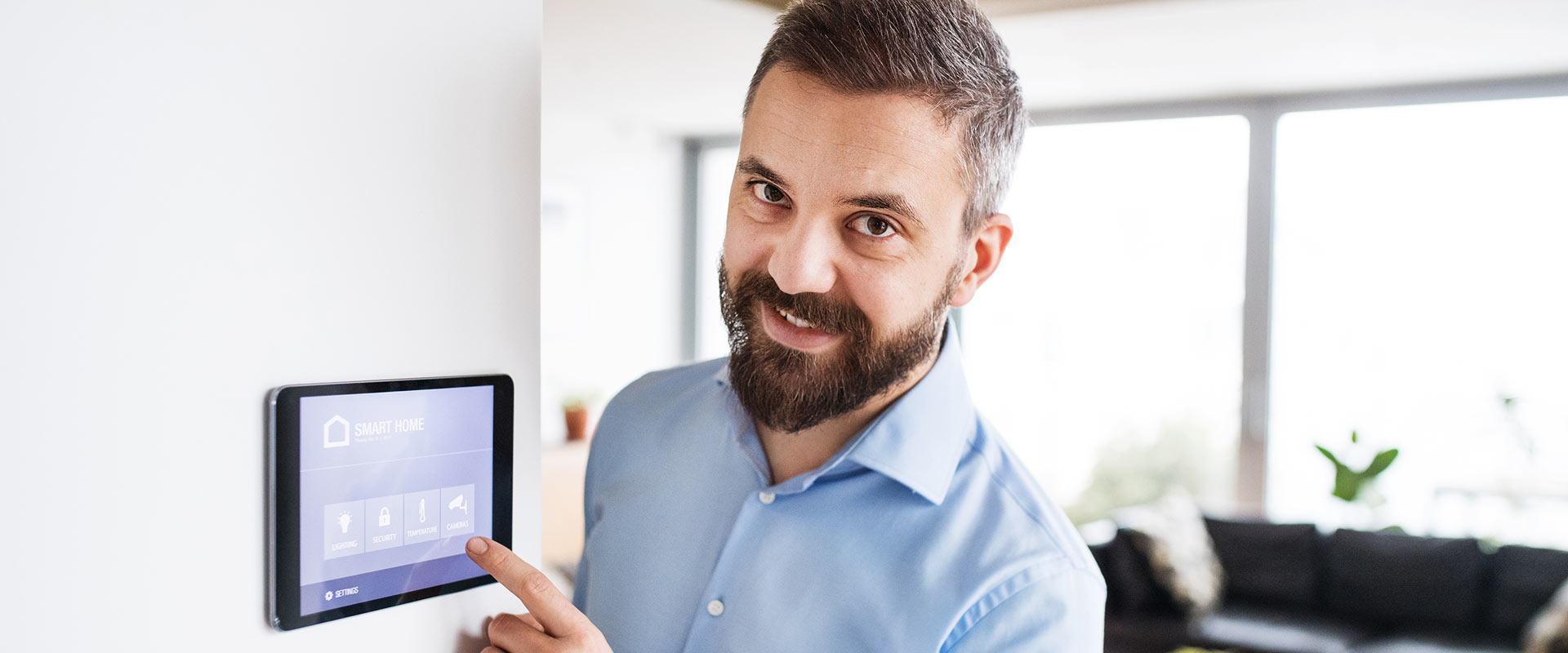

Simple things like vacuuming the floor or opening the blinds can suddenly become strenuous tasks when you are ill or elderly. However, modern technology is helping to make life easier. Smart household appliances can be controlled remotely. In addition, smart home appliances can also help with communication and healthcare. For example, they can send an alarm to a caregiver if you fall or are unable to get out of bed for a certain period of time. Smart home technology therefore enables senior citizens and people in need of care to live independently for longer. Find out everything you need to know about the smart home now!
Smart home: a good idea?
Smart technologies are revolutionizing the way we live. Nowhere is this more evident than in our homes and everyday lives. Today, smart devices can do everything from translating foreign languages to watering the garden. They can open and close blinds, cook meals in an almost automatic process or inform the doctor at the touch of a button. The term "smart home" therefore means a classic home that is supplemented by digital and electrical helpers so that it can carry out many everyday, time-consuming tasks by itself via system control.
As well as making everyday tasks easier, smart technology can also increase people's safety by providing them with real-time assistance in emergencies. For example, many smart devices now have fall detection capabilities that can alert caregivers if a dependent or elderly person has fallen. As our population ages, it is becoming increasingly important to find ways to improve the quality of life for seniors in their homes. Smart technologies are one way to meet this challenge.
Technology will change the landscape of senior care in the coming years. Technology that enables people to stay in their own homes for as long as possible. A wonderful idea, because together with home helps and everyday companions as well as nursing care, senior citizens and those in need of care can enjoy their familiar surroundings for much longer.
Robot vacuum cleaner: Smart helper for clean floors
The invention of the vacuum cleaner is generally attributed to Ives McGaffey, who received a patent for his "dust extraction pump" in 1869. However, it was not until the beginning of the 20th century that the vacuum cleaner took on its modern form. The first motorized vacuum cleaners were bulky and difficult to use, but they quickly became an indispensable household appliance. In recent years, vacuum cleaners have undergone a further transformation with the introduction of robot vacuum cleaners.
These appliances are designed to clean your home independently so that you no longer have to do it yourself. Robotic vacuum cleaners are becoming increasingly popular, especially with older people and those with medical conditions who appreciate not having to bend down or operate the appliance themselves. Many of these smart devices are also equipped with sensors that allow them to avoid stairs and other areas in the home where they could be damaged. As a result, robotic vacuum cleaners have become an integral part of many people's households. The latest generation of robot vacuum cleaners are called vacuum and mopping robots. These also take care of mopping the floor.
Why is a smart home particularly suitable for senior citizens?
Smart homes are becoming increasingly popular for senior citizens, as they offer a number of advantages over conventional technical equipment. Smart homes are equipped with various digital devices that can be controlled centrally, which reduces everyday stress and increases security. In the event of an emergency, smart home systems can notify other family members or even the emergency services, enabling a self-determined life.
When putting together a smart home, it is important that the devices are easy to operate so that even people who are not familiar with technology can control the systems. Simple activities such as lights, blinds or garage doors can already be controlled by voice command. Smart homes offer senior citizens and people in need of care the opportunity to live safely, independently and autonomously.

Digital helpers: what can they do?
The smart home is a rapidly growing business area with a wide range of possible applications. Smart homes are equipped with special devices and sensors that enable them to perform a variety of functions automatically. For example, smart homes can be equipped with motion detectors that can be used to control doors, lights and even the height of toilets.
Smart homes can also be equipped with reminder functions that remind residents to close windows or doors or turn off the lights before they leave the house. Smart homes are not only convenient, but can also increase safety by reducing the risk of fire. With so many possibilities, it's no wonder that smart homes are becoming increasingly popular.
What relief is there for senior citizens and people in need of care?
Digital helpers can be a great blessing for people in need of care and senior citizens. Depending on the level of care, you can start with a simple emergency call system or use a specially adapted tablet for senior citizens. This is designed to be easy to use and can also be operated by people with dementia.
In addition to fun and games, the tablet also enables contact with the family via video telephony. The tablet also helps with taking medication, as it can display the prescribed medication at the right time. With the help of these digital assistants, people in need of care and senior citizens can maintain their independence for longer and enjoy a higher quality of life.
Smart Home - What can it do and what can't it do?
In recent years, there has been a growing trend for senior citizens and people in need of care to be able to live independently for as long as possible. To make this possible, various assistance systems have been developed that can help with everyday tasks such as cooking, cleaning and laundry. When these assistance systems are combined in a smart home, experts refer to it as "Ambient Assisted Living" (AAL). AAL systems are designed to provide people with comprehensive support 24 hours a day.
However, this raises important questions about data protection, the loss of interpersonal relationships and the limits of control. It is crucial that all parties involved answer these questions honestly when planning a smart home. Only then can the full potential of AAL be realized.
Can home help and smart homes be combined?
The aim for family caregivers is always to ensure that their loved ones and those in need of care can continue to live as independently as possible in their familiar surroundings. There is a good reason for the saying "you don't transplant an old tree". Nobody wants to leave their familiar surroundings, especially not in the event of illness or old age.
Smart home applications help to make life easier. However, they cannot take over all tasks or even replace human contact. A little chat, a nice gesture and human warmth - there are visas for the rest. Or something like that. That's why smart home applications are ideal as a supplement to everyday assistance from domestic helpers and everyday companions or care services. In combination, they give the person being cared for and the family a good feeling. You can be sure that the right mix of human and technical support is available and that tasks are carried out conscientiously by people who always keep a loving and watchful eye on their charges.
You also don't have to worry about financing. Many people in need of care are entitled to free home help and daily living assistance according to their care and health insurance classification. Would you like advice on this topic? Then fill in the form on the right and we will contact you as soon as possible.