
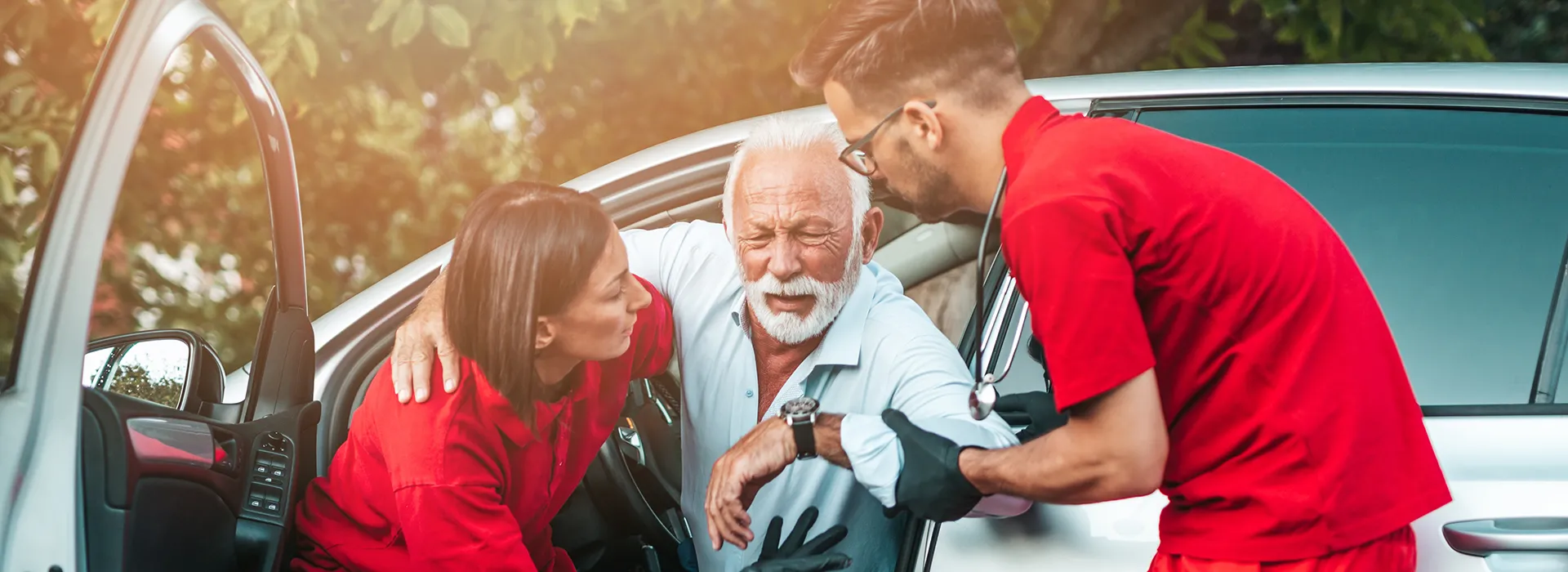

Your wallet is probably full of important cards, such as your driver's license, credit cards and health insurance card. But do you also have an emergency card?
What is an emergency card?
This is a special card in credit card format that contains the most important information for emergency situations. In an emergency, seconds count. That's why it's so important to have an emergency card in your wallet. Here are just a few reasons why:
- Emergency cards help first responders to provide medical assistance quickly and efficiently. Imagine that you are unable to speak or are unconscious. Emergency cards provide all the relevant information for emergency doctors and paramedics quickly and clearly.
- Relatives and/or friends can be notified in an emergency. It is also possible to store this information on the emergency card. A good feeling for you, but also for your loved ones.
- Emergency cards protect your privacy. In an emergency, relatives often have to be contacted. However, there are also people who do not want this or even hide an illness from their loved ones. With an emergency card, your information stays with you.
- Minimize the risk of incorrect treatment at the accident site or on the way to hospital, as their medical records, allergies or possible intolerances are stored on the emergency card.
Which emergency card is right for me?
There are various providers of emergency cards. The emergency cards on offer range from simple print templates, which are then filled out and carried in paper form in your wallet, to cardboard cards and modern, digital solutions with an app connection. Basically, any form of emergency card is better than not having one.
Paper/cardboard emergency cards
They have the advantage of being quick to produce. However, paper emergency cards only have a limited lifespan and can, of course, only contain the information that fits on the piece of paper. If we assume an emergency card in credit card format, the information content is therefore relatively low. Another decisive disadvantage is that paper emergency cards are destroyed if the wallet is soaked. The information can then no longer be deciphered. You can find a free template here!
Plastic emergency cards
If you want a more durable option, you can order a PVC emergency card from one of the many providers. All relevant data can then be entered using a waterproof, permanent pen. The advantage of a plastic emergency card is that it is waterproof compared to the cardboard or paper version. The disadvantage, however, is that there is hardly enough space for all the information. Older people in particular often have a more comprehensive medical record than the emergency card offers space for.
NFC emergency cards
NFC emergency cards are small technical wonders in credit card format. They have an NFC chip, just like your credit or debit card, for example. NFC stands for Near Field Communication. You already know this from contactless payments with your smartphone or bank card.
Data is transmitted and can be read out. The advantage for you is that all the documents you want to store can also be stored. Your medical data is usually entered using smartphone apps or online via a browser. You can make changes or update data there at any time. Thanks to the printed access code and the simple NFC function, the data can be read intuitively and without great technical effort at any time. You can purchase an NFC emergency card system with app and browser connection here, for example!
What information belongs on an emergency card?
In addition to your personal details (name, address, date of birth, etc.), your emergency card should of course contain health-related information. You should therefore state any illnesses (infectious diseases, coagulation disorders, pacemaker, asthma, diabetes, etc.) you suffer from and your medication (cortisone, blood thinners, insulin, etc.). This allows an emergency doctor to see at a glance whether the emergency treatment derived is correct and appropriate for you or whether it is not the right method for you due to the existing illnesses and associated medication.

Furthermore, all known allergies (contrast agents, painkillers, etc.) and the most important medical documents should be stored. Do you have a living willan organ donor card? All this information should be stored here digitally so that, if the worst comes to the worst, action can be taken in your best interests.
Electronic health card: will it replace the emergency card?
You are probably familiar with the electronic health card issued by health insurance companies. It replaced the old health cards a few years ago. Did you know that your electronic health card also contains an emergency card? Exactly, most people don't know that! And unfortunately there is a reason for this, because as is so often the case, the electronic health card was only equipped with a partially usable emergency card.
For example, some information is simply irrelevant in an emergency and can be saved. However, other potentially life-saving information cannot be stored. This means that the integrated emergency card on the electronic health card is only of limited use. The information can only be uploaded by a doctor. You would therefore always have to visit your family doctor, make an appointment and have this data uploaded.
Another major disadvantage is that additional information, such as contact details for relatives, living wills or information about your pet (in case care is needed) cannot be stored here. Reading the electronic health card in an emergency is also difficult, to put it mildly. Every emergency vehicle would have to be equipped with a chip card reader for this. However, this is not the case across the board - so this offers them no protection in the event of an emergency.
The probability that there is a person with an NFC-enabled cell phone in the rescue team is significantly higher. Every modern cell phone (Android from version 4.0, Apple from iPhone 6) is NFC-enabled.