
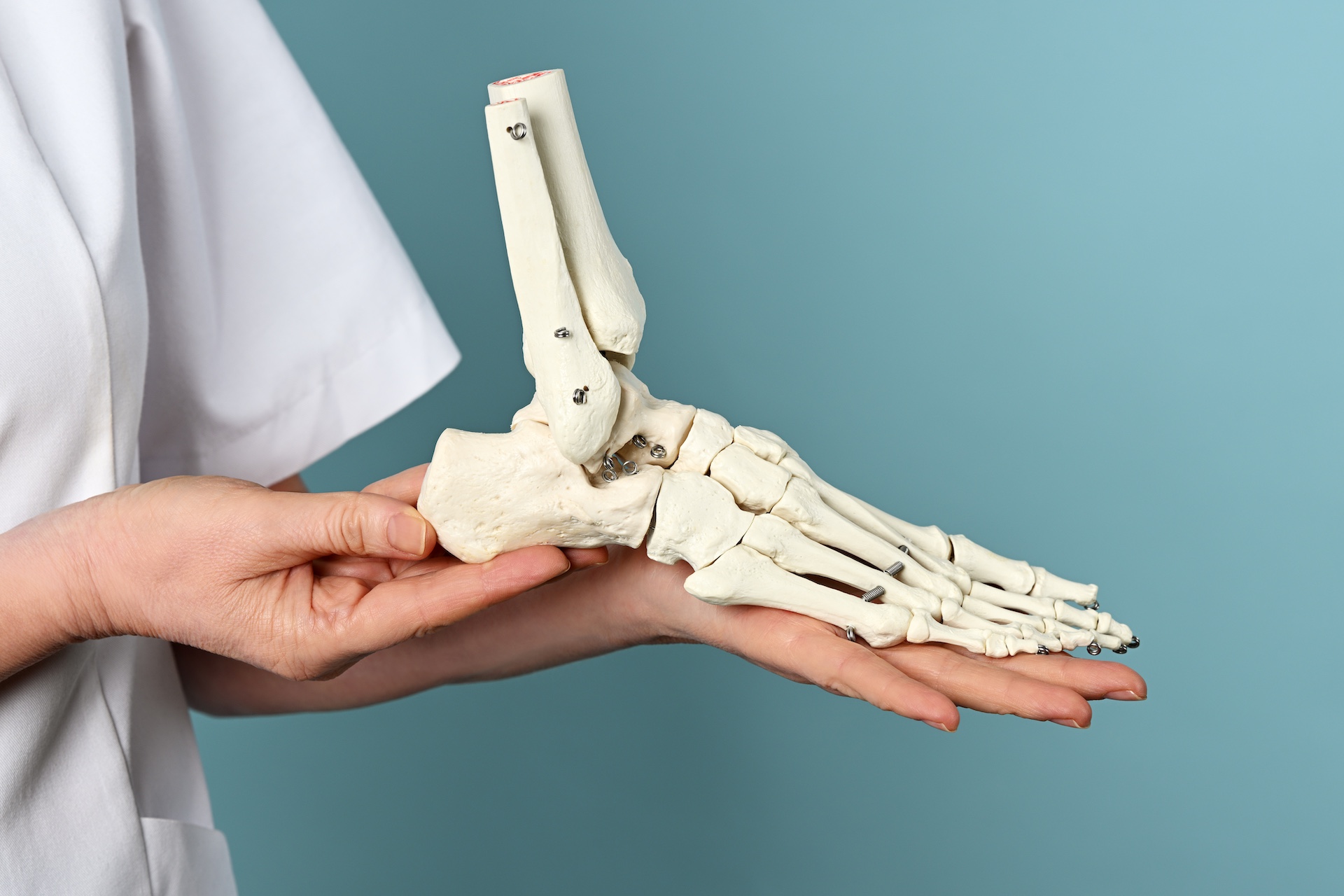

When Ms. M. (74) noticed that her fall walks in the park were getting shorter and shorter, she initially attributed it to her age. But the real reason was the burning pain in her big toe; the painful bunion barely fit into her favorite shoes anymore. Millions of people, especially women, share Ms. M.’s experience: Hallux valgus is one of the most common foot deformities, yet many who are affected wait too long to see a doctor out of shame or fear of surgery. This magazin explains how a bunion develops, which modern treatments can help, and how you can still manage your daily life pain-free and independently in your own home despite the diagnosis.
What is hallux valgus?
Definition and Typical Characteristics
The term "hallux valgus" (also known as a bunion) refers to a misalignment of the big toe at the metatarsophalangeal joint. In this condition, the tip of the big toe gradually deviates outward (toward the other toes), while the first metatarsal bone shifts inward. The result is the typical, visible bump on the inside of the foot. This displacement widens the entire forefoot, causing conventional shoes to pinch, rub, and cause painful redness or swelling at the bunion.
How does a "bunion" develop in the foot?
Hallux valgus rarely develops overnight. It is usually the result of a combination of factors: an existing splayfoot, functional weakness of the foot muscles, and a change in the direction of tendon pull all contribute to the joint gradually becoming misaligned. Everyday stresses, such as standing for long periods at work or wearing ill-fitting shoes, significantly accelerate this process, as the forefoot is continuously overloaded, which can lead to the development of a bunion.
From our day-to-day support work:
Ms. K. loved her job in sales, but decades of standing took their toll. When the pain in her foot became so severe that she didn’t even have the strength to prepare dinner after work, she decided to call it quits. We’re here precisely for moments like these, when everyday life turns into a state of emergency. One of our employees temporarily took over the grocery shopping and household chores so that Ms. K. could put her feet up and recover.
Causes and risk factors
Constitution and Foot Shape
The predisposition to hallux valgus is often inherited. There is no doubt about the genetic component and the tendency for it to run in families: People who are naturally prone to weak connective tissue or who suffer from a flat, fallen, or splayed foot are at a significantly higher risk that the tendon and bone structures will shift over the course of their lives, leading to the development of a bunion.
Shoes, Everyday Life, and Stress
Tight, pointed, or high-heeled shoes force the toes into an unnatural position. While they are rarely the sole cause, they act as a catalyst. If this is compounded by occupational demands that involve a lot of walking and standing, or by sports that place extreme stress on the forefoot, the misalignment is further exacerbated.
Other Factors
- Gender: Women are affected far more frequently because of their softer connective tissue.
- Age: As we get older, the ligaments lose their elasticity.
- Comorbidities: Obesity increases pressure on the arch; rheumatic diseases can directly damage the joints.
Symptoms – How Hallux Valgus Manifests Itself
Early Signs
It often starts with just a slight visual change: the big toe tilts slightly, the forefoot appears a bit wider, and after walking long distances, a mild pulling sensation sets in. Unfortunately, the first signs of pressure marks on the insides of the shoes are still too often ignored at this stage.
Common Pains and Ailments
As the misalignment progresses, the bursa over the protruding bone often becomes inflamed. This leads to redness, swelling, and a dull, burning, or stabbing, persistent pain. Wearing closed-toe shoes becomes a torment.
Effects on Gait and Daily Life
To avoid the pain caused by bunions, those affected unconsciously change their gait. Their steps become shorter, and they shift their weight to the outer edge of the foot or to the adjacent toes. This leads to secondary problems such as painful metatarsalgia (pain in the midfoot) and hammertoes, and can even manifest as knee or back pain through the kinetic chain.
Diagnosis: How a Doctor Diagnoses Hallux Valgus
Medical History and Physical Examination
The diagnostic process begins with a detailed discussion of the nature of the symptoms, the type of footwear worn, and any family history of medical conditions. The orthopedist then examines the foot while the patient is standing and walking. He assesses the alignment of the foot, the mobility of the joint, and the condition of the skin.
X-rays and Severity Classification
An X-ray of the foot—which must be taken while the patient is standing and bearing weight—provides a definitive diagnosis. The doctor measures the so-called hallux valgus angle (HV angle) and the intermetatarsal angle (IM angle). Depending on the severity, the deformity is classified as mild, moderate, or severe.
Differentiation from Other Foot Problems
It is important to perform a differential diagnosis with hallux rigidus (a osteoarthritis of the metatarsophalangeal joint of the great toe, which is primarily characterized by stiffness) as well as distinguishing it from isolated metatarsalgia or claw toes.
Conservative Treatment—What Works Without Surgery?
Shoe Advice and Pressure Relief
The foundation of any conservative treatment is changing shoes. Look for styles with a wide toe box, flat heels, and a soft upper. Pressure points can be effectively alleviated with gel inserts, silicone rings, or toe spreaders.

Insoles, Splints, and Orthoses
Special orthopedic insoles support the collapsed longitudinal and transverse arches of the foot and relieve pressure on the ball of the foot. Night splints or orthoses can gently stretch the toe into a straight position. While this alleviates symptoms and stretches shortened capsular structures, it does not result in a true, permanent realignment of the bone.
Physical Therapy and Foot Exercises
Active exercise is the key to slowing the progression of a bunion. Targeted foot exercises (such as gripping with the toes, spreading the toes, and rolling the foot over a small ball) strengthen the short muscles of the foot. The goal: to stabilize the joint through muscle strength and achieve a noticeable improvement in gait.
Pain and Inflammation Treatment
For acute flare-ups or bursitis, anti-inflammatory pain relievers prescribed by a doctor, as well as local cooling and quark compresses, can help.
Surgery for Hallux Valgus—When Is It Recommended?
Surgery becomes an option when conservative treatments have been exhausted and the level of suffering becomes too great. When severe, chronic pain dictates daily life, the misalignment becomes extreme, and wearing regular off-the-shelf shoes becomes impossible, surgery is a proven solution.
Procedure, Anesthesia, and Hospital Stay
The procedure is usually performed under regional or general anesthesia and often involves a short hospital stay. Immediately after surgery, the patient must wear a special forefoot-relief shoe for about 4 to 6 weeks to completely protect the operated bone from stress during the healing phase.
As with any surgery , there are general risks such as impaired wound healing, infections, or blood clots. In rare cases, a recurrence (reappearance of the misalignment) may occur. However, when patients have realistic expectations, patient satisfaction is very high: Most patients report a dramatic reduction in pain and a completely new quality of life.
Don't be left alone after surgery:
Imagine coming home from the hospital after foot surgery. You’re barely allowed to put any weight on your foot and are supposed to keep it elevated, but the fridge is empty, the apartment needs to be vacuumed, and the bed isn’t made. That’s exactly what we’ll take care of for you.
Our housekeeping service makes sure your home is sparkling clean, meals are freshly cooked, and the laundry is done—all while you can relax in your armchair, completely stress-free. We’re the ones who step in when daily life becomes too difficult after surgery, so you can recover in peace.
Aftercare, Rehabilitation, and Relapse Prevention
Immediately after surgery
During the first few days, the focus is on consistently elevating the limb, applying cold therapy to reduce swelling, and providing structured pain management. Wound monitoring and regular dressing changes ensure proper healing.
Physical Therapy and Rehabilitation
As soon as the doctor gives the go-ahead, the gradual increase in activity begins. Targeted physical therapy involves mobilizing the joint—which is often still stiff—professional gait training to prevent poor posture, and the gentle rebuilding of the foot muscles.
Long-Term Measures to Prevent Relapses
To ensure that the results of the surgery are long-lasting and that the bunion does not return, you must break old habits. This means consistently avoiding shoes that are too tight, continuing to do the foot exercises you’ve learned on a regular basis, and maintaining a healthy weight to minimize the strain on your feet.
Prevention and Tips for Everyday Life
Shoes That Are Good for Your Feet Right from the Start
The best prevention starts at a young age. When buying shoes, always make sure they have enough toe room so your toes can move freely, are made of breathable, soft materials, and have a flat to moderate heel height.
Daily Life and Exercise
Take every opportunity to walk barefoot, whether on the grass, on carpet, or in the sand. This stimulates the receptors on the soles of your feet and strengthens your natural arch. Barefoot shoes or minimalist shoes can also be an excellent way to exercise your feet and keep them healthy in everyday life. You can also playfully incorporate small exercises (such as picking up a tissue with your toes) into your daily routine in the bathroom or at the office.
Frequently Asked Questions About Hallux Valgus (FAQ – Overview)
What exactly does "hallux valgus" mean?
The term comes from Latin. “Hallux” means big toe, and “valgus” describes the direction of the deformity, in which the tip of the toe deviates outward, that is, toward the body.
Is hallux valgus dangerous, or is it just a cosmetic issue?
Hallux valgus is by no means just a cosmetic problem. If left untreated, it can lead to chronic pain, premature joint wear (osteoarthritis), inflammation, and improper weight distribution, which can damage the entire musculoskeletal system, extending all the way to the knees and the back.
Why are women more likely to develop hallux valgus?
Women naturally have softer, more elastic connective tissue that is subject to hormonal fluctuations. As a result, the supportive structures in the foot give way more quickly under stress. In addition, women’s footwear trends contribute to the development of this condition.
Does a bunion always have to hurt?
No, especially in the early stages, a noticeable misalignment can be completely painless. Conversely, even minimal axial deviations can cause severe pain—the perception of pain varies greatly from person to person.
How can I tell if my symptoms are caused by a bunion?
Typical symptoms include a burning or stabbing pain directly at the protruding bunion, redness and swelling caused by pressure from shoes, as well as pain upon first walking after periods of rest or pain caused by exertion after walking long distances.
Can hallux valgus be cured without surgery?
Once a bone deformity has developed, it cannot be reversed through conservative treatment. However, it is possible to slow down or stop the process and effectively relieve the pain. True anatomical correction can only be achieved through surgery.
Which orthotics or insoles are really effective?
Orthopedic insoles are useful for supporting the arch of the foot and redistributing pressure. Night splints stretch the tissue and relieve stretching pain, but they do not permanently correct the misalignment. They should always be considered as part of a comprehensive treatment plan.
When should I have surgery for my hallux valgus?
Surgery is recommended when the level of suffering is high, conservative treatments no longer provide relief, chronic pain interferes with daily life, and there is a risk of secondary damage to adjacent toes or joints.
How long will I be out of action after hallux valgus surgery?
The duration of the inability to work depends heavily on the type of job. For sedentary jobs, it is usually 2 to 4 weeks; for jobs involving heavy physical labor or prolonged standing, the time off can last 6 to 12 weeks. Driving is usually not permitted again until the compression boot has been removed.
Can hallux valgus return after surgery?
Yes, a so-called recurrence is possible. If the anatomical causes (such as significant connective tissue weakness) persist or if ill-fitting shoes are worn again after surgery, the big toe may become deformed once more.
How can I prevent hallux valgus?
The best measures are to regularly wear loose-fitting, flat shoes, walk barefoot frequently on a variety of surfaces, and perform consistent, daily foot exercises to strengthen the tendons and muscles.
What happens if hallux valgus is left untreated?
If a bunion is left untreated, the deformity usually worsens. This can lead to severe osteoarthritis in the metatarsophalangeal joint, chronic bursitis, the development of hammertoes, and permanent limitations in mobility.
What exercises help with hallux valgus?
Particularly effective exercises include consciously spreading all the toes, picking up marbles or cloths with the feet, pulling the foot toward you against resistance, and gently stretching the big toe into its natural, straight alignment.
What kind of shoes are suitable for hallux valgus?
The ideal shoes have an orthopedically optimized, roomy toe box, a flexible upper (e.g., soft leather or mesh), no seams that dig into the ball of the foot, and flat, well-cushioned soles.