
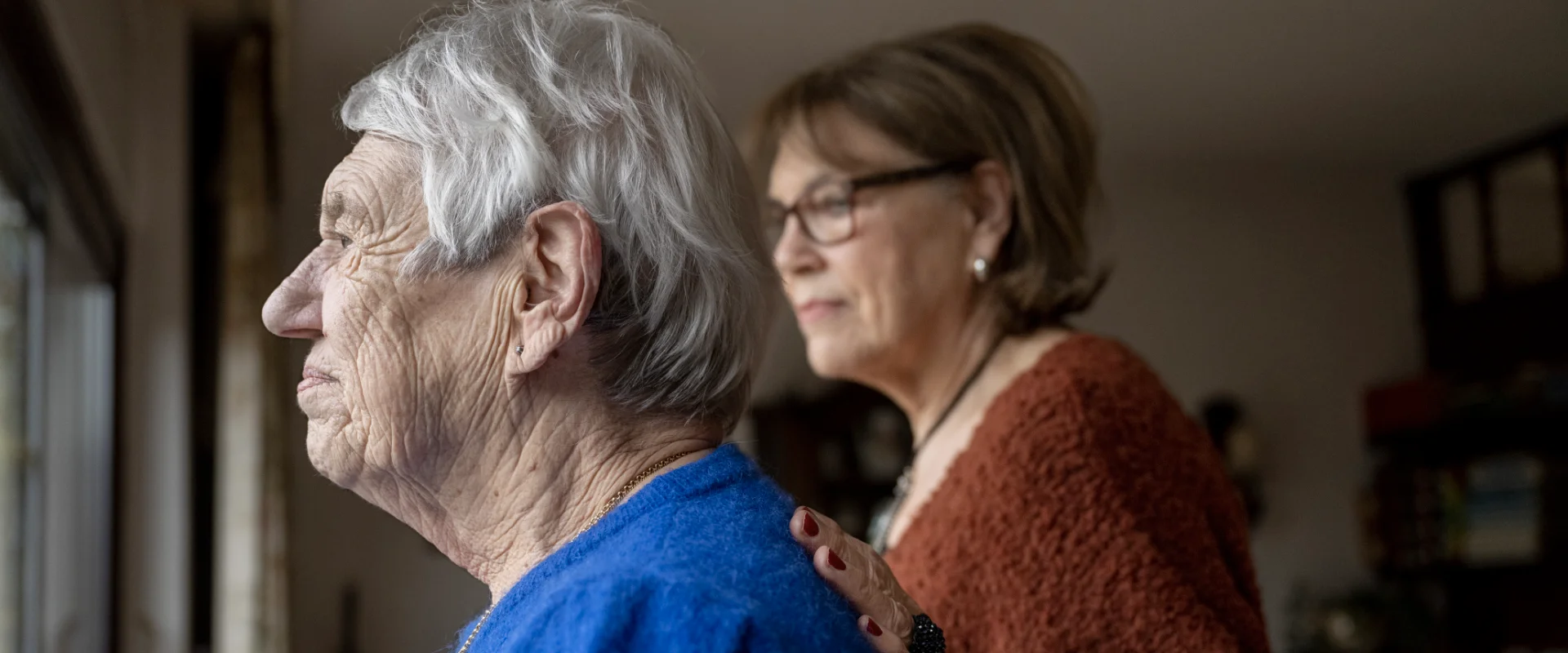

This disease not only poses immense difficulties for those affected, but also places a considerable burden on relatives. In this guide, you will find out how a home help can provide crucial support to make everyday life easier and improve quality of life.
We will also show you what respite services are available and how you can take advantage of them free of charge. Let's explore together the options that can help you and your loved ones lead a fulfilling life despite the challenges of dementia.
What is dementia and how do I recognize it?
Dementia is a disease that affects the brain and leads to various cognitive impairments. These include memory loss, orientation problems and speech disorders. It is a progressive process that poses major challenges not only for the people affected, but also for their relatives.
There are various forms of dementia, with Alzheimer's disease being the most common. This disease brings with it specific symptoms that become more and more pronounced over time.
Although there is currently no cure for dementia, there are still ways to alleviate the symptoms and improve the quality of life of those affected. Targeted therapeutic measures and support services can take into account the individual needs of dementia sufferers and improve their quality of life.
Signs and progression of dementia
Dementia is a complex disease characterized by various symptoms and phases. The most common signs include
- Memory loss: Those affected have difficulty retaining new information or remembering past events.
- Orientation problems: Difficulty finding one's way in familiar surroundings or recognizing time and place.
- Speech disorders: Problems finding the right words or understanding language.
- Behavioral changes: Unusual mood swings or changes in social behavior.
The course of dementia varies depending on the form of the disease and its severity. Typical phases are
- Early stage: Minor to moderate memory and orientation problems. Initial symptoms are often subtle and can easily be overlooked.
- Middle phase: Significant limitations in memory and increasing difficulties in communication. Daily activities can become overwhelming.
- Late phase: Intensive support is required. Those affected are often no longer able to live independently or communicate basic needs.
Care options for people with dementia
The challenges posed by dementia are manifold and affect both those affected and their relatives. This disease often leads to a loss of independence, which is both emotionally and physically stressful.
The daily household tasks that used to be routine can quickly become an insurmountable hurdle. Relatives are faced with the difficult task of supporting their loved ones while at the same time being confronted with their own worries and burdens. The emotional and physical exhaustion caused by this double burden can seriously endanger the health of the carer.

In addition, the course of dementia can vary; some people with dementia need intensive support early on, while others may be able to live independently for longer.
There are various respite services in dementia care to offer those affected and their relatives support in everyday life and to relieve the burden as the need for care increases.
Outpatient care services
Outpatient care services provide valuable support for people with dementia by caring for and looking after them in their own home. These services are provided by qualified nurses or caregivers who cater to the individual needs of those affected.
The adaptability of outpatient care services is a key advantage, as they can vary depending on needs and the severity of the illness. This ensures that each person receives the right support to cope with everyday life in the best possible way.
24-hour care offers comprehensive support and care for people with dementia, around the clock. This type of care ensures that those affected receive the help and support they need at all times, which is particularly important for their safety and well-being.
Care is provided by qualified care staff who are specially trained to meet the needs of people with dementia. These professionals are not only responsible for providing basic care services, but also for offering emotional support and building a trusting relationship with patients.
Day and night care
Day and night care provided by a care service offers comprehensive support and care for people with dementia in a specialized facility. In these facilities, qualified nursing staff or caregivers are available who have the necessary expertise and experience to meet the individual needs of the patient.
A key advantage of day and night care is its flexibility, which allows the services to be adapted according to need and the severity of the illness. This means that those affected can receive the optimum care and support they need to organize their everyday life in the best possible way and improve their quality of life.
Home help for people with dementia
Home helpers can provide significant support for people with dementia, not only by working in the home but also by helping to promote the well-being and safety of those affected. The support of a home help can be provided in various areas of dementia care:
- Everyday organization: A home help can help to keep everyday life structured and clear. This includes creating daily schedules, regular reminders of important activities and tasks and providing a calm and familiar environment.
- Shopping and meal preparation: The home help can do the shopping and prepare healthy meals tailored to the patient's individual preferences and needs. This contributes significantly to a balanced diet and therefore to the patient's health.
- Housekeeping: The tasks of a home help include cleaning and organizing the living space, which not only improves the quality of life of those affected, but also creates a safe and pleasant environment.
- Companionship and social interaction: A home help also provides companionship and encourages social interaction by doing activities together, such as playing games, going for walks or sharing memories from the past. This can help counteract isolated feelings feelings and increase emotional well-being.
- Assistance with taking medication: Although the primary responsibility for medication lies with the carer or doctor, a home help can remind the patient to take their medication, which is particularly important for their health.
Nursing home
A nursing home offers comprehensive support and care for people with dementia in an inpatient facility. In the home, residents receive the care they need, which is provided by qualified nursing and care staff. These professionals are specially trained to meet the particular needs of people with dementia.
The services provided in a care home are comprehensive and can be customized depending on the needs and severity of the illness. This means that care and support are tailored to the specific requirements of each individual to ensure optimal care. This includes medical care, therapeutic measures and social activities that help to improve residents' quality of life.
Challenges in everyday life with dementia
People with dementia often experience problems in their everyday lives that affect various areas of their lives. The most common challenges include forgetting appointments, misunderstanding instructions or misplacing objects. These difficulties can not only affect the patient's quality of life, but can also lead to frustration and confusion.
Relatives often have to improvise and find themselves in a role for which they are not adequately prepared. The stress and uncertainty about the best way to deal with the patient can lead to relatives feeling isolated.
The role of domestic help
A home help can provide crucial support to make everyday life easier for dementia sufferers. These professionals specialize in helping in the home environment and can take on tasks that become increasingly challenging for those affected. A home help can enable a person with dementia to continue living in their own home in old age.
The tasks of a home help include preparing meals, cleaning the house or shopping for groceries. This relief allows family members to focus on the emotional and social needs of their loved ones instead of having to worry about everyday tasks. A professional home help not only provides practical support, but can also provide important social interaction for those affected.
Advantages for patients and relatives
Professional help and care services can significantly improve patients' quality of life and relieve the burden on family members. The support provided by a home help enables family carers not to lose sight of their own needs and, if necessary, to plan time for themselves and their own leisure activities.
This is particularly important in order to avoid burnout and other health problems. A home help can also help to maintain a sense of normality and structure in the everyday lives of those affected. This is an essential aspect for people with dementia, as stability and routine offer them security.
Degree of care and entitlement to home help
The care level plays a central role in the eligibility for home help and other support services. Classification into a care level is carried out by the care insurance company and is based on the individual support needs of the person concerned. This classification is crucial, as it not only determines access to various respite services, but also the amount of financial support, such as the care allowancethat is available.
The level of care is usually determined by an assessor, who carries out a comprehensive assessment of the state of health and everyday abilities of the person with dementia. Various criteria are taken into account, such as independence in everyday activities, cognitive performance and general state of health. Depending on the results of this assessment, the person concerned is classified by the care insurance fund into one of five care levels, with a higher care level indicating a greater need for support.
For people with dementia, it is particularly important to obtain the right level of care, as this is directly linked to the benefits available. People with a higher care level are entitled to more extensive services from caregivers, including support from home help. This can be a considerable relief for relatives in particular, as they can make use of targeted help to cope better with everyday life.
Another important aspect is the possibility of applying for different types of domestic help. These range from professional carers to private helpers who can be deployed as part of the respite services. Depending on the level of care and individual situation, different services can be used that are specially tailored to the needs of dementia sufferers.
Applying for household help with dementia
Applying for household help requires a number of steps, but these are clearly structured. In order to receive the support, it is important to find out about the necessary steps and documents in advance. This can make the process much easier and help you to get the help you need for your relative with dementia quickly.
Required documents
Certain documents are required for the application, which document the level of care and the need for support. First of all, you should ensure that your relative's care level has been correctly classified. This is usually done by a care insurance assessor who evaluates the need for support based on various criteria. The required documents include
- Care degree notice: This notice documents the care degree determined degree of care and is essential for applying for home help.
- Medical certificates: If necessary, medical certificates are required to confirm the state of health of the person concerned.
- Evidence of the need for support: This can be a written statement outlining the specific needs of the person concerned.
Contact with cost bearers
An important step is to contact the cost bearers, such as health insurance companies, who may cover the costs. It is advisable to first create an overview of all relevant cost bearers. In addition to statutory health insurance companies, this also includes private insurance companies and possibly social welfare providers. Ideally, the first contact should be made by telephone or email to find out about the specific requirements and procedures.
You should clarify the following points during this meeting:
- Which benefits are covered? Ask specifically about the options available to you.
- What documents are required for the application? How to make sure you have all the necessary documents together.
- Are there any deadlines or special requirements? Find out about any application deadlines.
It is advisable to keep a written record of all information and, if necessary, to arrange a consultation with your health insurance fund, care insurance fund or another funding body. A personal consultation can often help to clarify open questions and dispel uncertainties.
The application process
Once all the necessary documents have been compiled and initial contact has been made with the funding bodies, the actual application process follows. This usually comprises the following steps:
- Filling out the application form: Many health insurance companies offer online forms that can be completed conveniently. Alternatively, you can also request the form in paper form.
- Submission of documents: Submit all collected documents together with the completed application. Make sure you keep copies.
- Waiting for the decision: Once the application has been submitted, it will be reviewed by the funding providers. You will usually receive feedback on the approval or rejection of your application within a few weeks.
It is important to remain proactive throughout the process and to ask if necessary if there is no feedback. In some cases, it may be helpful to ask a relative or professional for support to ensure that all steps are carried out correctly.
Tips for choosing a suitable domestic help
Various criteria should be taken into account when choosing a suitable home help. Deciding on the right support can have a significant impact on the quality of life of both those affected and their relatives. It is important that the chosen home help not only takes on practical everyday tasks, but also builds up a trusting relationship with the patient.
Qualifications and experience
The qualifications and experience of the home help are decisive for the quality of the support. Make sure that the person has appropriate training or certificates that prove their suitability for working with dementia sufferers. Professionals who are trained in the care or support of people with dementia bring valuable knowledge about the special needs of this group of people. It can also be helpful to ask for references or contact previous employers to get a better picture of the professionalism and reliability of the home help.
Another aspect is experience in dealing with dementia. People who have already worked in similar situations are often better able to respond to individual needs and challenges. This can be particularly important when it comes to communication and dealing with the behavioral problems that often occur with dementia.
Personal chemistry and trust
The personal chemistry between the home help and the person affected plays an important role in their well-being. A trusting relationship can help the patient to feel more secure and open. It is advisable to arrange an initial meeting to find out whether the chemistry is right. During this meeting, both the home help and the relatives can ask questions and clarify expectations.
It is important that the home help is empathetic and patient. People with dementia often need more time for everyday tasks and may be limited in their communication. A good home help should be able to adapt to the pace of the person affected and provide them with reassurance.
The person's environment should also be included in the selection process. Ask the patient about their likes and dislikes of certain people or behaviors. A respectful approach to the wishes of the person concerned promotes trust and can help them to feel more comfortable.
Support for family caregivers
As a family caregiver, it is important to seek the right support to meet both your own needs and those of the person in need of care. One valuable way to get this support is to contact a counseling center or participate in a self-help group.
By contacting advice centers, you will not only receive information about the various services and aids available to you, but also individual advice on your specific concerns. The specialists at these centers can give you practical tips and inform you about the legal framework and financial support options.
Self-help groups offer a platform to get in touch with other family caregivers. Here, experiences can be exchanged and you receive understanding and support from like-minded people who are coping with similar challenges. Such groups promote social interaction and contribute to emotional relief.
In addition, there are special services that are specifically geared towards the needs of family caregivers, such as care advice. These are comprehensive services that provide information and support to help them cope better with the challenges of caregiving. This can include planning care, learning about special care measures or organizing respite services.
Costs and financing options
The cost of dementia care can vary greatly depending on individual needs and the severity of the condition. The following factors influence the costs:
- Type of care: Whether the care is provided at home, in a day care facility or in a residential care facility.
- Scope of care: The number of hours during which care staff are required, as well as additional necessary services.
- Regional differences: Differences in prices for services depending on where you live.
Financing options
There are various options for financing dementia care:
- Long-term care insurance: The statutory long-term care insurance partially covers the costs of care, depending on the care level of the person concerned; for example, the care level-independent relief amount can be used to settle qualified services directly with the long-term care insurance fund. This support can be used for both home and inpatient care services.
- Private financing: In some cases, it may be necessary to bear the costs privately, especially if the services go beyond those covered by long-term care insurance.
- Public funding: In certain cases, state or municipal aid may also be available to provide financial relief.