
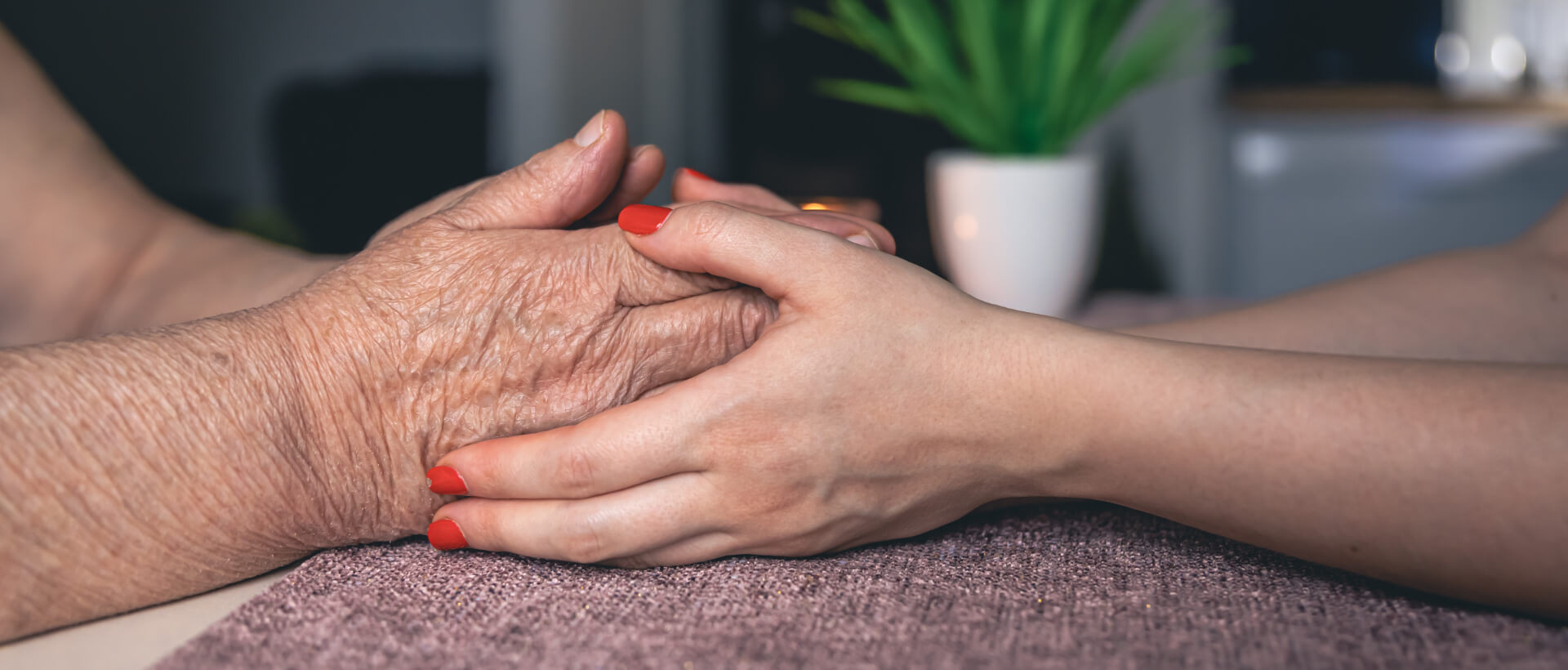

In a society characterized by longevity, the quality of care is becoming increasingly important. Today, care is no longer a purely mechanical act of providing assistance, in which a passive recipient is treated by an active caregiver. Rather, a paradigm shift has taken place: toward activating care.
This concept understands care as a dynamic process that aims to protect people's autonomy until the very end. The idea is not to view the need for care as the end of a person's ability to act independently, but rather as a phase of life in which resources must be rediscovered and specifically promoted.
Definition and theoretical foundation
Activating care is a form of care that refers to all care measures in which the person in need of care is actively involved in the care activities. The aim of the care is to promote, maintain, and make meaningful use of existing physical, mental, and emotional strengths as well as social skills. In doing so, it consistently follows the principle of helping people to help themselves.
The caregiver does not perform tasks on behalf of the patient, but rather accompanies, supports, motivates, and guides them. The aim is to strengthen the patient's self-care skills and reduce their dependence on outside help as much as possible, or at least not to increase it unnecessarily.
Key features of activating care
- Resource orientation: Focus on skills, potential, and opportunities for development rather than deficits
- Participation: The person requiring care is actively involved in decisions and actions.
- Holistic approach: consideration of physical, mental, emotional, and social aspects
- Individuality: Tailoring care measures to the patient's biography, habits, needs, and daily condition
- Dignity and respect: Respect for human dignity and promotion of self-esteem
The foundation is a humanistic view of humanity. Every person is seen as an individual with a unique biography. Even when physical functions decline, the core of the personality and the desire for self-determination remain.
The influence of Ingo Bartussek
Nursing scientist Ingo Bartussek has had a significant influence on this approach. He postulated that professional care ends where it "trains" people to be dependent. If a caregiver feeds a patient out of time constraints, even though the patient could still hold the spoon themselves, this results in "learned helplessness." Bartussek instead calls for care that enables development and strengthens self-care skills.
The psychological dimension: dignity and self-esteem
For those affected, needing care is often associated with shame and a feeling of loss of control. People who have worked all their lives, raised children, and run a household often find it humiliating to suddenly be dependent on help when washing or going to the toilet.
Activating care reverses this process. By not "being washed" but "washing themselves under supervision," patients remain in control of their own bodies. This small-scale participation is the key to preserving human dignity. It creates psychological stability: "I can still make a difference."

Experiencing small successes, such as being able to hold a coffee cup independently after a stroke, strengthens mental resilience. This counteracts depressive moods, which often arise in old age due to feelings of uselessness.
Core objectives of activating care
Activating care pursues a clear yet multifaceted approach. This form of care focuses not only on providing for a person in need of care, but also on consciously promoting their existing resources, abilities, and opportunities for development. Its core objectives intertwine on a physical, mental, emotional, and social level and form the basis for care that views people as active, self-determined individuals.
Maintaining physical mobility
Mobility is the freedom to choose where you want to be. Activating care focuses on this:
- Contracture prevention: Active movement of the joints prevents stiffness.
- Fall prevention: Targeted training of muscles and balance reduces the fear of falling.
- Transfer training: Learning safe movement sequences from bed to wheelchair.
Cognitive vitality
Mental fitness is closely linked to physical activity. Activating care integrates memory training into everyday life in a playful way, for example by planning the weekly shopping together or recalling biographical events during basic care.
Social participation
Loneliness is a major risk factor in old age. Activation here means maintaining contact with the outside world, encouraging visits, and supporting participation in community activities (e.g., singing groups, cooking together).
Methodology: Helping people help themselves in practice
Instead of performing an action for the patient, it is broken down into sub-steps:
- Preparation: The caregiver places the necessary items (e.g., comb, toothbrush) within sight and within reach.
- Stimulus: A verbal cue or gentle touch initiates the action.
- Instructions: If the patient hesitates, explain or demonstrate the next step.
- Partial assistance: The caregiver only assists with difficult tasks (e.g., combing the back of the head).
Resource orientation vs. deficit orientation
The difference between deficit-oriented and resource-oriented care lies less in the individual actions and more in the attitude with which care is provided. In the classic, deficit-oriented approach, the focus is on what a person in need of care can no longer do. Phrases such as "the patient cannot wash themselves" describe a limitation, but completely ignore existing abilities. In nursing practice, this often means that tasks are taken over without utilizing the remaining potential.
Activating care deliberately sets a different focus. It does not first ask about deficits, but rather about remaining resources. The statement "Patient can wash their upper body independently with the support of their right hand" makes it clear that there are skills that can be built upon. This perspective changes not only the care documentation, but also the entire care process.
This change in perspective has a noticeable effect on the person in need of care. Those who are perceived as competent and capable of acting experience themselves less as needing help and more as active shapers of their own everyday lives. This strengthens their self-esteem, promotes motivation to cooperate, and counteracts the decline in abilities.
The resource orientation also brings about a change for caregivers. Care becomes an accompanying process in which guidance, motivation, and observation play a greater role than simply performing tasks. The relationship between caregivers and care recipients becomes more cooperative, respectful, and characterized by mutual trust.
Activating care for dementia
In people with dementia, purely rational activation often reaches its limits. In such cases, activation must take place on an emotional level.
You activate a person with dementia by correcting them, but by validating and appreciating their world. If a former seamstress constantly fiddles with her tablecloth, you can use this as a resource and give her fabric scraps to sort. This activates fine motor skills and triggers positive memories.
Structure provides security. Recurring routines (e.g., singing a certain song every day while getting dressed) activate long-term memory and reduce restlessness and anxiety.
Therapeutic concepts as a supplement
Activating care is most effective when it is complemented by appropriate therapeutic concepts. These concepts broaden the nursing perspective to include targeted professional approaches from therapy and rehabilitation and support caregivers in not only maintaining existing skills, but also systematically promoting them. This is not a matter of mixing professional roles, but rather of working together toward common goals.
The Bobath concept
The Bobath concept is particularly essential after a stroke. It is based on the brain's ability to reorganize itself (neuroplasticity). Activating care in this context means consistently involving the affected side of the body in all activities in order to bring it back into the patient's consciousness.
kinesthetics
This involves teaching patients how to sense movement. Caregivers learn how to support patients' own movements so that they can control their own weight. This protects the caregiver's back and promotes the patient's body awareness.
The role of relatives: partners in activation
Relatives provide the lion's share of care in Germany. However, out of love and concern, they often tend to take care of everything for the person in need of care.
Instructions for home use
Care services should train family members:
- Patience instead of speed: It's hard to watch someone take 10 minutes to button a shirt, but those 10 minutes are training for the brain.
- Adapting the environment: Ergonomic handles, seat risers, and good lighting are passive activation factors.
- Self-care: Only those who have strength and energy themselves can activate patience.
Activation within an institutional framework
In nursing homes, activating care often poses a challenge for time management. However, modern concepts show that time invested in activation saves time later on when it comes to providing full care.
milieu therapy
The design of the living areas plays a role. When hallways are designed like streets and mementos from the residents' youth are on display, this encourages independent movement and communication.
Interdisciplinary cooperation
Doctors, physical therapists, occupational therapists and nursing staff must all pull together. If the physical therapist practices walking with the patient, but the nursing staff then only pushes them around in a wheelchair due to time constraints, the success of the therapy is jeopardized.
Challenges and limitations of activation
Activation must not degenerate into stress. A patient in severe pain or in the final stages of dying often does not need activation, but rather rest, relief, and passive care. Professional judgment is required here.
Staff shortages in care facilities also often lead to time-consuming activating care being abandoned in favor of quick care. This is a systemic problem that leads to higher care costs in the long term, as patients lose their abilities more quickly.
Digitalization and technology: Activation 2.0
Modern technology offers new opportunities:
- Exoskeletons and robotic suits: Support mobility in cases of paralysis.
- VR glasses: Enable virtual walks for people who are no longer able to leave their beds, thereby activating the visual center and emotions.
- Interactive tables (e.g., Tovertafel): Project games onto surfaces that encourage people with dementia to move and interact socially.
Practical guide: 10 steps to successful activation
- Observe: What can the person do today? What could they do yesterday?
- Use biography: Which hobbies or professions shaped their life? (A former gardener is more likely to be active when watering flowers than throwing a ball).
- Set small goals: Not "being able to walk again," but "standing safely at the edge of the bed today."
- Communication: Explain each step. Use positive reinforcement.
- Time management: Allow for buffer times. Activation requires rest.
- Use aids in a targeted manner: Use cutlery with thick handles or dressing aids to enable independence.
- Allow mistakes: If something goes wrong while eating, it's not a big deal, but part of the learning process.
- Demonstrate rather than explain: When dealing with cognitive impairments, showing the movement is often more effective than a thousand words.
- Take feelings seriously: When resistance arises, explore the cause: fear, pain, fatigue.
- Document: Record successes to keep motivation high for everyone involved.
Conclusion: An investment in humanity
Activating care is much more than a nursing technique; it is an expression of respect for a person's life achievements. It requires courage on the part of caregivers to take a back seat, and courage on the part of those being cared for to make an effort.
By shifting the focus from what has been lost to what is still possible, we give people in need of care back a piece of their identity and zest for life. Ultimately, activating care is an investment in all of our futures, because we all want to be perceived as competent and self-determined individuals, even when we need help.