
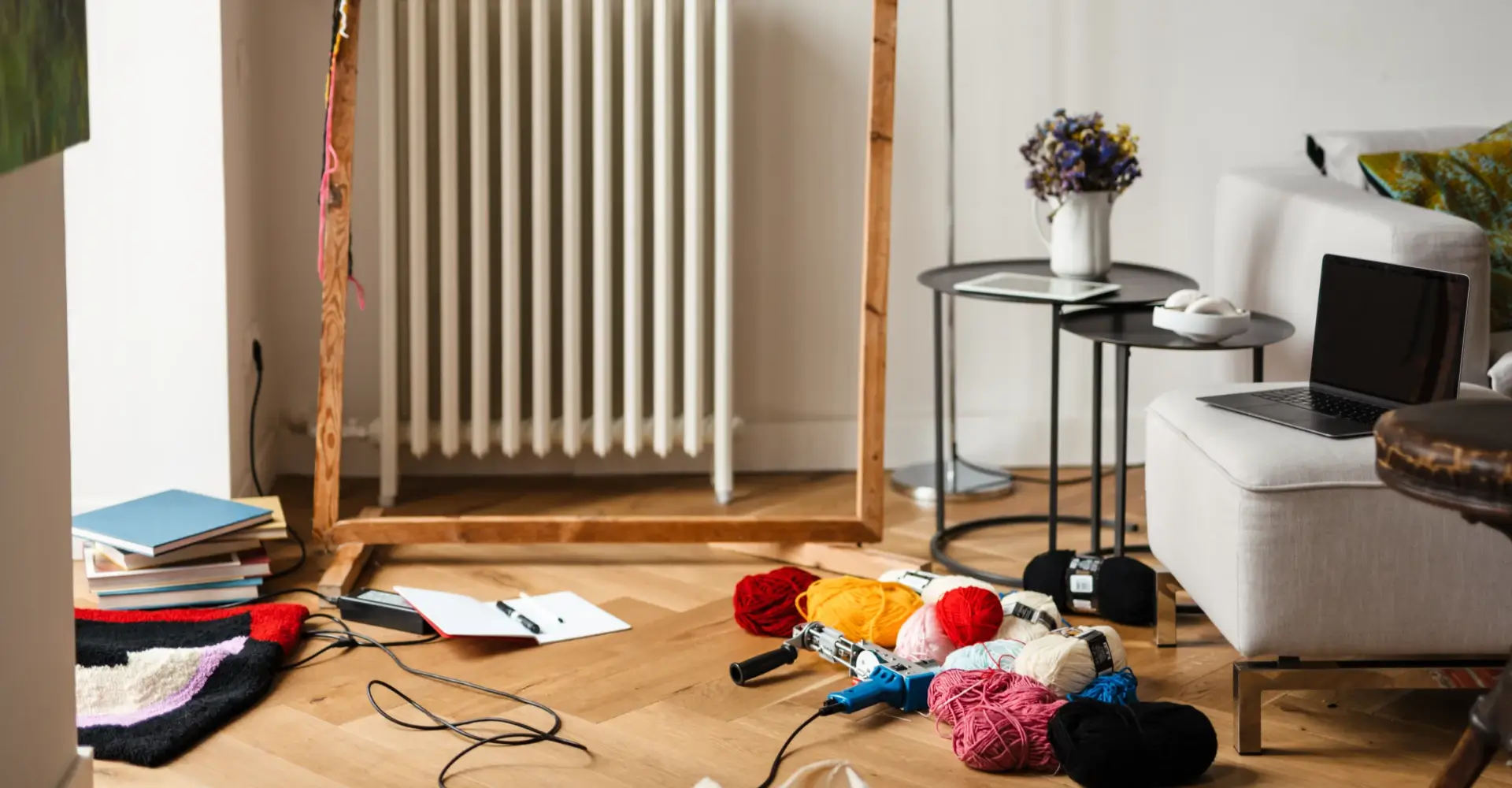

The dishes have been sitting there for three days. The laundry is still in the dryer. The kitchen table isn’t really a table anymore, but a place to pile everything that has nowhere else to go. And yet, you still can’t bring yourself to get started. Not because you’re lazy. But because, with ADHD, your brain evaluates tasks like “housework” fundamentally differently—and thus follows different rules than neurotypical people. This article offers practical everyday tips for people with ADHD to help them better manage their daily lives.
This magazin 15 ways to work with the ADHD brain, not against it—and explains when a domestic helper is is the decisive step.
Why Willpower Doesn't Work for ADHD
In ADHD, the brain produces less dopamine during routine tasks. What this means in practical terms is that the internal reward is missing. While a neurotypical brain releases a small surge of happiness after cleaning, in the ADHD brain—nothing happens. No signal. No motivation. No dopamine.
This leads to a vicious cycle of procrastination, shame, and feeling overwhelmed, as people with ADHD often find their minds overwhelmed by too many stimuli or tasks at once. More discipline isn’t the answer. The answer lies in external structures that take over what the brain cannot provide internally.
“With ADHD, it’s not motivation that fails, but the motivation system,” explains Dr. Edward Hallowell, an American psychiatrist and ADHD expert. “People with ADHD want to—they just often can’t get started.”
Every attempt to get things in order is a step in the right direction, even if it doesn't always work out right away.
Hoarding Disorder and ADHD in the Home
Hoarding disorder is an issue that affects many people with attention-deficit/hyperactivity disorder (ADHD), often without them immediately realizing it. While even everyday household tasks can be a challenge for people with ADHD, hoarding disorder takes it a step further: here, order and structure in one’s own home are completely thrown off balance. Chaos, clutter, and the feeling of being overwhelmed by possessions and tasks dominate daily life.
People with ADHD often find it difficult to establish routines and maintain order. This is not due to a lack of willpower, but rather to the way the brain processes information and sets priorities. In hoarding disorder, this disorganization becomes so severe that it significantly impairs daily life at home. The home becomes a reflection of the inner chaos: piles of objects, unfinished tasks, and the constant feeling of being overwhelmed.

Differences between children and adults with ADHD
While children often need help with specific tasks, adults with ADHD face the challenge of organizing their entire daily routine, household, and numerous to-do lists on their own. This can quickly become overwhelming, especially when hoarding disorder comes into play. Adults with ADHD often report that they have difficulty setting priorities, planning tasks, and managing their energy effectively. This leads to important things being left undone and the chaos spreading further and further.
To counteract this, established routines, simple organizational systems, and clear structures at home are crucial. To-do lists, regular short tidying sessions, and getting rid of unnecessary items can help you regain control of your home. It’s important to remember: no one has to face this challenge alone. External support—whether through professional help, coaching, or the understanding of partners and family—can make a significant difference.
Hoarding disorder and ADHD affect not only the person with the condition but also everyone around them. Partners, children, and friends often experience the effects of clutter and disorganization firsthand. Shared strategies, open communication, and mutual support are therefore particularly important for avoiding conflicts and finding solutions together.
Ultimately, the following applies: With the right support, appropriate strategies, and therapeutic guidance if needed, it is possible to bring more order and structure back into your life even if you have ADHD and hoarding disorder. Every small step counts, and every bit of progress is a success on the path to a more relaxed daily life and a home where you can feel comfortable again.
15 Tips for Managing Household Chores with ADHD
Structure, not willpower
1. Tackle just one task at a time—no “I’m going to clean the whole apartment today.” Instead, say: “I’m going to clear out the sink right now.” Focus on one task, breaking the work down into small, manageable steps. Done. Then move on to the next one.
2. Use a timer instead of a to-do list: Set a timer for 15 minutes. Clean for just those 15 minutes—no more. This makes it easier to get started. Many people with ADHD then automatically get into the flow.
3. Visible chore cards: Write individual household chores on index cards. Place 3 of them face up on the table. Not 10. Three.
4. Set aside specific time slots instead of “when I have time.” With ADHD, “when I have time” means never. Schedule specific time slots, such as Mondays at 6:00 p.m. for the kitchen and Wednesdays at 9:00 a.m. for the bathroom. Routine beats motivation. This method supports better time management for people with ADHD and helps make daily life more structured.
5. Cut down on decisions: The more decisions a task requires, the more likely you are to get stuck. Post a simple weekly schedule on the fridge: Monday = kitchen. Tuesday = vacuuming. No need to think about it. A flexible schedule ensures that household chores stay manageable and don’t feel overwhelming.
Working with the reward system
6. Plan for immediate rewards: The ADHD brain responds to immediate rewards. After doing the dishes, treat yourself to your favorite music, a cup of coffee, or a short break with a podcast. Not later—right away.
7. Favorite music or a podcast as a dopamine booster: Many people report that they find it much easier to get things done when they have music or a podcast playing in the background. Give it a try—and keep a “household playlist” that you wouldn’t otherwise have.
8. Gamification apps like Habitica turn household chores into a role-playing game. It sounds silly, but it works: the reward system kicks in.
Using the concept of body doubling
9. Get it done together: Body doubling means having another person present while you complete the task, without them actually helping. This technique is scientifically proven and one of the most effective strategies for managing daily life with ADHD. Especially in relationships, mutual support around the house through body doubling can make daily life easier and strengthen mutual understanding.
10. Body Doubling via Video Call Body doubling works even over video calls. Make plans with a friend: “Let’s both clean for an hour without talking much.” There are even apps (e.g., Focusmate) that make this possible.
11. Housekeeping as structured support: A professional housekeeper who is specially trained in ADHD doesn’t just handle chores—she provides structure, offers encouragement, and is there for you. It’s more than just cleaning. It’s active support in daily life.
ADHD Household Routine: Reducing Sensory Overload
12. Tackle chores during low-stimulus periods:Many people with ADHD experience a brief period of lower stimulation in the morning after waking up—before cell phones, emails, and external stimuli kick in. Use this window of opportunity to tackle short tasks.
13. Minimize visible clutter with boxes, baskets, and containers: Anything that takes the decision-making out of it (“Where should I put this?”) helps. A basket in the living room for “to be sorted” is better than 20 separate piles scattered everywhere. Especially with ADHD, a lot of stuff and numerous items can quickly pile up, leading to clutter and feeling overwhelmed. A transparent box for unprocessed mail should be placed in plain sight in the entryway so that important letters don’t get lost.
Tip: Keep important items like keys or mail right by the door or nearby so you don't forget them when you leave the house.
14. Designate an area that is always tidy. Instead of tidying up the entire apartment, set aside a “safe space”—such as the kitchen table. That area is always clear. Just that one. This creates a sense of order that serves as an anchor. Having a quiet space in your home is especially important for retreating from noise and sensory overload and finding inner peace.
[elementor-template id="62139"]
When tips aren't enough
15. External support as a strategy, not a sign of defeat. Sometimes the most honest and effective strategy is to ask for help. A housekeeper who understands ADHD not only lightens the household load, but also eases the strain on your nervous system. She creates the mental space that those affected need to function in the rest of their lives.
That's not a defeat. That's self-care.
Behavioral therapy can also help individuals with ADHD develop strategies for managing household tasks and organizing their daily routines.
When is it a good idea to hire a professional housekeeper?
ADHD can lead to problems in various areas of life—such as school, work, social settings, and at home—which can also affect household management.
Hiring a housekeeper is a good idea if:
- Household chores are constantly piling up and causing stress
- Tips and strategies alone are not enough
- households with children or teenagers who need structure and predictability
- Comorbidities such as burnout or depression further impair functioning
- Relationship conflicts related to household chores are on the rise
Especially when unexpected visitors arrive, the problem of clutter in your home becomes particularly apparent and can cause additional stress. Medication can be part of a comprehensive treatment plan for ADHD and help you better manage daily life. In many cases, household help be covered in part or in full by health insurance or long-term care insurance .