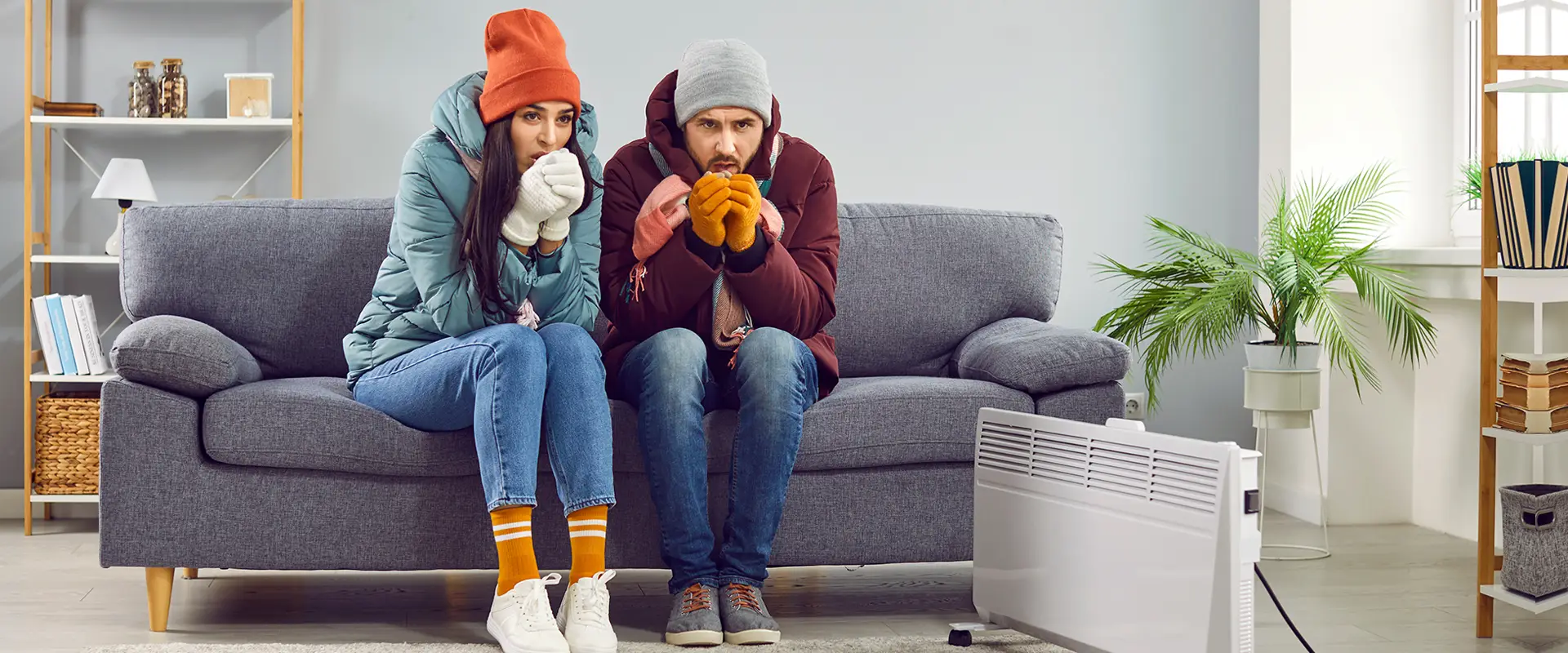

Autumn is a season full of colorful splendor and cozy evenings at home. But to keep the cold outside and ensure pleasant warmth inside, the right heating settings and usage are crucial. In this article, you will learn how to heat efficiently and comfortably in autumn. We give you tips and tricks to save energy and maximize comfort in your home.
Autumn often brings changing temperatures and it can be a challenge to maintain the right room temperature without massively increasing heating costs. The most important reasons for energy-efficient heating are:
Reducing energy costs: finding the right room temperature
If you heat properly, you can significantly reduce your energy costs. An efficient heating system uses less energy and helps to reduce your monthly bills. Just a few degrees can make a big difference to energy consumption. In the living area, 20 to 22 degrees Celsius is usually sufficient. In the kitchen, around 18 degrees Celsius is usually sufficient, in the bedroom 17 to 18 degrees Celsius.
However, it should not get colder there, as this increases the risk of mold. The bathroom can be a little warmer, 22 degrees Celsius is ideal. The heating can generally be turned down at night. The temperature in living and working rooms can be lowered by 4 to 5 degrees Celsius, saving a few percent of heating energy. Good insulation of the building also helps to save heating energy. However, there are limits to lowering the room temperature, as this can lead to mold growth on cold wall surfaces and a loss of comfort.
To summarize, the following temperatures are ideal for your living space:
- Living area: 20-22 degrees Celsius
- Kitchen: 18 degrees Celsius
- Bedroom: 17-18 degrees Celsius
- Bathroom: 22 degrees Celsius
- Temperature drop at night: 4-5 degrees Celsius
Close and seal curtains
To reduce heat loss through the window by around 20 percent, it is advisable to close the shutters at night. This effect is enhanced if the curtains are also closed to keep heating costs low. However, avoid radiators being covered by curtains or blocked by furniture, as otherwise the heated air cannot be distributed evenly throughout the room.

Thermostat for temperature regulation
A thermostatic valve keeps the room temperature constant and reduces the heat supply when the sun is shining or many people are present. A medium level (on a scale with six levels, level 3) corresponds to around 20 degrees Celsius. The more precisely the thermostatic valve can regulate the room temperature, the lower the energy consumption. Modern thermostatic valves enable savings of 4 to 8 percent in heating energy. The advantage of programmable thermostatic valves is that they automatically bring rooms to the desired temperature at preset times.
This can save around 10 percent of heating energy. Lower the room temperature to 17 to 18 degrees Celsius at night or during longer periods of absence (below this, the risk of mold growth increases). General temperature settings such as the night-time reduction should ideally be made directly on the central control unit of the boiler and not on the thermostats in the home.
Correct ventilation is immensely important
Regular ventilation during the heating season is very important, even when it is cold outside. Fresh air reduces the humidity in living spaces and ensures good air quality. People in a four-person household, for example, release around twelve liters of moisture into the air every day through breathing, showering, cooking and washing.
The most effective method is to ventilate the room vigorously several times a day with the windows fully open for around five minutes instead of leaving the windows permanently tilted. Tilt ventilation carries the risk of mold growth due to condensation on the edges of the windows and is not very effective. Tilt ventilation is also strongly discouraged for energy reasons.
Prevention of mold and moisture
Mold growth occurs when it is regularly too damp in the home. It is high time to ventilate if the walls are constantly wet or if condensation forms on the inside of the window panes.
In old buildings with cold exterior walls, it is advisable to place furniture a few centimetres away from the wall to avoid moisture accumulation. This can encourage the growth of mold and bacteria and trigger allergic reactions or respiratory problems.
In general, heating and regular ventilation are the best measures to prevent damp and mold. In addition, the building must be structurally sound to prevent moisture from penetrating walls and floors. Landlords may also have a duty here. If you have any questions about the reasonableness of mold, you can contact the tenants' association, for example. Do not hesitate, because mold is a health hazard and can also have consequences for the entire building. Landlords have a duty here!
Heating with fireplaces
Fireplaces contribute to improving living comfort (radiant heat sources) and, depending on the fuel (such as wood or coal), emit various volatile and semi-volatile chemicals. Polycyclic aromatic hydrocarbons (PAHs) in particular are dangerous as they can be carcinogenic. Heavy metals are also released into the outside air, especially when burning coal.
However, the main problem is dust emissions. Modern fireplaces have multiple combustion and carefully designed air ducting, so that although emissions are not completely reduced, they can be significantly reduced compared to old appliances. Stoves with the "Blue Angel" eco-label emit particularly little particulate matter.
Every fireplace must be approved by a competent chimney sweep before being put into operation. Only dry and stored wood should be burned and the stove door should only be opened when the wood has burned red-hot. When changing the ash, care should be taken to ensure that no ash is spread around the home. The Federal Environment Agency advises against alternatives such as ethanol fireplaces or so-called chimneyless fireplaces, as the exhaust fumes can enter living spaces directly and the exhaust gas catalysts provided are not sufficiently effective.
Heating maintenance: Bleeding the heating and topping up the water
If radiators make strange noises and don't get really warm, there may be air in them. You can easily release this air using the air vent on the side of the radiator. All you need is a cup, a small pair of pliers and the correct air vent key, which you received when you handed over your home or can alternatively buy from a DIY store.
Open the screw with the pliers, release the air and wait until only water comes out. If too much air is removed, water may need to be added to the heating circuit. To do this, simply check the pressure at the boiler or the heating boiler.
If you don't want to have to bleed the system regularly, you can fit special automatic bleed valves to the radiators. This ensures that your heating system always works perfectly!
Regularly maintain and modernize heating systems
To maintain the improved speed and performance over time, measures should be taken by a specialist company. This includes regular maintenance and cleaning of the heating system. This should include taking a look at the circulation pump. Older models consume a lot of electricity as they always operate at full power. Modern pumps adapt to demand and are therefore more economical. It may be worth replacing them. Contact your trusted heating engineer for individual advice.
Hydraulic balancing ensures that all components of the heating system are optimally matched to each other and to the heat demand in the house. However, this adjustment can cost up to 1,000 euros. The flow temperature should also be adjusted by a specialist company to suit requirements.
Further information on modern heating systems can be found in the magazin from ökoloco.