
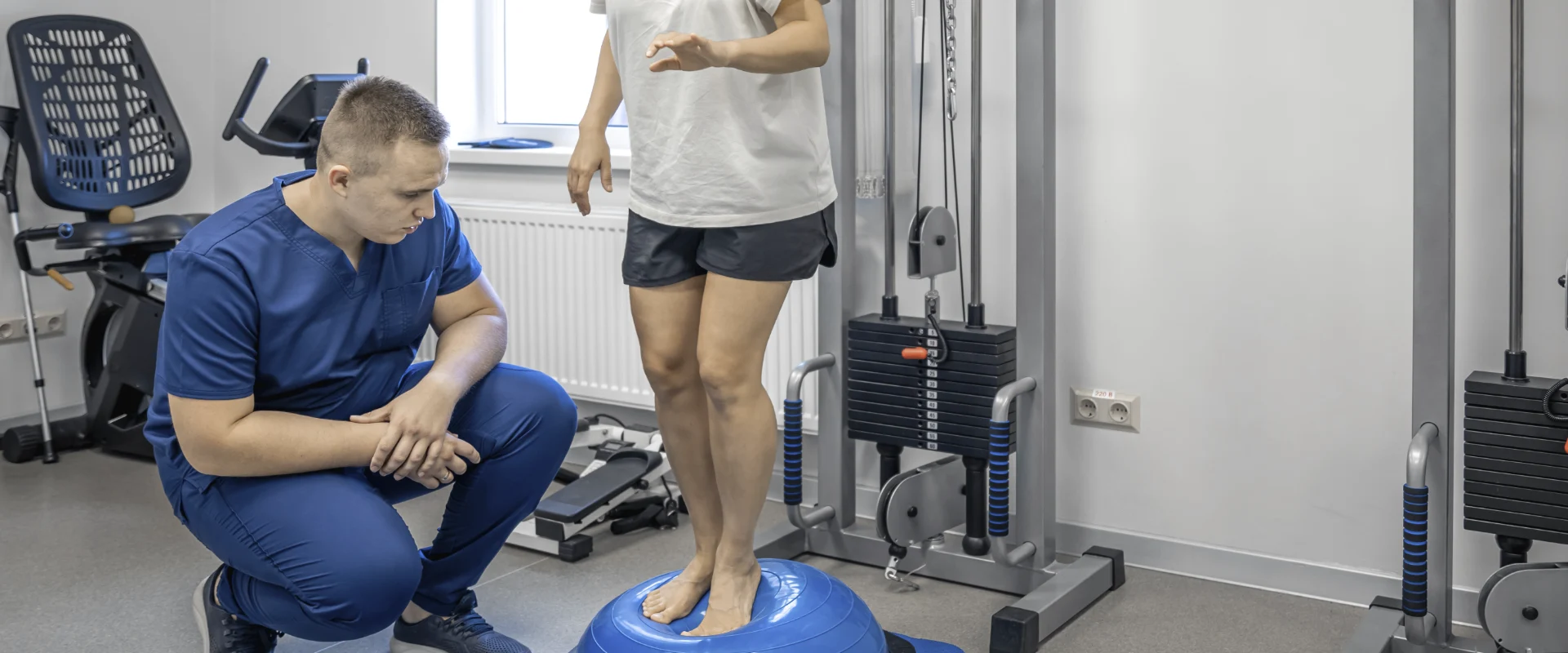

Whether after a stay in hospital for an operation or an illness such as a heart attack or cancer, rehab can support recovery and help to restore normal everyday life.
In this article, we answer your questions about rehabilitation, explain the various topics and show you how to choose the right steps for a successful application. Let's pave the way to rehabilitation together and achieve your goals.
Introduction to rehab
Applying for medical rehabilitation is a crucial first step on the way to restoring your health and earning capacity so that you can return to everyday life and work.
Rehabilitation can take various forms: outpatient, day-care or inpatient. Depending on your individual situation and needs, different rehabilitation measures are offered that aim to promote your physical and mental fitness.
As a rule, German pension insurance and statutory health insurance companies cover the costs of the necessary rehabilitation services. However, in order to submit a successful application, it is important to meet the requirements for rehabilitation. These include medical necessity and an identified impairment of your abilities.
Requirements for a successful rehab application
In order for your rehab application to be successful and for your rehab application to be approved, certain requirements must be met.
First of all, you must ensure that there is a medical indication for rehabilitation. This means that medical certificates or diagnostic reports are required to substantiate the need for rehabilitation. This is the case, for example, if outpatient care is not sufficient to alleviate the restrictions.
It is also helpful if you gather information in advance about the various rehabilitation services that are relevant to your situation. Whether outpatient or inpatient rehabilitation - the choice depends on your individual situation and illness.
German pension insurance also plays a key role, as it covers the costs in many cases. Keep in touch with your attending physician, who can help you with any questions you may have about the application process. Make sure you submit all the necessary documents correctly and in full to avoid delays.
Submit a rehab application
The rehab application is an important step that the patient must make themselves. To increase the chances of a positive application, it is advisable for the application to be supported by a doctor. The application form for the pension insurance provider should contain all the necessary information, including the medical report and the medical diagnosis, in order to clearly explain the urgency and necessity (especially in the event of a deterioration in health) of the rehabilitation.
Various forms are available for submitting applications, which can either be obtained from the relevant funding agencies or conveniently downloaded online. It is important to submit the application as early as possible to ensure that it is processed quickly and that you have faster access to the rehabilitation measures you need.
Rehab - goals and measures
The central aim of rehabilitation in a rehabilitation clinic is to restore the patient's state of health and ability to work. In order to achieve this goal, various rehabilitation measures are offered that are tailored to the specific needs of each individual. These include therapies and treatments such as physiotherapy and occupational therapy with various therapists.
It is crucial that these rehabilitation measures are individually tailored to the patient, focusing on their personal needs and health goals. Rehabilitation can take place in various settings: outpatient, day-care or inpatient, depending on the severity of the impairment, the need for care and the measures required.
Medical rehabilitation
Medical rehabilitation plays a central role in the rehabilitation process by aiming to restore the patient's health and ability to work. It includes a variety of therapies and treatments, such as both physiotherapy and occupational therapy, which are designed to promote physical and mental fitness.
It is crucial that medical rehabilitation is individually tailored to the patient, focusing on their specific needs and goals. This personalized approach ensures that the measures are optimally effective and that the patient receives the best possible support. Medical rehabilitation can be carried out in different settings: on an outpatient, day-care or inpatient basis, depending on the patient's individual requirements.
Select a rehab clinic
When choosing a rehabilitation facility, it is crucial that it is individually tailored to the patient and takes their specific needs and goals into account. Optimal care depends on the quality of the equipment and the expertise of the staff, which is why the rehabilitation clinic should have a modern infrastructure and qualified specialist staff.
Another important aspect is the accessibility of the rehab clinic. Ideally, it should be close to the patient's home to ensure easy access and regular visits by relatives. relatives visits by relatives.
It is also advisable to look at various reviews and information about the clinic to select a clinic with a good reputation and experience in treating patients with similar conditions to ensure that the best possible care is provided.
Rehab clinics and their services
Rehabilitation clinics offer a wide range of services that are individually tailored to the needs of patients.
- Physiotherapy: Targeted movement and strengthening therapies to restore physical functioning.
- Occupational therapy: support in regaining everyday skills for more independence in everyday life.
- Psychological counselling: offers psychological stabilization and support, especially after serious illnesses.
- Water gymnastics: exercises in the water that are easy on the joints and promote mobility.
- Pain therapy: Measures to alleviate and manage pain, often using multiple therapeutic approaches.
- Nutritional advice: support in developing a healthy diet adapted to specific health needs.
- Social therapy: Help with social and occupational reintegration issues and coping with life changes.
- Sports and exercise therapy: Activities that promote physical fitness and support the healing process.
- Relaxation therapy: techniques such as yoga or meditation to manage stress and relax the body and mind.
- Derivation of pain and mobility training: Special programs to relieve pain and improve mobility after operations or injuries.
These services vary depending on the clinic and specific rehabilitation needs. Patients should therefore inform themselves in advance about the available therapies and services in order to choose the right rehabilitation clinic.
Outpatient rehab
Outpatient rehabilitation is a form of rehabilitation in which the patient is treated in their own home or in an outpatient facility. This option offers the advantage that patients can remain in their familiar surroundings while receiving the necessary therapy.
Various therapies and treatments are used as part of outpatient rehabilitation, such as physiotherapy and occupational therapy. These measures are designed to promote patients' independence and quality of life.
It is very important that outpatient rehabilitation is tailored to the individual patient, taking into account their specific needs and goals. This customized approach enables targeted and effective treatment.
For many patients, outpatient rehab can be an excellent alternative to inpatient rehab, especially if they are not dependent on full inpatient treatment. This allows the patient to enjoy a high degree of flexibility and continuity in their therapy.
Approval of the application
The approval of the rehabilitation application is an important step in the rehabilitation process and takes place when the funding provider recognizes the medical necessity of rehabilitation. This decision is crucial to ensure that the necessary resources are made available for treatment.
The approval should be in writing and contain all the necessary information that is important for the implementation of the rehabilitation measures. This documentation ensures that all parties involved are informed about the approved services.
The approval forms the basis for the actual implementation of the rehabilitation measures. Without this approval, the therapeutic treatments cannot begin, which is why it is important to organize the approval process efficiently.
It is also advisable to apply for approval at an early stage in order to enable the rehabilitation measures to be carried out quickly. Early approval helps to ensure that the patient receives the necessary support promptly.
Rejection of the rehab application
The rehab application may be rejected if the payer does not recognize the medical necessity of the rehabilitation. This decision can be frustrating for the patient concerned, as it can prevent access to important rehabilitation measures.
A rejection should always be made in writing and contain all relevant information that makes the decision-making process comprehensible. This enables the applicant to understand the reasons for the rejection and to take further steps if necessary.
There can be many reasons for a rejection. A lack of medical necessity or an incomplete application are common reasons that can lead to the application not being approved. It is therefore important to ensure that the application is submitted completely and correctly.
The rejection of the application can be appealed. In this case, the application will be re-examined and there is the possibility of obtaining a positive decision.
Lodge an objection
Appealing against the rejection of a rehab application is an important step in challenging the decision of the funding provider. It is very important that the appeal is submitted within a specified period after receiving the rejection in order to preserve legal claims.
The objection should be made in writing and contain all the necessary information required to justify the request. A clear and precise presentation of the arguments will help to ensure that the application is reconsidered.
There can be many reasons for an objection. Common reasons include, for example, an incomplete application or insufficient justification regarding the medical necessity of rehabilitation. A detailed discussion of these aspects helps to make the objection convincing.
A successfully submitted appeal can lead to a review of the original rejection and, in the best case, to the application for rehabilitation being approved. This gives the patient access to the necessary rehabilitation measures.
Self-payers and co-payment
A self-payer is a patient who bears the costs of their rehabilitation measures themselves. This may be the case if the cost bearer does not cover the costs sufficiently, meaning that the patient has to raise the funds themselves.
The co-payment refers to the amount that the patient must pay themselves if the rehabilitation measures are not fully covered by the payer. The amount of the co-payment can vary depending on the individual situation and should be clarified in advance.
There can be many reasons for a co-payment. Often it is incomplete applications or insufficient medical necessity that lead to the payer not covering certain services in full. It is therefore important to submit the application documents completely and correctly in order to avoid unnecessary co-payments.
To ensure that the rehabilitation measures are carried out quickly, the co-payment should be clarified at an early stage. This ensures that the patient is prepared to make the necessary payments and can thus avoid delays in the rehabilitation process.
German pension insurance and rehabilitation
German Pension Insurance plays an important role as a payer for rehabilitation services. It is instrumental in providing patients with access to the necessary therapeutic measures that contribute to restoring their health and ability to work.
Within its range of services, German Pension Insurance provides a variety of rehabilitation measures, including physiotherapy and occupational therapy. These therapies are crucial for rehabilitation and should be tailored to the patient's specific needs in order to achieve the best possible results.
In addition, German Pension Insurance can be an excellent alternative to other cost bearers, especially if the patient is dependent on inpatient treatment. With the support of German Pension Insurance, patients receive comprehensive and high-quality care during their rehabilitation.
Right to rehab
The right to rehabilitation is a fundamental patient right that is enshrined in various laws and regulations. This right ensures access to necessary rehabilitation measures that are crucial for restoring health and earning capacity.
The right to rehabilitation includes the possibility for the patient to apply for a rehabilitation measure and to carry it out accordingly. It ensures that every patient has the opportunity to take advantage of support and therapeutic measures that are tailored to their specific situation.