
The skin is the largest organ in the human body and undergoes many changes throughout life. One particularly striking phenomenon that primarily occurs in advanced age is known as parchment skin. This condition poses special challenges for both those affected and their caregivers.
In this article, we take a detailed look at the development, symptoms, and essential care of this highly sensitive skin structure.
What is parchment skin? – Term and phenomenon
The term "parchment skin" is a figurative description of an extremely thin, fragile, dry, and brittle skin condition that resembles parchment paper in appearance and texture. It is not a disease in the traditional sense, but rather a phenomenon that usually occurs as a symptom of advanced skin aging or as a side effect of certain therapies.
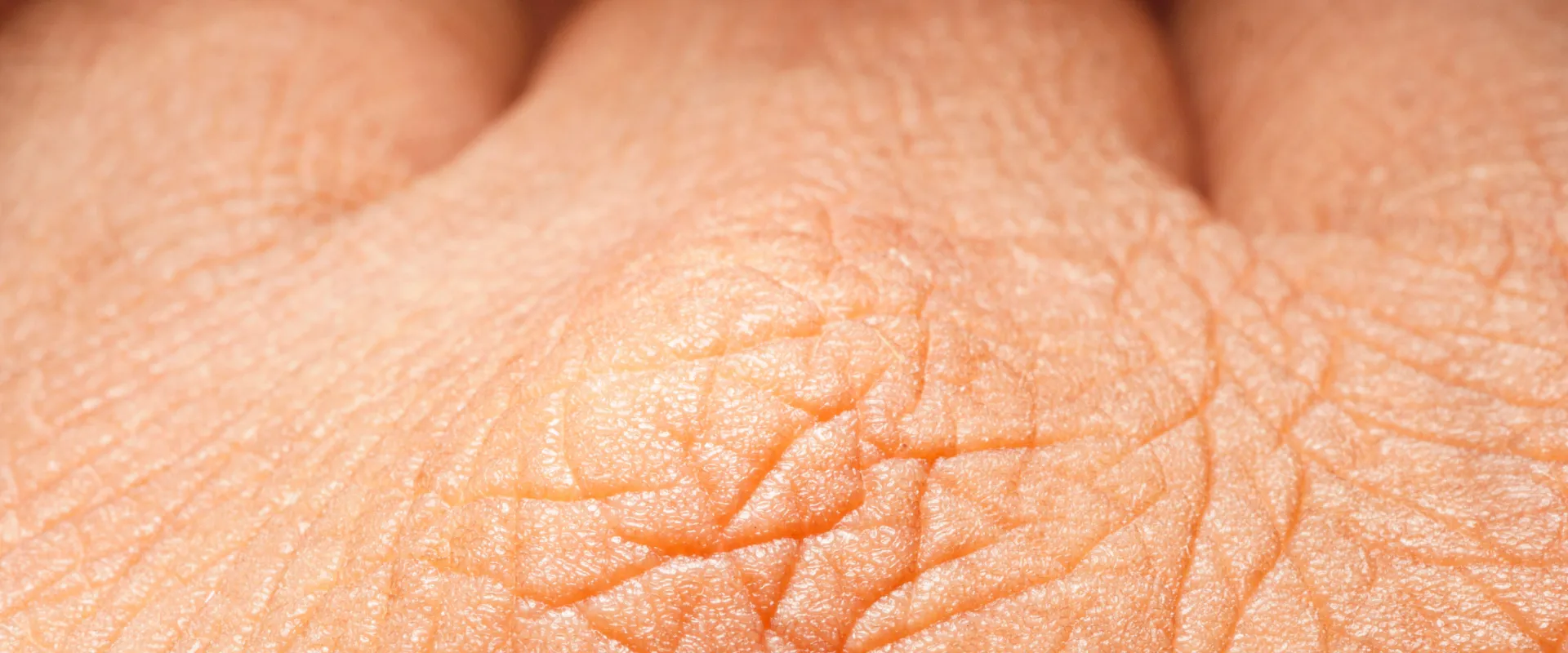
The term parchment skin: A visual comparison
The name derives directly from the texture of parchment. Like dried writing material, the skin appears dry, translucent, and wrinkled. If you pull up a fold of skin, it often remains in place for several seconds before slowly smoothing out again. These changes are a clear sign of loss of moisture and elasticity.
Differentiation from aging skin and skin atrophy
It is important to distinguish parchment skin from normal aged skin , even though the transition between the two can be fluid. While all skin loses substance with age, parchment skin describes an extreme stage of skin atrophy. Atrophy (tissue loss) causes the skin layers to recede significantly. Atrophic skin is therefore the medical umbrella term, while parchment skin describes the clinical appearance. Not every elderly person necessarily develops parchment skin, but the risk of skin layer regression increases with each decade of life.
The formation of parchment skin: a biological process
The formation of parchment skin is a complex process that takes years. To understand it, you need to take a look at skin cells and the structure of the skin.
The natural aging process of the skin
The aging process begins as early as age 25, but accelerates significantly with age. Cell renewal slows down. Whereas the epidermis (outer skin layer) renewed itself approximately every 28 days in younger years, it often takes 60 days or longer in old age. This causes the skin surface to become rougher and its barrier function to decline.
Atrophy and loss of volume and firmness
A key factor in the formation of atrophic skin is the breakdown of the dermis (leather skin). This is where the collagen and elastin fibers that provide firmness and elasticity are located. Over time, the density of these fibers decreases. This has the effect of reducing the volume of the skin. The subcutaneous fatty tissue (subcutis) also breaks down, which is missing as padding. The result is thin skin that lies loosely over bones and muscles like a shell.
The role of elastin and skin cells
Elastin is a protein that gives skin its elasticity. In parchment skin, this elastin network is often severely fragmented or barely present. This explains the massive loss of elasticity and tone. The skin cells (fibroblasts) responsible for producing new fibers increasingly cease their activity with age.

Causes: Why does atrophic skin develop?
The causes of parchment skin are varied and often a combination of intrinsic (internal) and extrinsic (external) factors.
Intrinsic factors: genetics and stage of life
Genetic predisposition plays a major role. Some people are more prone to skin atrophy than others. Hormonal changes, especially in women after menopause, accelerate collagen breakdown due to estrogen deficiency. This is a natural consequence of this phase of life.
Extrinsic factors: UV radiation and lifestyle
UV radiation is a major factor in accelerating skin aging. Years of sun exposure without adequate protection leads to chronic photoaging (dermatoheliosis). UV rays penetrate deep into the skin, destroying collagen fibers and damaging the DNA of skin cells. This process of photoaging (photoaging) is often the main reason why areas of skin on the face or hands age faster than protected parts of the body.
Influence of medications and illnesses
Not only age, but also the use of certain medications can contribute to atrophic skin.
Taking cortisone and blood thinners
Above all, long-term systemic or local use of glucocorticoids (cortisone) inhibits collagen synthesis and causes the skin to become thinner ("cortisone skin"). Patients who take blood thinners also often develop hematomas (bruises) more quickly after even the slightest impact, which visually accentuates the parchment-like appearance of the skin. An existing condition such as diabetes mellitus can further worsen the skin's condition due to circulatory disorders.
Signs and symptoms: How can you recognize parchment skin?
The symptoms are usually clear and can be identified by simple inspection.
Visual changes: thin skin and visible veins
The most striking sign is transparency. The skin is so thin ("paper skin") that underlying structures such as blood vessels and veins shine through clearly in blue or purple. In addition, pigment shifts or age spots are also frequently observed.
Altered skin sensation and loss of elasticity
The skin feels dry, rough, and brittle. It lacks sebum and sweat because the glands are also atrophying. The loss of elasticity is evident in the skin's sagging appearance and the formation of fine wrinkles.
Hematomas and skin folds as warning signs
Even slight pressure or friction can cause bleeding. These hematomas are often extensive on parchment-like skin and take a long time to heal. Skin folds can be easily moved, but due to the loss of elasticity, they return slowly to their original position.
Typical body regions and affected people
Parchment skin does not occur evenly across the entire body. Certain areas are predisposed to this condition.
The face and exposed areas of skin
Areas that are particularly exposed to light are especially affected: the face, neck, décolleté, forearms, and backs of the hands. The shins also often have thin skin, which can lead to problems when combined with poor circulation.
Who is particularly affected by parchment skin?
This primarily affects elderly people. However, younger people with chronic autoimmune diseases who require long-term cortisone treatment also suffer from this phenomenon. Cancer patients may also experience localized skin atrophy after radiation therapy.
Risks and consequences of atrophic skin: The skin as a protective barrier
The skin primarily has a protective function. With parchment skin, this barrier is severely impaired. This can result in the skin no longer being able to fulfill its role of protecting the body from pathogens and mechanical irritants.
Why skin is prone to injury
The connection between the epidermis and dermis flattens. This makes the skin less resistant to shear forces, making it extremely susceptible to injury. Removing a bandage or simply scratching can be enough to tear the skin.
Wounds and wound healing disorders
Small wounds develop quickly and heal poorly. Wound healing is delayed because the supply of nutrients is restricted by the reduced blood vessels and cell division slows down. There is a high risk of skin tears because both the elastic fibers of the skin tissue (elastin) and the stabilizing fibers (collagen) are insufficient.
The problem of wound care
Wound care for atrophic skin requires special materials. Strongly adhesive plasters are taboo, as they can cause further injury when removed. Silicone-coated wound dressings are the treatment of choice here.
Caring for parchment skin: What matters
Caring for parchment skin is the most important step in stabilizing its condition. The goal is to lock in moisture and strengthen the barrier. Incorrect skin care can worsen the condition.
Basic principles of proper care
Proper care begins with cleansing. Long baths or hot water remove additional oils from the skin. It is better to take short showers with lukewarm water and use pH-neutral cleansing products instead of aggressive soaps. After washing, the skin should only be patted dry and never rubbed.
Water-in-oil emulsions (W/O): The gold standard
Water-in-oil emulsions (W/O) are essential for compensating for the lack of the skin's own lipids.
Why water-in-oil emulsions are so important
In a W/O emulsion, water droplets are enclosed in oil. This forms a fine lipid film on the skin's surface, which locks in moisture and prevents evaporation. Water-in-oil emulsions (or water-in-oil creams) provide long-lasting protection and make dry skin more supple. Pure moisturizers (oil-in-water) evaporate too quickly and can even have a drying effect in cold weather.
Suitable care products and moisture
When choosing care products, look for ingredients such as urea, glycerin, ceramides, or panthenol. Urea binds moisture in the deeper layers of the skin. Products containing alcohol or strong fragrances should be avoided as they irritate the skin.
Prevent parchment skin and maintain skin health
Can parchment skin be prevented? To a certain extent, yes. Although the genetic aging process cannot be stopped, external factors can be influenced.
Protection against UV radiation and environmental influences
Consistent sun protection is the best prevention against skin atrophy. Avoiding strong UV radiation at a young age pays off in old age. Even in old age, a sun protection factor should be used daily, especially on the face.
Nutrition and hydration
A balanced diet with vitamins (C, E) and proteins supports skin health. Drinking enough fluids is essential to maintain cell turgor (tension), although this alone will not work wonders for parchment-like skin.
Treatment and handling in everyday life
The treatment of parchment skin is symptomatic. There is no pill that can restore the skin's thickness. The focus is on protection and preservation.
Be careful with personal hygiene
Relatives and caregivers must be extremely gentle when assisting with personal hygiene. Rubbing vigorously with a towel should be avoided. Jewelry or long fingernails worn by caregivers also pose a risk of injury.
Clothing and environmental protection
Long sleeves and pants can serve as mechanical protection to prevent injuries from bumps. Padded arm guards are also a sensible option for people at risk of falling to protect their skin.
Summary: Effects on the appearance of the skin
In summary, parchment skin is a serious change in skin structure. It has a massive impact on the appearance of the skin, quality of life, and the need for care. The loss of volume, firmness, and elasticity makes the skin a vulnerable organ. However, by understanding the causes, from skin cell aging to the effects of medication, adequate care can be ensured.
The consistent use of water-in-oil emulsions and protection against trauma are at the heart of all measures. Complications can only be avoided through appropriate care and wound treatment.
Checklist: The most important information for patients and their families
- Cleaning: Use only lukewarm water and mild, moisturizing detergents. Do not rub, but dab gently.
- Basic care: Apply water-in-oil emulsions (W/O) daily. These provide lipids and moisture.
- Ingredients: Look for urea, ceramides, and panthenol in skin care products. Avoid alcohol.
- Sun protection: Ensure daily protection from UV radiation to prevent further damage.
- Wound care: Do not use traditional plasters (risk of skin tearing). Use silicone dressings and fixation bandages.
- Clothing: Soft clothing that covers the skin protects against mechanical irritation and injuries.
- Fluids: Ensure adequate fluid intake to support skin health from within.
- Caution: Be aware of any medication you are taking (e.g., cortisone) and check your skin regularly for bruises or cracks.
- Observation: Have any changes to the skin surface, new wounds, or signs of infection checked by a doctor immediately.
- Surroundings: Remove tripping hazards to prevent falls and associated skin injuries.
Treating your skin with respect and care as you age is key to avoiding pain and preserving the integrity of this important protective organ for as long as possible. A series of small measures can have a big impact when taken together.