
Halloween - the festival of pumpkins, ghosts and disguises - has long been more than just fun for children. Year after year, streets, front gardens and living rooms are transformed into little spooky landscapes, while young and old celebrate with enthusiasm. But what is actually behind Halloween? Where are its roots and how did it develop into what we know today?
This magazin sheds light on the origins, history and modern trends surrounding Halloween - from its Celtic beginnings to the current forms of celebration in Germany in 2025.
What is Halloween?
Meaning and basic idea
Halloween is celebrated every year on October 31 - the night before All Hallows' Eve. The name itself comes from Old English: All Hallows' Evening, meaning the "evening before All Saints' Day".
The central idea is that the boundaries between the world of the living and the dead are particularly permeable on this night. People dressed up, lit lights and made offerings to protect themselves from evil spirits or to appease them.
Today, Halloween has a different character: it is a colorful festival full of fun, creativity and community that delights children and adults alike.
The historical background
Historically, Halloween is rooted in ancient customs that originated centuries before the Christianization of Europe. It was a rite of passage between summer and winter - a time of farewell, gratitude and new beginnings.
The Celtic roots of Halloween
The festival of Samhain and its customs
The origins of Halloween lie in the Celtic festival of Samhain, which was celebrated over 2000 years ago in Ireland, Scotland and parts of France. Samhain (pronounced "Sow-in") marked the end of summer and the beginning of the new year according to the Celtic calendar.
The Celts believed that the souls of the deceased returned to earth on this night. To honour them - or keep them away - they lit large fires, wore masks and disguised themselves to avoid being recognized by spirits.

Food was placed in front of the doors to appease the souls - a custom that later survived in a modified form as "trick or treat".
Change through Christianization
With the Christianization of Europe, many pagan festivals were adopted and reinterpreted. Samhain was not unaffected by this.
The fusion with All Saints' Day
In the 8th century, Pope Gregory III set All Saints' Day on November 1. The aim was to Christianize pagan customs - and so the evening before became "All Hallows' Eve", which later became Halloween.
However, the old rituals have been preserved in a modified form - a fascinating example of how beliefs, culture and folk customs flow into one another.
From Ireland to the world - global distribution
The journey to North America
In the 19th century, many Irish emigrated to North America - and took their Halloween traditions with them. There they found an open audience: American society loved festivals and creative forms of expression.
Halloween became a family and neighborhood festival, characterized by pumpkin faces, sweets and disguises. The turnips that were carved in Ireland became pumpkins in the USA - larger, easier to carve and more luminous.
New customs and symbols
Many of today's typical Halloween elements developed in the USA:
- Jack O'Lanterns - hollowed out pumpkins with grimaces
- Trick or Treat - children go from house to house shouting "trick or treat"
- Halloween parties, parades and competitions
From there, Halloween began its triumphal march around the world - and also reached Germany in the 1990s.
Modern characteristics and trends
Halloween today in Germany and Europe
In Germany, Halloween is now firmly anchored in the annual calendar. Children in particular love the spooky fun, while adults celebrate Halloween parties, costume events or themed evenings.
What was originally considered an "American fashion" has long since become part of our own celebration culture - an occasion to experience community, creativity and fun.
The most important customs and traditions
Trick or treat
Children parade through the neighborhood in disguise, ringing doorbells and shouting "trick or treat". Those who don't give anything have to be prepared for little pranks - in keeping with the old belief that small sacrifices (sweets) make the spirits milder.
Pumpkin and decoration
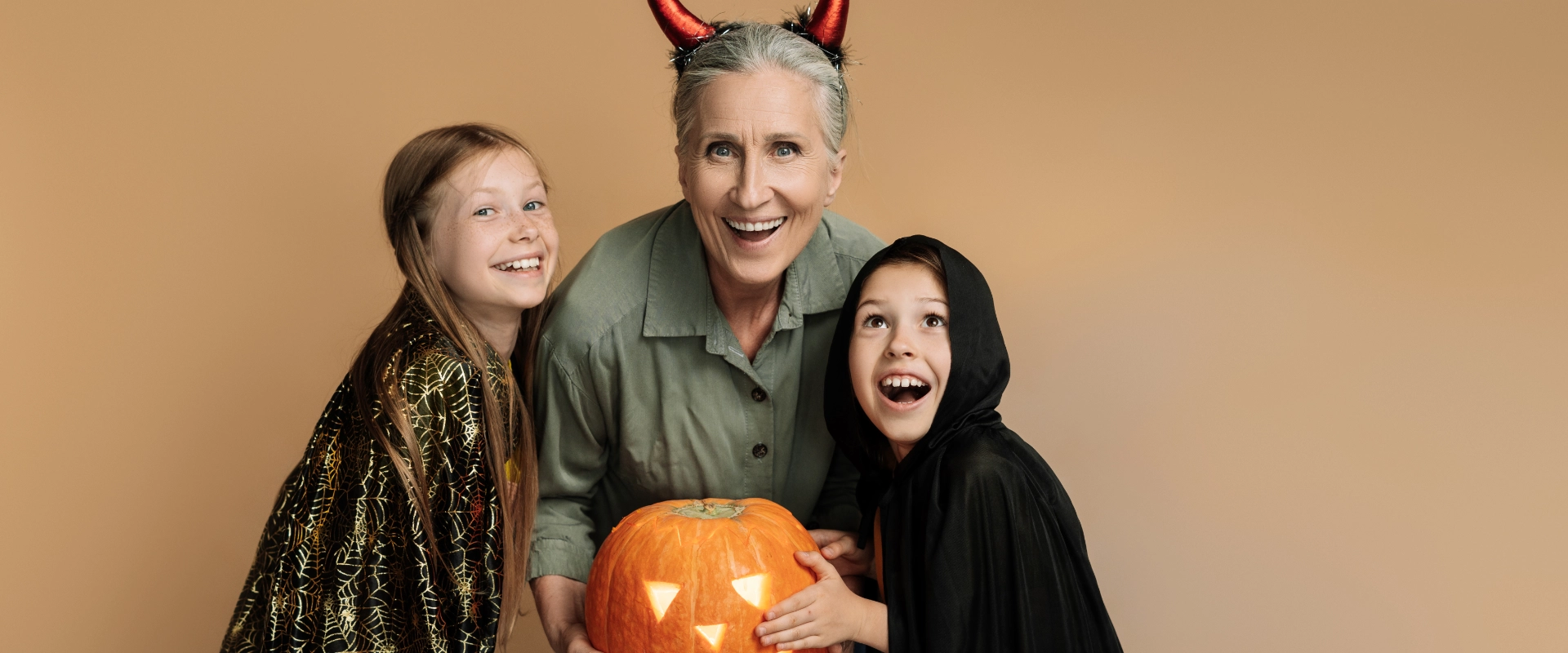
Pumpkins are to Halloween as the Christmas tree is to Christmas. Whether carved, painted or as window decorations, they are a symbol of light and protection.
Many people are now opting for sustainable decorations: reusable fabric pumpkins, LED lights or regional products.
Creepy costumes
From classic vampires and witches to pop culture icons - you can slip into any role on Halloween. The trend is clearly towards DIY costumes: homemade, creative and often with a sense of humor.
Halloween trends 2025
Sustainability, DIY ideas and influencer styles
Halloween 2025 is all about sustainability and individuality.
Costumes are increasingly made from recycled materials, decorations are reused and many people celebrate in small groups - but with all the more attention to detail.
Social media shapes the style: influencers inspire with DIY instructions (do-it-yourself instructions), sustainable craft ideas and vegan recipes for Halloween buffets.
The scary factor remains - but awareness is growing: Halloween can be fun without harming the environment.
Criticism and discussions about Halloween
Commerce and cultural debates
Some critics see Halloween as a purely commercial festival that supplants traditions. In fact, a large industry has developed around October 31 - from costumes and sweets to decorative items.
But Halloween is more than just consumption: it offers a creative stage on which people can express themselves, experience community and share joy.
Halloween as an occasion for community and creativity
Especially at a time when many people are longing for closeness and belonging, Halloween is a welcome opportunity to get to know neighbors, do crafts together, celebrate and laugh.
It connects generations, inspires imagination - and reminds us that traditions are always changing.
Conclusion Halloween
Halloween is far more than just an imported spooky festival. It is a living piece of cultural history that combines old traditions with modern creativity. Whether you are carving pumpkins, accompanying children or simply celebrating together - the focus is on what Halloween is really about: community, imagination and the joy of life.