
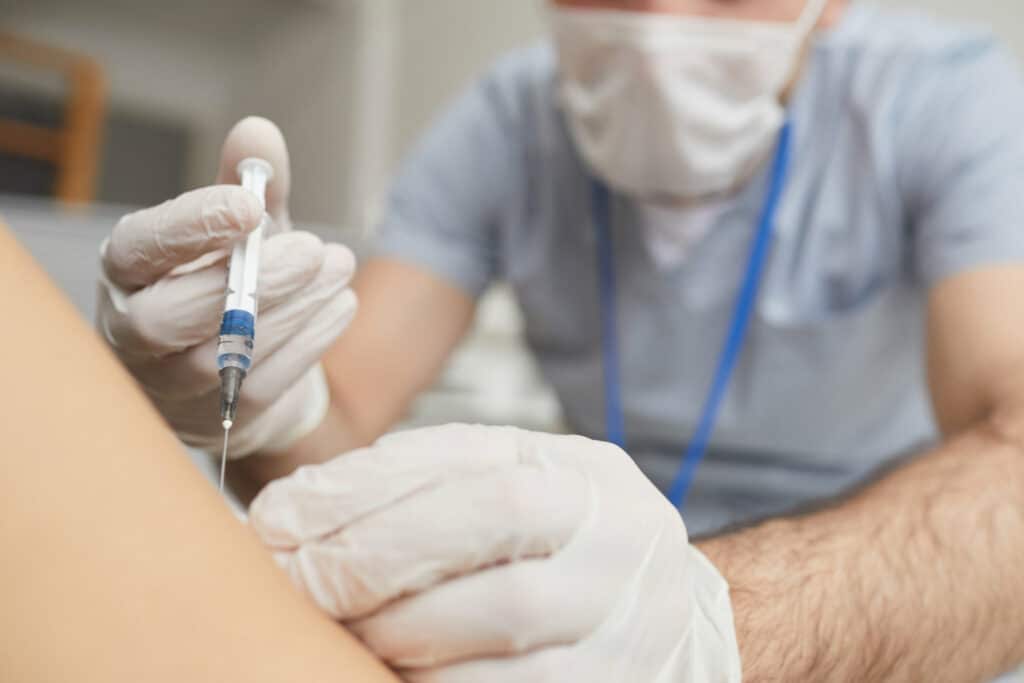

Although the vaccines effectively prevent SARS-CoV-2 infection, there is a breakthrough of COVID-19 cases. Scientific findings indicate that the immune response to COVID-19 vaccines is weaker or declines more quickly in certain groups of people. In order to continue to protect these particularly vulnerable groups from severe cases of COVID-19, a booster vaccination is recommended as a preventive health measure.
A booster vaccination is administered to people who have already received the status \"fully vaccinated\" but whose immune response to COVID-19 has been weakened after a period of several months since vaccination. The booster vaccination is an extension of the first vaccination series, i.e. for complete vaccination protection, not the usual two vaccinations are recommended, but a third vaccination against COVID-19 with an interval of six months.
According to the COVID-19 Vaccination Ordinance, all those eligible for vaccination can have their vaccination booster free of charge. Although the STIKO recommends that everyone aged 18 and over get a COVID-19 booster vaccination, older people aged 70 and over in particular should get vaccinated to ensure the best possible protection. There is also a strong recommendation for people aged 18 and over who suffer from an underlying disease or work in an environment close to the body, e.g. in the medical or social sector. The STIKO would therefore like to prioritize the protection of caregivers and the elderly as well as people with weakened immune systems.
COVID-19 - The STIKO recommends a booster vaccination for the following groups of people
- Residents in care facilities for the elderly
- Residents in facilities for people with disabilities and other vulnerable groups
- People in need of care in their own home
- People with a congenital or acquired immunodeficiency
- People aged 70 and over
- People aged 60 and over after individual consideration and
medical advice - Staff who are regularly in contact with infectious people, for example in medical or care facilities
- Close household contacts of persons with a severe immunodeficiency
- People who have received a complete vaccination series with the Vaxzevria® vaccine from AstraZeneca
- People who have received a dose of a vector vaccine following a coronavirus infection
Where can I get a vaccine or a booster shot?
In general, booster vaccinations can still be carried out by doctors in private practice, company doctors, public health service facilities, hospitals and vaccination centers. The best way to do this is to make an appointment online or by phone. If you have any questions about the coronavirus booster vaccination, we recommend a clarifying discussion with your doctor. According to the latest information from the federal authorities, the booster vaccination is free of charge for everyone.
Which vaccines are used for the booster vaccination?
If possible, the vaccine that was also used for the basic immunization should be used. These are the mRNA vaccines Comirnaty® from BioNTech/Pfizer and Spikevax® from Moderna, which are currently approved in Germany.
Am I also protected against the delta variant after the booster vaccination?
Yes, hourly results show that the available mRNA vaccines provide sufficient protection against the delta variant.
Do I need the booster vaccination to be considered "fully vaccinated"?
In accordance with the Ordinance on the Regulation of Facilitations and Exemptions from Protective Measures to Prevent the Spread of COVID-19 (COVID-19 Protective Measures Exemption Ordinance), you are considered to be sufficiently protected even without a booster vaccination. The booster vaccination with a third dose is not yet mandatory, but is strongly recommended by the German authorities.