
With every breath, we not only take in air, but also a piece of life. Our breathing accompanies us continuously, often unnoticed, but is invaluable. Especially in old age, when the respiratory muscles become weaker and lung function declines, it is worth paying more attention to it. Because conscious breathing means doing something good for yourself: gentle, effective and possible at any time.
This magazin shows step by step how senior citizens and their relatives can gain more vitality, flexibility and inner balance with simple breathing techniques, without any effort, but with great effect.
Why breathing exercises are so important for seniors
With every breath we take, we give our body life, strength, rest and, above all, oxygen. But the older we get, the harder it is for many people to take a deep breath.
The lungs lose elasticity, the respiratory muscles become weaker and breathing often becomes shallower. This is precisely where targeted breathing exercises for seniors come in: They strengthen lung function, improve oxygen supply and promote general well-being.
Many senior citizens notice that they get out of breath more quickly during exercise or suffer from breathlessness after physical exertion. This doesn't have to be fate, as proper breathing training is easy to learn and integrate into everyday life. Just a few minutes of conscious breathing exercises every day can help to significantly improve quality of life.
Breathing exercises are gentle, free and can be done at any time, whether you are sitting, lying down or going for a walk. They bring more energy, calm and concentration into everyday life and support body and mind in equal measure.
What happens when we breathe? - A look inside the body
Breathing - something we take so much for granted that we hardly give it a second thought. Yet a small miracle happens with every breath we take. When we inhale deeply through our nose, air flows through our airways into our lungs. There, the oxygen enters the bloodstream via tiny bubbles called alveoli. At the same time, carbon dioxide is released when we breathe out, a natural cycle that supplies our body with oxygen around the clock.
This process changes with increasing age. The alveoli lose elasticity, the diaphragm, our most important respiratory muscle, becomes weaker and the mobility of the ribcage decreases. As a result, less air reaches the lower parts of the lungs. Many senior citizens notice this because they get out of breath more quickly or have the feeling of "not getting enough air" when exerting themselves.
Targeted breathing exercises counteract these changes: they strengthen the respiratory muscles, promote deeper breathing and thus support the body's natural oxygen supply. At the same time, the circulation is stimulated, giving you more energy and concentration in everyday life.
Consciously engaging with your own breath is therefore much more than just breathing exercises, it is a key to better health, inner peace and a better quality of life in old age.
Why the lungs need support in old age
The lungs are an amazingly adaptable organ. Every day, they move many thousands of liters of air through our airways and supply the blood with vital oxygen. However, like all bodily functions, breathing also changes over the course of our lives.
With increasing age, the elasticity of the lungs decreases, the tissue becomes stiffer, the respiratory muscles weaker and the chest less mobile. This reduces the lung volume, i.e. the amount of air we can breathe in and out. The diaphragm, our main breathing muscle, also no longer works as powerfully as it used to. As a result, the body receives less oxygen and even small efforts can become a challenge.
Many senior citizens experience this when climbing stairs or taking long walks. Even slight movement can lead to shortness of breath, often accompanied by a feeling of insecurity or worry.
But the good news is: the lungs can be trained! Just like muscles or joints, respiratory function can also be improved. Regular breathing exercises keep the lungs flexible, strengthen the diaphragm and promote deeper, calmer breathing. This increases the oxygen supply, boosts energy and makes the body feel more vital.
Even those who suffer from respiratory diseases can find relief with gentle breathing training. The important thing is to do the exercises regularly and without strain, step by step, adapted to your own pace.
Giving your lungs this little daily attention not only strengthens your health, but also your confidence in your own body.
Benefits of regular breathing exercises for seniors
Regular breathing exercises are much more than a simple health tip, they are an effective workout for body, mind and soul. Just a few minutes a day can bring noticeable changes.
- Improved lung function and oxygen supply: By consciously breathing in and out, the alveoli are ventilated more. This increases oxygen uptake and supplies all organs better. Seniors feel more alert, stronger and generally more vital as a result.
- Strengthening the respiratory muscles: breathing exercises strengthen the diaphragm as well as the chest and abdominal muscles. This makes breathing easier, the lungs can expand more freely and the feeling of breathlessness is noticeably reduced.
- Relaxation and stress reduction: calm, rhythmic breaths activate the so-called parasympathetic nervous system, the part of the nervous system responsible for relaxation and inner balance. Just a few minutes of conscious breathing reduces stress and promotes well-being.
- Positive effect on circulation and heart: deep breathing improves blood flow and can gently regulate blood pressure. The body receives more energy and the heart works more efficiently - a benefit for general health.
- More mobility in the chest: Targeted breathing exercises make the chest more elastic, which increases mobility and keeps the airways clear. This also makes movement and sport easier.
- Sleep deeper and fall asleep more easily: conscious breathing helps to calm the mind. If you breathe before bedtime can often fall asleep better and sleep more deeply. Breathing acts like a natural relaxation exercise.
- Less breathlessness on exertion: Seniors who exercise regularly often report that they can hold out longer when walking or climbing stairs. Breathing becomes more efficient and more air is retained even during exertion.
- More quality of life and self-confidence: Those who breathe consciously feel more secure in their own body. Regular breathing training gives you control, calm and inner strength - a gain in quality of life, especially in old age.
- Support for respiratory diseases: For chronic diseases such as COPDasthma or bronchitis, breathing exercises can help to loosen mucus and open up the airways. This gently alleviates symptoms and maintains lung function for longer.
- More energy and mental freshness: with every deep breath, new oxygen reaches the brain, improving concentration, memory and mood. Breathing exercises are therefore an easy way to revitalize both body and mind.
How breathing exercises reduce stress and promote relaxation
Breathing means life and at the same time breathing is a direct key to calm, balance and inner stability. Our breath reacts sensitively to everything we experience: Excitement, worry, pain or stress often cause us to breathe shallowly and hastily. This shallow breathing in turn signals the body to remain on alert, a reaction that can promote restlessness and exhaustion.
Targeted breathing exercises break this cycle. They act like a gentle brake for body and mind.
The psychological mechanism - rest begins in the mind
When we breathe consciously, we direct our attention inwards. This calms our thoughts and helps us to perceive the moment. Studies show that slow, rhythmic breathing activates the parasympathetic nervous system. This is the part of the nervous system that ensures relaxation, regeneration and inner balance.
At the same time, the sympathetic nervous system, i.e. the body's stress system, is downregulated. This means that the pulse and blood pressure drop, the muscles relax and the mind becomes clearer. Seniors who regularly practise breathing exercises often report that they feel calmer, more relaxed and emotionally more stable.
Conscious breathing can even reduce anxiety and inner restlessness. The brain reacts to the calm breathing rhythm by releasing calming messenger substances. The body understands: "I am safe."
The physical mechanism - oxygen, energy and relief
When breathing in deeply through the nose, the chest expands and the diaphragm moves downwards. This creates more space in the chest cavity and allows the lungs to fully expand. More oxygen enters the bloodstream, while more carbon dioxide is released when you breathe out.
This deep breathing acts like a natural massage for the internal organs: the gentle pressure of the diaphragm promotes blood flow to the heart, liver and digestive organs. At the same time, the breathing muscles relax, creating a feeling of lightness and calm.
The circulation also benefits: Regular, even breathing stabilizes blood pressure and provides the body with a constant supply of energy. This results in a noticeable improvement in well-being, both physically and mentally.
The influence on mind and mood
Breathing means being in the flow. If you consciously do breathing exercises, you not only activate your body, but also your mind. An improved oxygen supply to the brain promotes concentration and mental clarity. At the same time, calm, even breathing acts like a natural state of meditation: thoughts slow down, worries lose weight and you return to your inner center.
This can be particularly valuable for senior citizens. Breathing exercises help to calm thoughts, loosen ruminations and regain a sense of control and stability.
Basics of respiratory gymnastics - breathing in and out correctly
Breathing correctly sounds obvious and yet many people unconsciously do it wrong. Especially in old age, many people tend to breathe too shallowly. This means that air only reaches the upper part of the lungs, while the lower areas are barely ventilated. As a result, less oxygen reaches the body and the respiratory muscles are hardly exercised.
This can be changed with simple breathing exercises. The key is to consciously experience natural breathing again, step by step and without effort.
The right start: posture and environment
Before you start the breathing exercises, make sure you are in a calm environment. Sit or stand comfortably, preferably upright but without tension.
Tip:
- Let your shoulders hang loosely
- Place your hands on your thighs
- Raise your chin slightly to keep the airways clear
Good posture is the basis for free breathing. It ensures that the chest can open wide when inhaling and that air can flow freely into the lungs.
Breathing in - absorbing fresh energy
Breathe in deeply through your nose. The nose filters, humidifies and warms the air ideally to protect the airways.
- Feel how your stomach bulges slightly outwards.
- The chest rises gently, the shoulders remain relaxed.
- Count to four calmly as you inhale.
With this technique, the air reaches deep into the lower parts of the lungs. This is particularly important in order to utilize the entire lung volume and improve the oxygen supply.
Breathing out - letting go and relaxing
The actual relaxation happens when you exhale. Allow the air to escape gently, as if you were blowing quietly through a straw.
- Breathe out slowly and evenly through your slightly open mouth.
- Count to six, the exhalation may take a little longer than the inhalation.
- Make sure that your stomach sinks gently inwards.
This conscious exhalation frees the body from stale air and helps to reduce stress. It calms the nervous system and conveys a sense of calm.
The breathing rhythm - finding your natural balance
A steady breathing rhythm is the goal. Many seniors find it with a simple 4-6-6 rule:
Inhale for 4 seconds - exhale for 6 seconds.
This technique calms the heart and circulation, lowers stress levels and provides a pleasant inner balance.
A little exercise for everyday life
"The morning breath" - for a good start to the day:
- Sit upright on the edge of the bed.
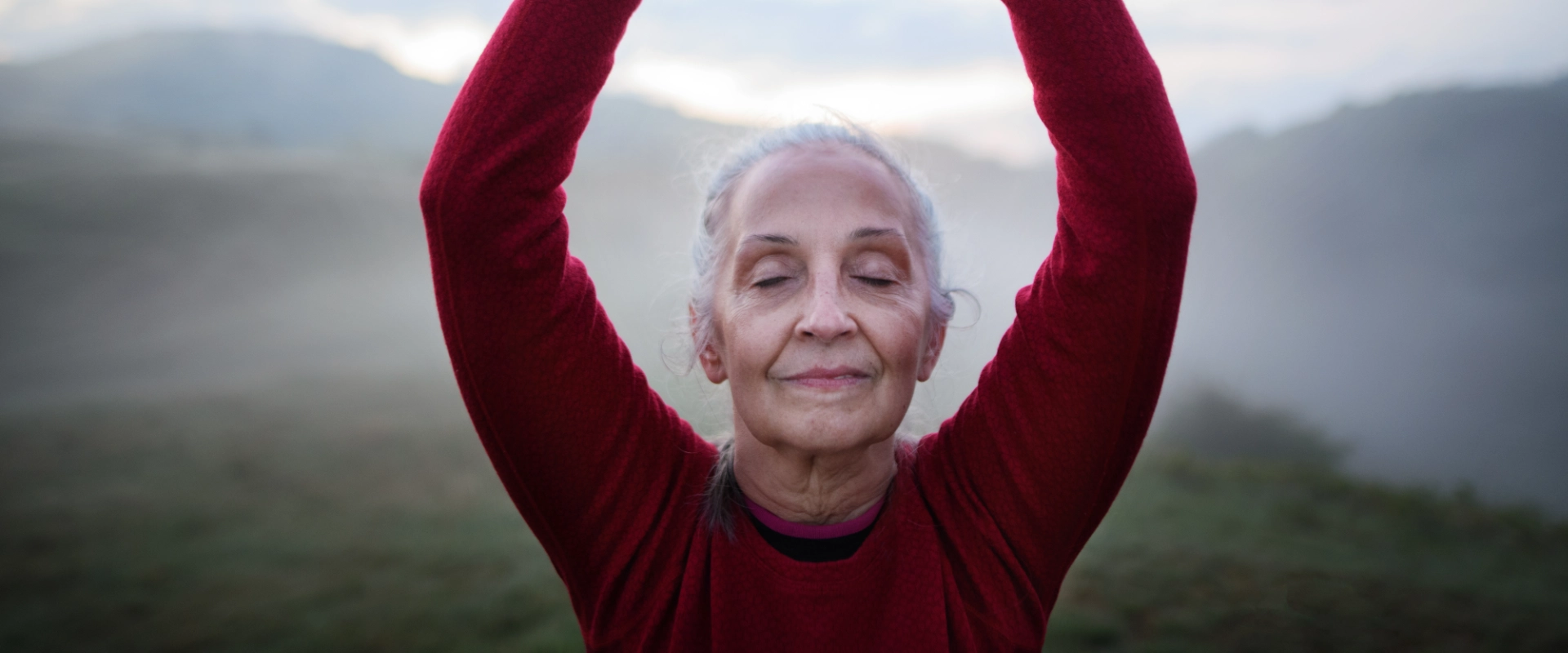
- Breathe in deeply through your nose and slowly stretch your arms above your head.
- Pause for a moment.
- As you exhale, lower your arms again and relax your shoulders.
Repeat the exercise five times. It promotes mobility of the chest, activates the circulation and gives you fresh energy for the day.
Exercise to relax in the evening
"The evening breath" - to calm down before sleep:
- Lie comfortably on your back.
- Place one hand on your stomach and the other on your chest.
- Feel how your belly rises first and then your chest as you inhale.
- When you exhale, everything slowly sinks back down again.
This simple exercise promotes abdominal breathing, calms the mind and makes it easier to fall asleep.
Abdominal breathing - energy source from the abdomen
Abdominal breathing, also known as diaphragmatic breathing, is the most natural and efficient form of breathing. Even babies breathe in this way, calmly, evenly and deeply. In the course of life, however, many people unlearn this natural way of breathing, especially when stress, lack of exercise or pain unconsciously alter breathing.
During abdominal breathing, the diaphragm, a large, dome-shaped muscle that separates the chest cavity from the abdominal cavity, is primarily at work. This diaphragm is the motor of breathing: it moves up and down with every breath and thus influences the entire body.
How abdominal breathing works
When you inhale, the diaphragm contracts and sinks downwards. This creates more space in the chest cavity and allows the lungs to expand. The abdomen bulges slightly outwards, a sign that the air is flowing deep into the lower lung areas.
As you exhale, the diaphragm relaxes again and moves upwards. The abdomen lowers and the air is gently pushed out of the lungs. This alternation of tension and relaxation creates a harmonious, rhythmic movement that is transmitted to the entire body.
The effect on body and health
Abdominal breathing has many positive effects, both physically and mentally:
- Deeper oxygen uptake: The activity of the diaphragm allows more air to reach the lower parts of the lungs. This improves the oxygen supply and strengthens overall lung function.
- Strengthening the respiratory muscles: Regular tensing and relaxing gently trains the respiratory muscles, which is particularly important for senior citizens whose muscles lose strength with age.
- Massage of the internal organs: the movements of the diaphragm stimulate the liver, stomach, intestines and heart. This promotes blood circulation and aids digestion.
- Relieving the circulatory system: Even, deep breathing calms the heart, stabilizes blood pressure and improves circulation.
- Reduction of stress: because the brain interprets the calm breathing rate as a sign of safety, stress hormones are reduced

Why senior citizens benefit in particular
Breathing often becomes unconsciously shallow in old age. Many people breathe mainly into the chest, which means that the diaphragm is barely activated. In the long term, this can lead to shortness of breath, inner restlessness or a feeling of exhaustion.
Returning to abdominal breathing is therefore an effective way to bring the body back into balance. It promotes the mobility of the chest, improves breathing function and provides new energy. It is also easy to integrate into everyday life, whether sitting, lying down or going for a walk.
Breathing exercises and joie de vivre - consciously shaping everyday life
To breathe is to live. Every conscious breath gives you peace, strength and new energy. Breathing exercises are more than just training for the lungs, they are small islands of mindfulness in everyday life. If you regularly take time to breathe in deeply through your nose and exhale calmly, you will feel your body become lighter and your mind clearer. These moments promote well-being, relaxation and inner balance.
Whether at the window in the morning or in bed at night: conscious breathing means feeling life in all its depth. Every breath is a step towards more joie de vivre.