
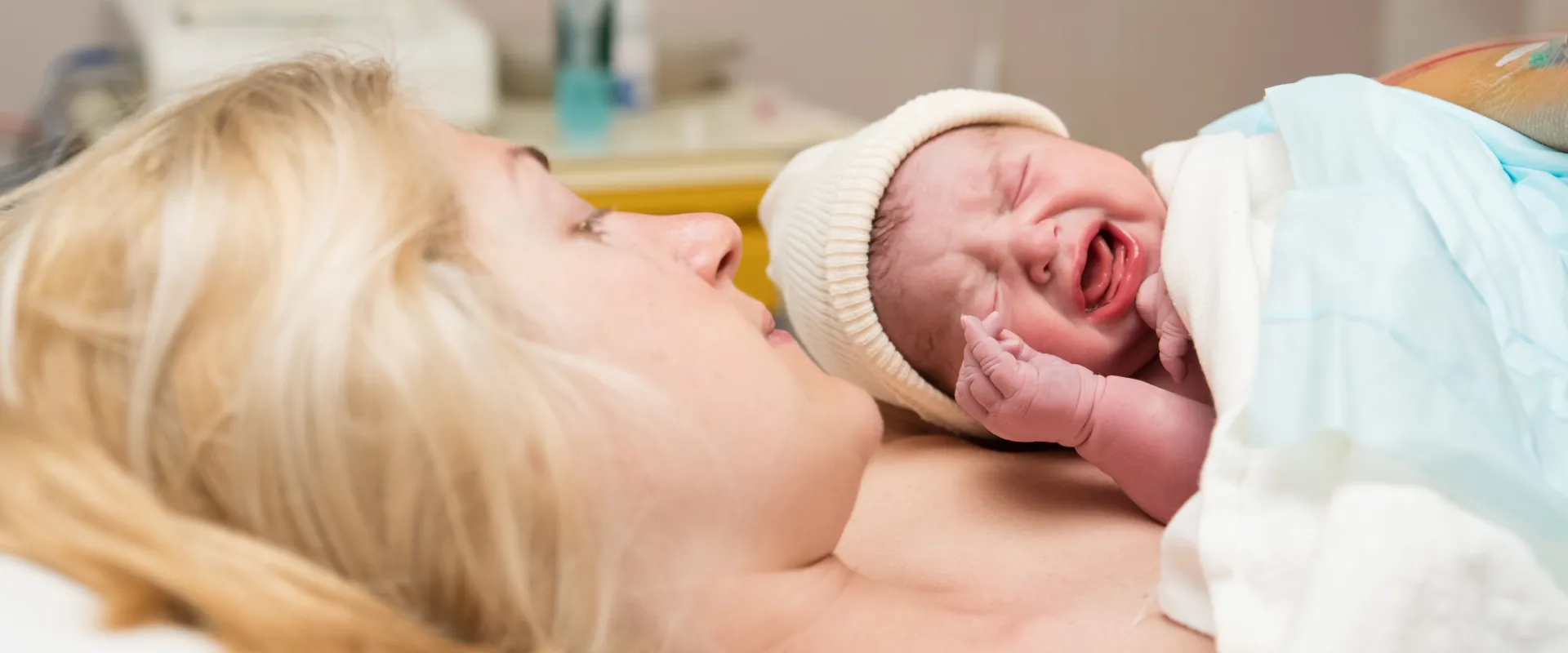

The birth of a child is considered one of the most beautiful events in life. Images of happiness, fulfillment, and intimacy characterize many website texts, brochures, and content related to pregnancy, birth preparation, and childbirth.
However, for many women and families, childbirth is not a joyful experience, but a deeply traumatic event that leaves its mark. Birth trauma can affect both the mother and the baby, with long-term consequences for the mother-child relationship, the family, and the rest of their lives.
What is birth trauma?
Experts refer to birth trauma when the birth experience is perceived as extremely threatening, overwhelming, or helpless and leads to traumatization. This is less about objective medical complications and more about the subjective feeling of loss of control, helplessness, or vulnerability.
Birth trauma in mothers – a common but taboo phenomenon
Postpartum trauma is not a marginal phenomenon. Studies show that between 10 and 20 percent of women develop traumatic symptoms after giving birth. However, few of those affected talk openly about it, out of shame, guilt, or because they believe they "shouldn't make such a fuss."
How birth trauma can occur
The development of birth trauma can rarely be reduced to a single moment. Rather, it results from a chain of circumstances, decisions, and situations that are experienced as overwhelming during pregnancy, during birth, or immediately afterwards. What may seem medically necessary or routine can feel like an existential threat to the woman giving birth.
The decisive factor here is not only the course of the birth, but also the subjective experience: the feeling of no longer being in control, of not being heard, or of being at the mercy of the situation. Especially at such a sensitive moment, a lack of communication, time pressure, or unexpected interventions can pave the way for a traumatic experience.
Situations in the delivery room
Many birth traumas occur in the delivery room or maternity ward when procedures are perceived as threatening. These include:
- Stalled labor and long, exhausting contractions
- an unplanned induction of labor
- medical interventions without sufficient information or consent
- an emergency C-section
- Separation of mother and child immediately after birth
Violence and boundary violations during childbirth
A particularly sensitive issue is experiences of violence in obstetrics. These include verbal abuse, physical assault, or invasive procedures without consent. The controversial Kristeller maneuver, which involves applying pressure to the abdomen of the woman in labor, is experienced by many women as a serious violation, both physically and emotionally.
The role of fear, stress, and loss of control
Anxiety, stress, and a sense of loss of control are among the key factors in the development of birth trauma. In a situation that should actually be characterized by safety, support, and trust, uncertainty, time pressure, or unexpected turns of events can severely disrupt the emotional balance of the woman in labor.
When fear takes over and stress dominates the body, it is not only the experience of birth, but also the way in which memories are stored. The moment when a woman no longer feels in control but rather helpless can leave a deep impression—often far beyond the actual birth process.
What happens in the brain
Under extreme stress, the brain switches into survival mode. The ability to process information, make decisions, or defend oneself is limited. Many people report feeling "paralyzed." These neurobiological processes explain why traumatic memories are often fragmented but emotionally very intense.
Helplessness as the core of trauma
It is not the pain alone that makes childbirth traumatic, but the feeling of losing control and being at the mercy of others. This feeling is intensified when support is lacking or midwives and doctors seem unavailable.
Birth trauma and the child
Birth trauma does not only affect the mother. The child is also part of this sensitive event and experiences birth as an intense physical and emotional transition. Stress, medical interventions, or an abrupt separation after delivery can leave their mark, even if they were medically necessary.
While babies do not consciously remember their experiences, their nervous system reacts to stress and stores it on a physical level. The early phase after birth is therefore crucial: it shapes how secure a child feels and how the first relationship with the mother develops. A traumatic start does not have to be inevitable, but it deserves attention, understanding, and gentle support.
How babies store birth experiences
The baby is also part of the situation. Neuroscientific findings show that even newborns can store stress reactions. Oxygen deprivation, major interventions, or abrupt separation from the mother can affect the child's condition.
Effects on development and bonding
A difficult start in life can affect early development: increased crying, sleep problems, or regulatory disorders.
In combination with a traumatized mother, this can complicate the early mother-child relationship, a sensitive process that is, however, reparable.
Mother and child after birth – when closeness is difficult
After giving birth , mothers are often expected to naturally develop closeness, love, and attachment. However, for women who have found childbirth to be overwhelming or traumatic, this closeness can be difficult to achieve.
Instead of happiness, emptiness, inner distance, or feelings of emotional detachment sometimes dominate. Birth trauma can trigger protective mechanisms: to protect herself from further overload, the mother withdraws inwardly, often unconsciously. This distance is not a sign of a lack of love, but an understandable reaction to trauma. Especially in this sensitive phase, relief, understanding, and space are needed to allow the bond to grow at its own pace.
The postpartum period as a sensitive phase
The postpartum period is a time of physical healing and emotional reorientation. For traumatized mothers, however, this phase is often marked by fear, inner emptiness, or feeling overwhelmed. Some women report that they are unable to feel positive emotions toward their child, a taboo that adds to their burden.
Feelings of guilt and inner conflicts
Many mothers doubt themselves, question their own perceptions, or believe they have failed. This inner crisis can lead to delays in seeking help.
Fathers, partners, and family—also affected and often overwhelmed
Birth trauma rarely affects only one person. Fathers, partners, and other family members also experience birth as an intense and sometimes disturbing event. They witness pain, fear, or medical emergencies without being able to intervene themselves.
This feeling of powerlessness can be just as traumatic, but is even less frequently discussed in society. At the same time, many partners feel under pressure after the birth to be strong, supportive, and functional, while putting their own feelings on hold. This creates tension within the family due to unspoken burdens, misunderstandings, and excessive demands, which can have long-term effects if not addressed and supported.

When parents have different experiences
Parents who did not give birth themselves can also be traumatized. Fathers or partners often experience the birth feeling powerless, witnessing suffering and unable to intervene. Different birth experiences within a couple can lead to misunderstandings and separation.
Impact on the family system
Untreated birth trauma affects the entire family, including partners, siblings, and the social environment. This makes it all the more important to provide holistic care that involves everyone concerned.
Methods of processing and treatment
Birth trauma does not end when you leave the delivery room. Often, the real struggle begins weeks or months after the birth, when memories, feelings, or physical reactions unexpectedly return.
The path to processing is individual and requires time, understanding, and appropriate support. It is crucial to recognize that accepting help is not a sign of weakness, but rather an important step toward stability, inner order, and healing. Different therapeutic and body-oriented approaches can help to integrate the experience and find new security in one's own body and everyday life.
Psychotherapy as a central component
Trauma-sensitive psychotherapy, such as EMDR or body-oriented methods, can help to integrate the experience. An experienced psychologist can help to organize memories, put feelings of guilt into perspective, and develop a new sense of security.
Osteopathy and body-oriented approaches
Osteopathy can also be beneficial for mother and child. Gentle touch helps to release tension, calm the nervous system, and promote self-regulation. Many parents report positive effects, especially in babies with restless behavior.
Prevention: What can help before and during childbirth
Not every birth trauma can be prevented, but there are many things that can help to significantly reduce the risk of a traumatic birth experience. The decisive factor here is not so much the desire for a "perfect" birth as the feeling of security, self-determination, and being taken seriously.
Good preparation, transparent communication, and respectful care can empower women, even if the birth does not go as hoped. Prevention means creating spaces where women giving birth can make informed decisions, receive support, and not feel alone or helpless, even in challenging situations.
Good preparation and informed decisions
Realistic preparation for childbirth is crucial. This includes honest discussions about possible complications, cesarean section scenarios, and the rights of the mother. Knowledge creates room for maneuver.
Informed consent as a protective factor
Key preventive measures include transparent information and genuine consent. Women who understand what is happening and why experience even difficult procedures as less traumatic.
Case study: Anna's story
Anna, 34, underwent an emergency C-section after a long labor induction. No one explained the procedures to her, and her baby was taken to the intensive care unit immediately after delivery. Weeks later, she suffered from panic attacks and nightmares.
It was only through psychotherapy, conversations with other affected individuals, and accompanying osteopathy for her child that Anna slowly regained her relationship with herself and her son. "I have learned that my feelings are correct," she says today.
Social dimension and reappraisal
Birth trauma is not an individual problem affecting individual women, but rather a structural issue. More attention, research, and open debate are needed to identify and prevent violence in obstetrics.
Education, school, and long-term consequences
Unprocessed trauma can have an impact for years on mental health, relationships, and even children's educational paths. Prevention and early intervention are therefore also socially relevant.
Questions, help, and points of contact
When should you seek support?
If distressing memories, severe anxiety, depressive symptoms, or attachment difficulties persist, professional help is advisable. It is never "too late" to deal with trauma.
Where those affected can find help
Midwives, gynecological practices, specialized counseling centers, and therapeutic services offer support. Many reputable websites compile information and provide contacts.
Conclusion: Healing is possible—for mother and child
Birth trauma can be deeply traumatic, but it does not have to be a lifelong fate. With understanding, professional support, and social responsibility, wounds can heal. Mother and child can find their own way, beyond idealized images, toward a genuine connection. Those who observe, listen, and support can help ensure that a painful beginning can still grow into a lasting relationship.